
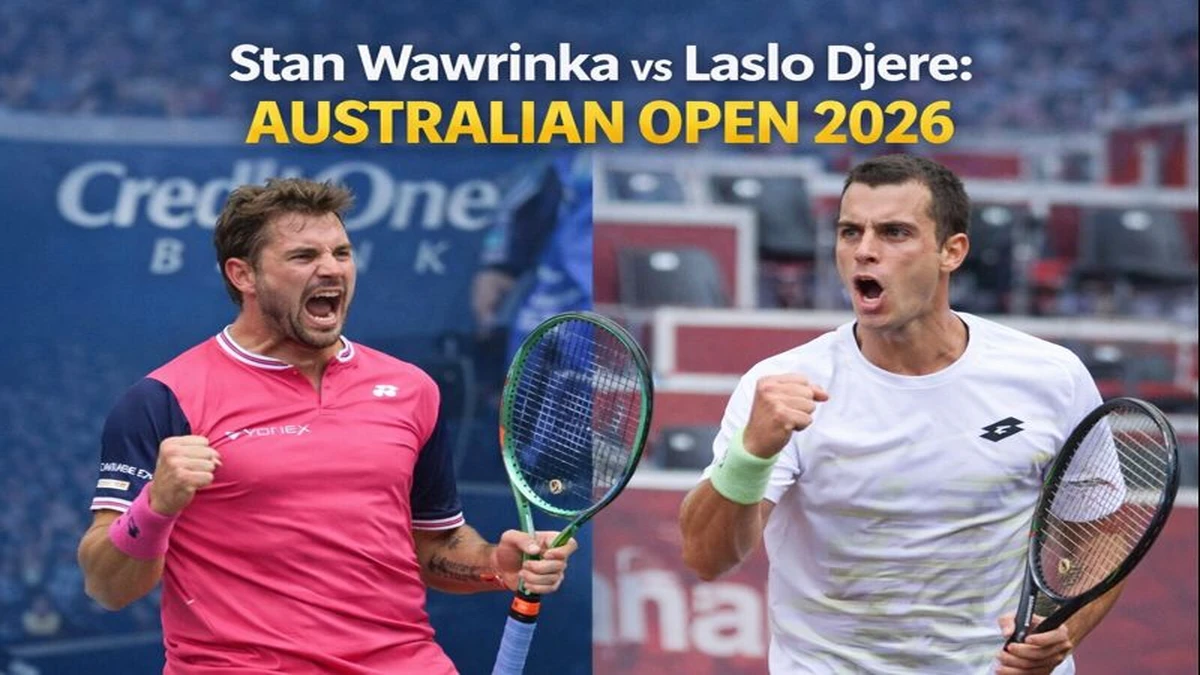
Stan Wawrinka vs Laslo Djere: Experience Meets Endurance at the Australian Open
Introduction to a Classic First-Round Battle
The first round of the Australian Open often delivers matchups that feel far more significant than their early-round billing suggests, and the clash between Stan Wawrinka and Laslo Djere at the 2026 edition is one such encounter. This match brings together a three-time Grand Slam champion nearing the twilight of his career and a resilient baseliner still fighting to establish consistency on the sport’s biggest stages. On paper, it is a first-round contest; in reality, it is a study in contrasting careers, styles, and motivations.
Stan Wawrinka’s Legacy at the Australian Open

Stan Wawrinka’s name is forever etched into Australian Open history thanks to his unforgettable title run in 2014. That year, Wawrinka stunned the tennis world by defeating Rafael Nadal in the final, announcing himself as far more than a supporting act in the era dominated by the Big Three. Over the years, Melbourne has often been a place where Wawrinka’s heavy groundstrokes and fearless mentality have flourished, making his return in 2026 emotionally significant for both the player and his fans.
Why This Australian Open Feels Different for Wawrinka
At 40, Wawrinka enters the 2026 Australian Open with the understanding that each appearance may be his last. While he no longer competes with the same physical consistency as in his prime, his preparation leading into the tournament suggests a player determined to savor every moment. Recent matches have shown flashes of vintage Wawrinka, particularly when he is able to dictate play early in rallies and avoid prolonged physical exchanges.
Laslo Djere’s Journey to This Match
Laslo Djere arrives in Melbourne with a very different narrative. Known primarily for his success on clay courts, Djere has built his career on endurance, heavy topspin, and mental resilience. Injuries and inconsistency have interrupted his momentum in recent seasons, but his steady performances leading into the Australian Open indicate a player eager to prove that he belongs at this level across all surfaces.
Contrasting Playing Styles Define the Matchup
The Wawrinka-Djere matchup is fascinating because of how sharply their playing styles differ. Wawrinka thrives on explosive shot-making, particularly his iconic one-handed backhand, which remains one of the most powerful weapons in men’s tennis. Djere, by contrast, relies on patience, depth, and consistency, preferring to grind opponents down through extended baseline exchanges rather than overpower them outright.
The Importance of Court Speed in Melbourne
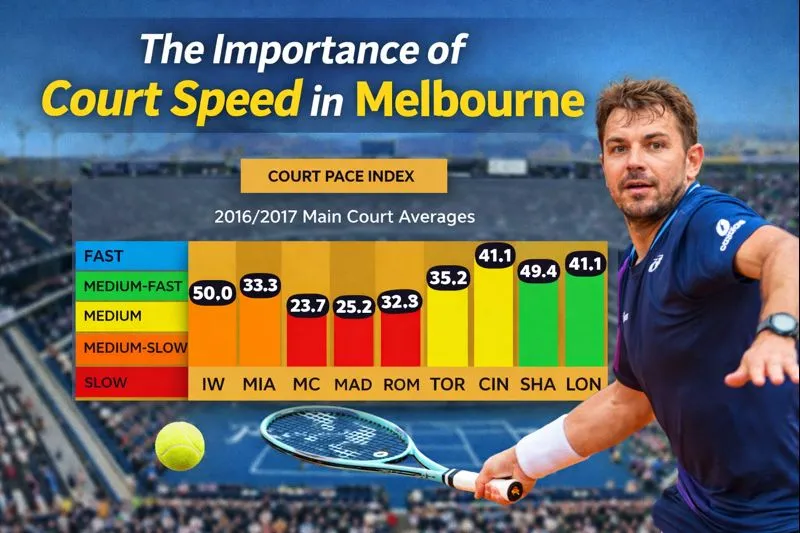
The relatively quick hard courts in Melbourne tend to reward aggressive players who can finish points efficiently. This condition naturally favors Wawrinka, whose ability to step inside the baseline and unload winners has long been his calling card. For Djere, success will depend on slowing the tempo, absorbing pace, and forcing Wawrinka into physically demanding rallies that test his endurance.
Fitness as the Central Question Mark
Fitness looms as the biggest question for both players. Wawrinka’s body has endured countless battles, surgeries, and comebacks, making recovery between long matches increasingly difficult. Djere, meanwhile, has also dealt with physical setbacks in recent years, raising doubts about his ability to sustain high intensity over four or five sets. As a result, the match’s length could play a decisive role in determining the outcome
Mental Strength and Big-Match Experience
One area where Wawrinka holds a clear advantage is big-match experience. Few players in the draw can match his résumé in high-pressure Grand Slam moments. Djere, while mentally tough, has not often found himself closing out matches against legends of the game on the biggest courts. How he handles momentum swings and crowd energy will be critical.
Crowd Influence at the Australian Open
Melbourne crowds have always embraced Wawrinka’s attacking style and emotional intensity. Even as a veteran, he remains a fan favorite, and that support can provide a crucial boost during difficult moments. Djere, on the other hand, may find himself playing against both his opponent and the atmosphere, requiring exceptional focus to stay composed.
Tactical Adjustments Wawrinka Must Make
For Wawrinka, the key tactical goal will be to shorten points whenever possible. This means taking returns early, stepping into the court, and using his serve to set up forehand winners. If he allows Djere to settle into long baseline exchanges, he risks being drawn into a physical battle that favors the younger player.
Tactical Adjustments Djere Must Make
Djere’s path to victory lies in discipline and patience. He must resist the temptation to overhit and instead focus on consistency, depth, and variation. By targeting Wawrinka’s movement and extending rallies, Djere can expose any physical vulnerabilities and increase the chances of wearing the Swiss down over time.
Serve and Return Dynamics
The serve-return battle could tilt the match in subtle ways. Wawrinka’s serve, while no longer among the tour’s fastest, remains effective due to placement and disguise. Djere’s return game is solid but not exceptional, meaning he must capitalize on any second-serve opportunities. Conversely, Wawrinka will look to attack Djere’s serve early to assert control.
Momentum Swings Are Inevitable

Given the profiles of both players, momentum swings seem inevitable. Wawrinka is capable of producing stretches of breathtaking tennis followed by sudden dips in level. Djere’s steadiness allows him to stay close even when outgunned, waiting patiently for openings. The player who manages these momentum shifts more effectively will gain a crucial edge.
What This Match Means for Wawrinka’s Career
A win in this match would not just be another first-round victory for Wawrinka; it would represent a symbolic extension of a remarkable career. Competing deep into a Grand Slam at this stage would reaffirm his ability to challenge younger opponents and remind fans why he remains one of the most respected figures in tennis.
What This Match Means for Djere’s Career
For Djere, defeating a former Grand Slam champion on one of tennis’s biggest stages would be a statement victory. It would validate his hard work through injury setbacks and reinforce his belief that he can compete with elite players outside his preferred clay-court environment.
Statistical Outlook and Recent Form
Recent form slightly favors Wawrinka, who has logged more match play in the lead-up to the Australian Open. While neither player enters as a clear statistical favorite, models and analysts tend to give Wawrinka a narrow edge due to his experience and surface preference. However, such margins are thin in a best-of-five-set format.
Best-of-Five Format Adds Complexity
The Grand Slam format adds layers of complexity that do not exist in shorter matches. Stamina, mental endurance, and adaptability become increasingly important as the match progresses. Both players will need to manage energy levels carefully, particularly if the contest extends beyond three sets.
Prediction and Expected Match Pattern
If Wawrinka can impose his aggressive game early and avoid prolonged physical strain, he is likely to emerge victorious in four sets. Djere’s chances increase significantly the longer the match lasts, particularly if it stretches into a fifth set where endurance and mental resilience come to the forefront.
Why This Match Is a Must-Watch
Regardless of the result, this match encapsulates much of what makes Grand Slam tennis compelling. It combines legacy, ambition, contrasting styles, and the ever-present uncertainty of sport. For fans, it offers a chance to witness a champion possibly taking his final bow in Melbourne against a determined challenger.
Broader Implications for the Tournament
The winner of this match will carry momentum into the second round, potentially setting up more intriguing clashes ahead. For Wawrinka, each additional win extends a storied career. For Djere, each victory builds confidence and visibility on the global stage.
Final Answer: Who Has the Edge?
While Laslo Djere’s consistency and endurance make him a dangerous opponent, Stan Wawrinka’s experience, firepower, and connection with the Australian Open give him a slight edge. If he manages his body and controls rallies, Wawrinka is the more likely winner.
Conclusion: A Battle Beyond the Scoreline
The Wawrinka-Djere clash at the 2026 Australian Open is about more than advancing to the next round. It is a meeting of eras, philosophies, and personal journeys. Whether it ends in a veteran’s triumph or a challenger’s breakthrough, the match promises drama, quality, and a reminder of why tennis remains one of the sport’s most compelling spectacles.