
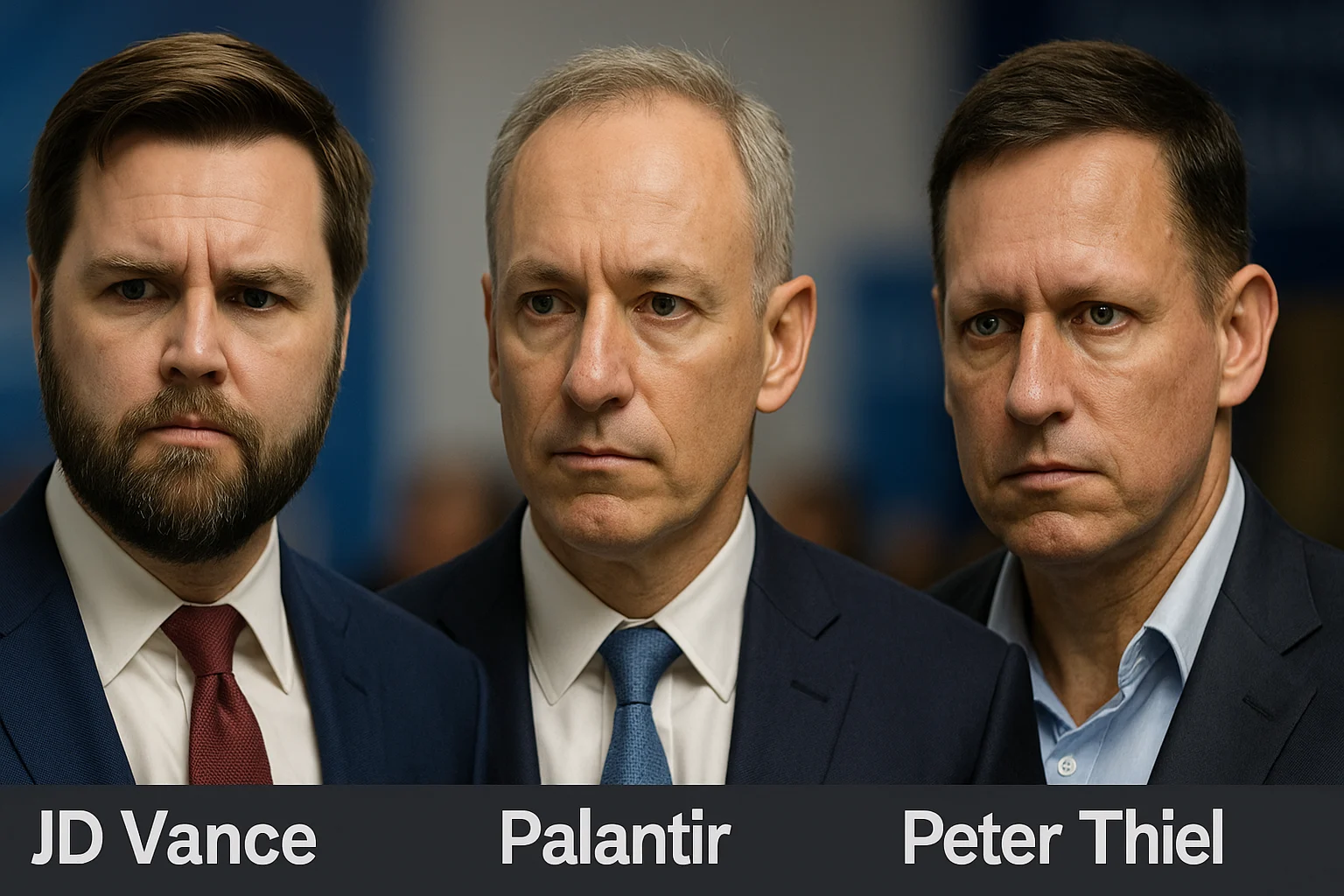
JD Vance, Palantir & Thiel: Inside the Rising 2025 Tech Controversy
In late 2025, a political storm erupted across the United States—one that combines government power, Silicon Valley influence, artificial intelligence, national security, and the future of data privacy. The controversy centers on Vice President JD Vance, software giant Palantir, and tech billionaire Peter Thiel—three names deeply embedded in the American political and technological landscape.
While Vance has become a dominant figure in the Trump administration’s second term, the scrutiny surrounding him has intensified. What began as a familiar Democratic critique of Vance’s ties to Big Tech has now evolved into a more complex rift within the Republican coalition itself.
At the heart of the growing tension is Palantir Technologies, a powerful data-analytics firm whose technology has expanded rapidly inside U.S. federal agencies. The concerns are no longer coming only from policy analysts or progressives but from MAGA influencers, conservative media, and even Trump’s inner circle.
How the Controversy Started: A Question from Roger Stone
The latest wave of scrutiny erupted after a conversation between JD Vance and longtime Trump strategist Roger Stone. When Vance asked Stone what worries him most about the country’s future, Stone responded with a surprising answer:
“Palantir.”
Stone later repeated this on his radio show, saying the company’s evolving role inside the federal government poses risks he believes are not being publicly discussed.
Stone’s remarks sparked a new political narrative—one that cast Palantir not simply as a tech contractor but potentially as a “surveillance-era wildcard” with influence reaching deep into government operations.
Why JD Vance Is in the Spotlight
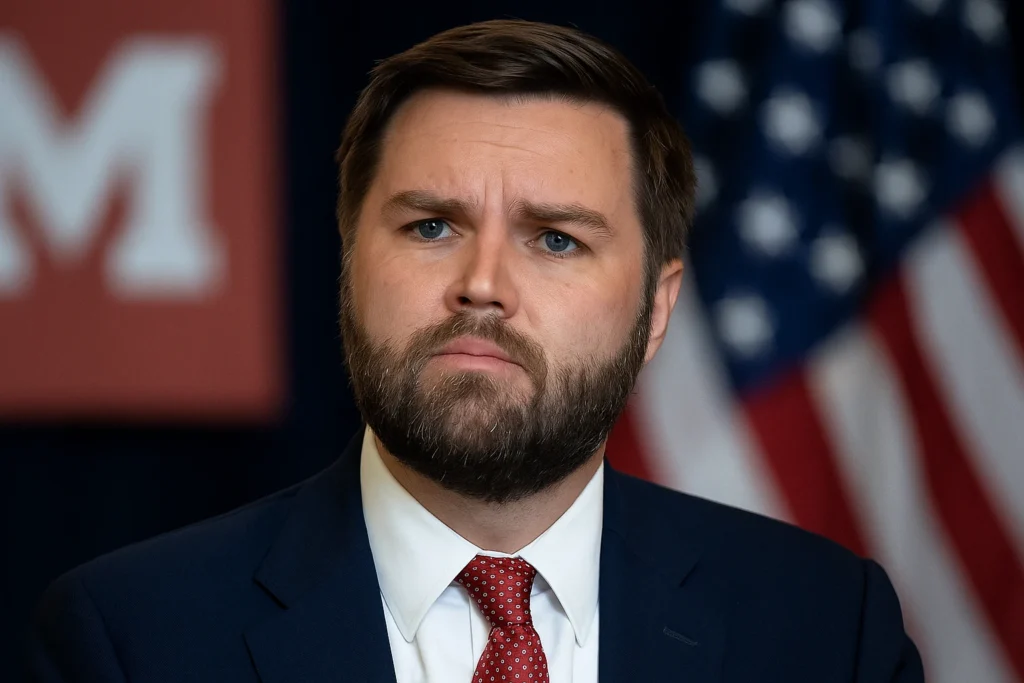
Vance’s relationship with Peter Thiel has been well known for years. Thiel provided Vance:
- One of his earliest tech jobs
- Political mentorship
- A massive $15 million contribution to Vance’s Senate campaign
- Direct ties to Silicon Valley donors
But in 2025, this history resurfaced with new political weight. Critics inside the Trump movement see Thiel’s influence not as empowering—but as potentially compromising. With Trump’s government steering billions of dollars toward Palantir, the company’s closeness to administration leaders became a topic of heated debate.
The issue is not whether Vance works at Palantir—he doesn’t.
The concern is whether his long-time tech alliances are shaping government technology decisions in ways that could impact privacy, civil liberties, or political neutrality.
Palantir’s Expanding Power Inside the Government
Palantir, founded with CIA support, is already one of the most influential software companies in the world. Its technology supports:
- The U.S. military
- Immigration enforcement
- Intelligence agencies
- State health departments
- Pandemic planning systems
- Diplomatic threat analysis
- Defense logistics
- Fraud detection
In 2025 alone, Palantir won:
- A major U.S. Army contract worth up to $10 billion
- New contracts in DHS and HHS
- Expanded work in immigration data systems
- Increased partnerships with local law enforcement
- More involvement in federal AI initiatives
Its tools combine AI models, predictive algorithms, and cross-agency data fusion systems. This expansion has triggered fears that Palantir could soon become the default infrastructure for how the federal government handles national data.
That level of power—and its connection to figures like Thiel and Vance—has made the company a political flashpoint.
Critics Across the Political Spectrum: “Is This Too Much Power?”
The backlash has come from a surprising mix of voices.
Steve Bannon
Said Palantir resembles a “sci-fi villain” in how it handles data fusion.
Joe Rogan
Called the company “creepy” and questioned how much government data they might access.
Right-wing activists
Raised concerns that Palantir wants to control the “digital backbone” of federal operations.
Left-leaning privacy advocates
Warned that Palantir’s tools could support large-scale surveillance.
Civil liberties researchers
Highlighted concerns around predictive policing and AI-driven risk models.
What makes the situation volatile is that both sides agree:
The power of Palantir’s technology needs oversight.
JD Vance Fires Back: “I’m Not in Bed With Palantir”
At a Turning Point USA event in Mississippi, Vance responded sharply:
“There is this internet meme that I am somehow in bed with Palantir.
Palantir is a private company. Sometimes they do good, sometimes they don’t.”
Vance insisted:
- He does not influence contracting decisions
- Palantir receives work for its technology—not for political ties
- Other tech companies gather far more data on Americans
He also pushed back against the idea that tech firms should be vilified simply for being powerful, arguing that government leadership—not private entities—should be held accountable for privacy protections.
What Is Palantir Actually Doing Inside the Government?
Some of Palantir’s projects are controversial; others are widely supported.
Beneficial Uses
- Securing diplomats overseas
- Tracking cyber threats
- Analyzing global supply chain risks
- Fighting fentanyl trafficking
- COVID-19 resource coordination
- Detecting fraud in medical billing
Controversial Uses
- Immigration enforcement analytics
- Predictive policing
- Law enforcement surveillance tools
- Facial recognition integrations
- High-level data fusion across agencies
The core fear is not that Palantir misuses data—but that its systems make broad surveillance possible, especially when combined with Trump’s 2025 executive order encouraging agencies to share more data openly.
Peter Thiel’s Role: Architect or Bystander?
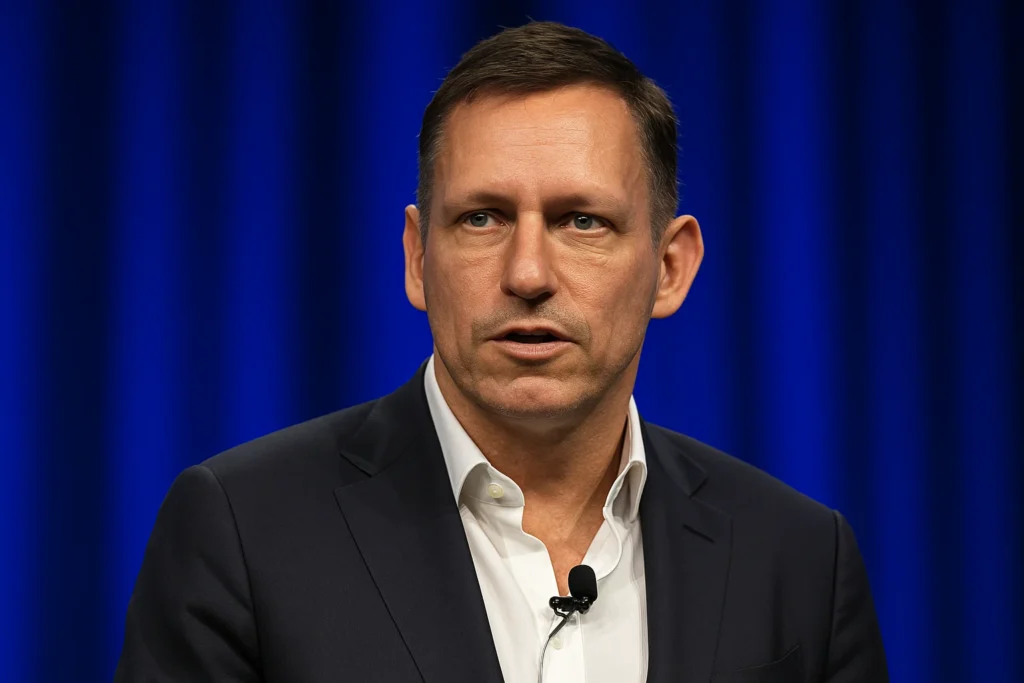
Peter Thiel, Palantir’s co-founder and one of Silicon Valley’s most polarizing figures, remains central to the conversation.
Key facts:
- Thiel built Palantir with early CIA support
- He funded JD Vance’s rise
- He is one of the few tech billionaires openly aligned with Trump
- He has influence inside policy circles, especially around AI and defense
Thiel is not part of the administration, but his orbit overlaps with government decisions—politically, economically, and strategically.
This overlap fuels speculation about undue influence, whether true or not .
Is Palantir a “Surveillance Company”? The CEO Says No.
Palantir CEO Alex Karp pushed back strongly:
- “We do not collect data.”
- “We do not sell data.”
- “We are not a surveillance company.”
He argued that private companies, not the government, hold far more sensitive personal data.
Karp framed Palantir as a patriotic organization that helps protect the U.S. from threats—not one that spies on civilians.
The Real Question: Can JD Vance Bridge Populism and Big Tech?
Vance has long positioned himself as both:
- A champion of working-class conservatives
- A former Silicon Valley insider with deep tech understanding
But now he faces a difficult balancing act.
Many Trump supporters see:
- Big Tech = censorship
- AI = centralized power
- Data fusion = surveillance risk
- Silicon Valley = anti-populist elite
Vance must convince supporters that:
- His ties don’t compromise his values
- He supports restraint and oversight
- He is not controlled by tech billionaires
- Palantir’s work does not threaten personal freedom
His ability to maintain this balance may decide the future of his political career.
The Bigger Issue: America’s War Over Data Power
The real struggle is not about one company or one politician.
It is about:
- Who controls data
- Who controls AI
- Who decides how the government uses technology
- Who protects privacy in a digital era
- Who sets the limits on surveillance tools
The Palantir–Vance–Thiel controversy is simply the most visible front in a much larger battle.
This debate will shape:
- U.S. national security
- Civil liberties
- Political power
- AI regulation
- The 2026 election cycle
And it is only beginning.
Conclusion: A Political Storm That Isn’t Going Away
The 2025 tension between JD Vance, Peter Thiel, and Palantir reveals a deeper shift inside American politics:
- The right is divided on tech power
- The left is united against surveillance tools
- Silicon Valley is increasingly political
- AI and data systems now shape national debates
Whether JD Vance emerges from this stronger—or weakened—depends on how he navigates the coming months.
But one thing is certain:
The intersection of politics, AI, and surveillance tech will define the next decade of American governance.