


Tata Sierra Revival Sparks EV/Camper Talk as Mahindra Unveils XUV700 Facelift
India’s SUV market has entered a frenetic late-2025 phase: Tata Motors is energizing interest in its revived Sierra name — including electrified and lifestyle-focused camper possibilities — while Mahindra continues to update and reposition its core SUV line with a facelifted XUV700. At the same time, October–September GST rate changes and manufacturer pricing strategies are reshaping on-road prices for many buyers.
This report pulls together recent developments, clarifies the likely buyer impact, and offers a clear, neutral assessment of the product, pricing and market implications for prospective car buyers in India.
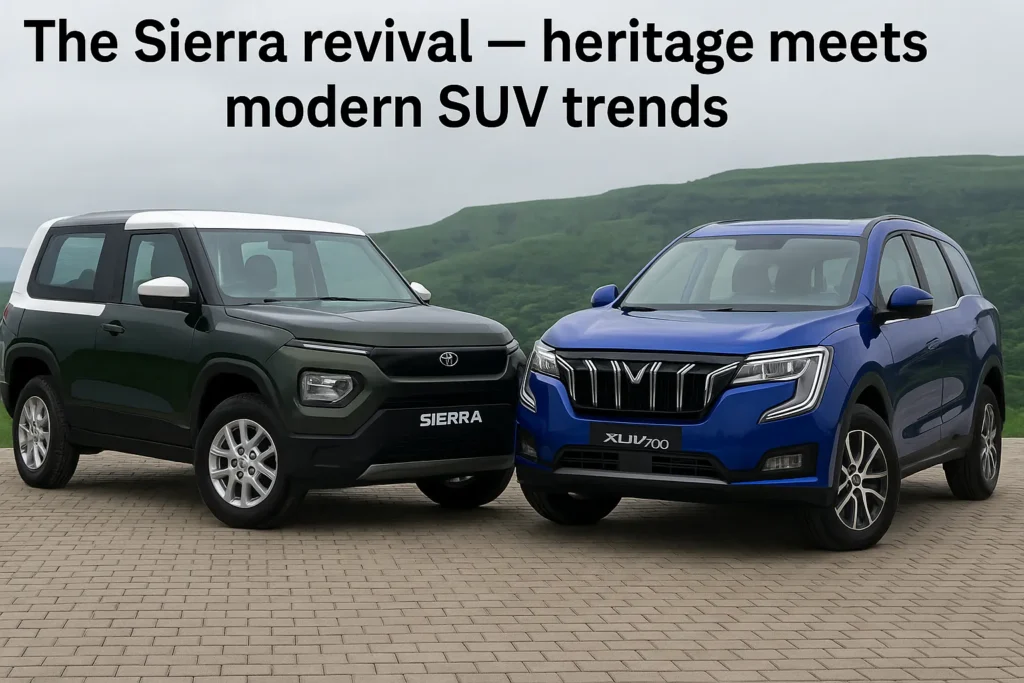
The Sierra revival — heritage meets modern SUV trends

A modern comeback with heritage branding
Tata revived the Sierra name for 2024–25 with an SUV that blends retro cues and contemporary packaging. The Sierra project has been designed to tap into both emotional nostalgia and current buyer demand for compact-to-mid-sized SUVs that offer personality as well as practicality.
EV and camper interest: what we know so far
Though Tata’s mainstream Sierra range initially focused on ICE and mild-hybrid options, industry chatter and lifestyle content have increasingly referenced two directions that would extend the model’s appeal:
- Electrified Sierra (Sierra EV) — consumer and media interest in an EV version centers on Tata’s existing EV expertise (from the Nexon EV and other models). An electric Sierra would aim to combine the nameplate’s styling with battery-powered city and highway usability, appealing to buyers seeking distinctive EV alternatives to mass-market hatchbacks and crossovers.
- Sierra Camper / Adventure variants — the Sierra’s retro-rugged styling makes it a natural candidate for lifestyle-oriented camper or “overlander” derivatives. Campers typically add modular interiors, roof-top tents or pop-tops, auxiliary electrical systems, and ruggedized suspension/tyre options.
At present Tata has not published an official, detailed roadmap for a factory-built Sierra camper or a full EV camper derivative. That said, the combination of consumer interest in adventure vehicles and Tata’s own EV roadmap means both concepts are feasible directions the brand could pursue, either as factory options, limited editions, or dealer/aftermarket conversions.
Mahindra XUV700 facelift — evolutionary update for a core model

Why a facelift matters
The Mahindra XUV700 has been a critical product for the brand, competing in the mid-size SUV segment against domestic and international rivals. Facelifts typically refresh exterior styling, tweak interiors and technology, and sometimes refine drivetrains to keep a model competitive midway through its life cycle.
Expected focus areas for the XUV700 facelift
While detailed specifications for the new XUV700 facelift may vary by release, facelifts commonly include:
- Updated front and rear fascias (new grille treatment, revised bumper lines, lighting signatures)
- Refreshed interior materials and infotainment software upgrades
- New safety or driver-assistance features as standard or optional fittings
- New wheel designs and color choices
- Calibrated suspension or engine management tweaks to improve NVH or ride quality
Mahindra’s approach with recent products has been to balance visible design changes with meaningful tech and safety enhancements — a strategy likely to continue with the XUV700 facelift.
GST cuts and Mahindra’s immediate price moves: context from CarDekho
What changed with GST
In early September 2025, revised GST slabs rolled out affecting a number of vehicle categories. According to the CarDekho summary you provided, Mahindra moved quickly to pass on benefits to customers:
- Mahindra announced effective price reductions starting September 6, ahead of the formal GST rate change date (some manufacturers delayed until Sep 22).
- Cuts varied by model/segment: example savings reported included up to ₹1.56 lakh for certain XUV 3XO diesel variants, and significant reductions on Bolero and Thar derivatives.
- Larger SUVs (above 4 metres and >1,500cc) saw smaller percentage reductions (e.g., circa 10% off for some variants such as the XUV700 and Scorpio N, due to differing cess structures).
What that means for buyers
- Immediate savings: Buyers in the market for specific Mahindra models could benefit from price reductions already applied by some dealers/brands.
- Variant sensitivity: Exact savings depend heavily on variant, engine, and cess classification — buyers should ask dealers for variant-by-variant pricing.
- Market ripple effects: If multiple manufacturers pass on rate cuts promptly, the market can see short-term promotional activity and increased buying urgency during festival seasons or end-of-year campaigns.
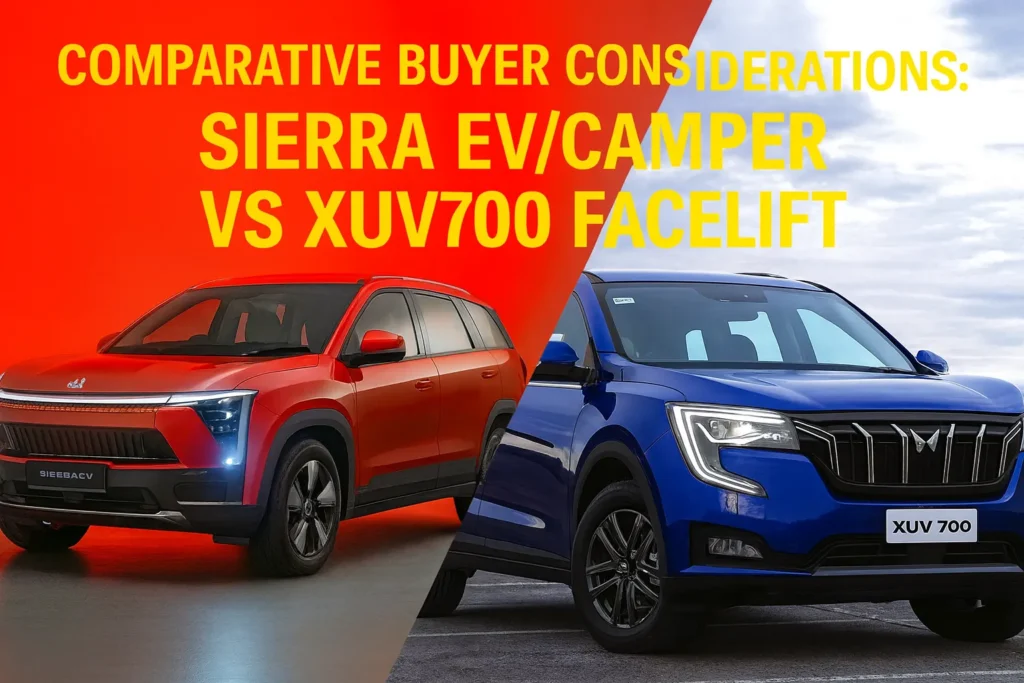
Comparative buyer considerations: Sierra EV/Camper vs XUV700 facelift
Use case and buyer profile
- Tata Sierra (EV / Camper) — likely to appeal to buyers seeking style, personality and lifestyle functionality. An EV Sierra would attract urban and suburban buyers wanting distinctive EVs; a camper/adventure derivative would draw outdoors-oriented buyers who prioritize modularity and weekend use.
- Mahindra XUV700 facelift — designed for buyers who want a conventional mid-size family SUV with strong value, features and proven service networks.
Cost of ownership and practicality
- EV Sierra (if offered) would bring lower running costs and potential tax/fee incentives for EVs in certain states — but buyers must weigh higher upfront cost, charging infrastructure, and real-world range for touring or camper use.
- XUV700 facelift keeps the benefits of established ICE/strong-hybrid ecosystems: predictable fuel availability, established servicing channels, and known resale values.
Resale and brand considerations
- Tata has improved its perceived reliability and resale in recent years thanks to strong product cycles; an EV Sierra would benefit from Tata’s EV ecosystem reputation.
- Mahindra enjoys a long dealer and aftermarket network in India, which is a plus for long-term servicing and parts availability.
Technical expectations and likely feature sets
For a Tata Sierra EV (speculative but realistic expectations)
If Tata offers an EV version of the Sierra, pragmatic expectations include:
- Dedicated battery pack and motor options shared with Tata’s existing EV platforms (for economies of scale).
- Typical urban-centric range targets of 300–400 km (WLTP/real-world dependent).
- Fast-charging compatibility and AC home charging options.
- Styling cues and interior packaging optimized for a lifestyle persona rather than pure utility.
For a Sierra camper edition (dealer or factory)
- Modular interior furniture and storage solutions.
- Roof or pop-top tent options, auxiliary power outlets, and off-grid electrical setups.
- Minor suspension and tyre upgrades for light off-road capability.
For the XUV700 facelift (likely manufacturer features)
- Revised front-end, LED matrix or signature lighting tweaks, and updated bumpers.
- Infotainment and connected car updates, perhaps expanded OTA capability.
- Possible ADAS upgrades (lane assist, adaptive cruise, enhanced traction modes).
- New trim levels or special editions to stimulate market interest.
Market positioning and pricing outlook
Pricing strategy in a rate-cut environment
With GST reductions affecting several Mahindra models, pricing dynamics are in flux. Key points:
- Short-term promotional window: Manufacturers and dealers often combine tax benefits with festive offers to drive year-end sales.
- Variant-by-variant changes: Savings are not uniform — buyers should request final on-road quotations including state taxes, registration and insurance.
- Competitor responses: Tata and other OEMs may adjust pricing or launch limited offers to remain competitive.
Where value lies
- Tata Sierra (if EV/camper options appear): value for buyers prioritizing uniqueness and lifestyle functionality.
- XUV700 facelift: value for buyers prioritizing mainstream utility, features, and established aftersales.
Safety, warranty and service considerations
Safety first
Both Tata and Mahindra have increasingly emphasized safety across their lineups. Buyers should consider:
- Standard safety equipment on chosen variants (airbags, ESC, ABS, ISOFIX).
- ADAS features availability and real-world usefulness.
- Structural ratings — safety testing results and crash ratings where available.
Warranty and servicing
- EV ownership: check battery warranty and warranty terms for high-voltage components.
- ICE ownership: check extended warranty offers, service packages, and roadside assistance options.
Real-world buyer checklist
If you’re actively shopping and trying to choose between a Sierra EV/camper (if available) or a facelifted XUV700, here’s a practical checklist:
- Define primary use: daily commute vs weekend overlanding vs family travel.
- Total cost of ownership: include fuel/energy costs, servicing, expected insurance, and potential incentives.
- Variant comparison: list must-have features (sunroof, ADAS, infotainment, third row, etc.).
- On-road pricing: ask for detailed quotes including state taxes, registration and any dealer markups.
- Charging & range planning (for EVs): check local charger availability and home charging feasibility.
- Test drive both: pay attention to ergonomics, visibility, ride comfort, and infotainment usability.
- After-sales network: check dealer proximity and service reviews in your city.
- Resale expectations: research historical resale values for similar models.
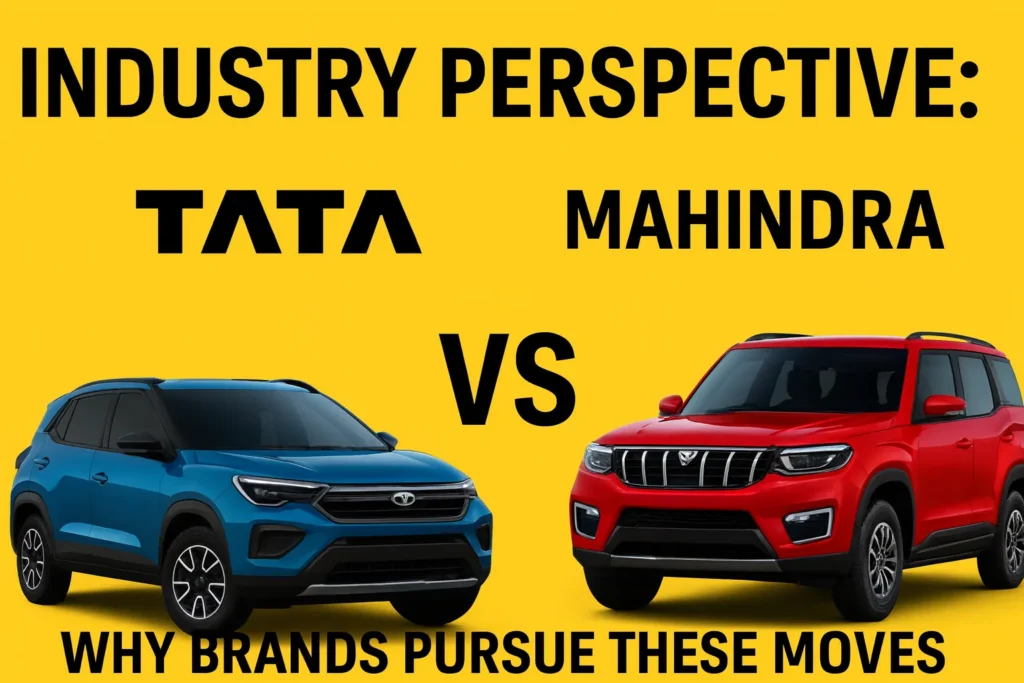
Industry perspective: why brands pursue these moves
Tata: diversification and image
Tata’s use of the Sierra nameplate reflects a strategic effort to blend heritage branding with modern product differentiation. EV and lifestyle derivatives help the brand:
- Reach new buyer segments (EV early adopters, lifestyle buyers).
- Showcase platform versatility.
- Reinforce Tata’s EV credentials.
Mahindra: refreshing a core seller
The XUV700 facelift helps Mahindra:
- Extend product lifecycle without full redevelopment costs.
- Maintain showroom interest with updated features and trims.
- Respond to competitive pressure from newer rivals and changing buyer tastes.
Policy & market nudges
GST changes and festival-season purchasing patterns create windows of opportunity for brands to convert interest into sales. Quick price pass-throughs, like Mahindra’s September action, are designed to capture immediate demand and leverage positive consumer sentiment.
Final verdict: what prospective buyers should do now
- If you want novelty and lifestyle flair: watch for official Tata announcements regarding EV and camper editions of the Sierra. If a factory EV or camper package is released, early reviews and range/feature confirmations will matter more than initial hype.
- If you want an established, feature-rich family SUV: the Mahindra XUV700 facelift is likely to remain a compelling choice. Look for updated tech and pricing, and shop for variant deals after GST adjustments.
- Always verify final on-road pricing: manufacturer statements and GST changes create shifting windows; ask dealers for itemized quotations and confirm whether savings have already been applied to ex-showroom prices.
Appendix: Quick reference — Mahindra GST savings (example figures from CarDekho coverage)
Note: savings vary by variant and region. Figures below were reported by CarDekho during the September 2025 GST revision period as examples of passed-on benefits for Mahindra models:
- Bolero / Bolero Neo: ~₹1.27 lakh (example)
- XUV 3XO (Petrol): ~₹1.4 lakh (example)
- XUV 3XO (Diesel): ~₹1.56 lakh (example)
- THAR RWD (Diesel): ~₹1.35 lakh (example)
- THAR 4WD / Scorpio Classic: ~₹1.01 lakh (example)
- Scorpio N: ~₹1.45 lakh (example)
- Thar Roxx / XUV700: savings in the range of ~₹1.01–1.45 lakh depending on variant and cess classification
Buyers should confirm exact amounts with dealerships as prices vary by variant and state taxes.
Closing note
India’s SUV market is dynamic and rapidly evolving. The revived Tata Sierra — with EV and camper possibilities — represents product diversification and lifestyle segmentation, while the Mahindra XUV700 facelift demonstrates how established models remain relevant through targeted updates and price realignments. Combined with recent GST changes that are already affecting on-road costs, buyers in late-2025 and early-2026 should be deliberate: verify variant specifications, confirm final pricing, and prioritize features aligned with real driving needs.
If you’d like, I can now:
- Convert this into a WordPress-ready post with H1/H2 markup and SEO tags embedded,
- Create a 1300×700 featured image concept (symbolic poster: Sierra silhouette + XUV700 outline + price tag/GST graphic), or
- Produce short social captions and a 50-word excerpt for your homepage.