

The Hidden Threat Orbiting Near Earth
While humanity has made enormous strides in space exploration, NASA scientists are now warning that thousands of undetected asteroids capable of destroying entire cities may be quietly orbiting near Earth. Unlike the massive “planet killers” that could cause global extinction — which scientists say are largely tracked — the real concern lies in mid-sized asteroids roughly 140 meters (about 500 feet) wide. These so-called “city killers” are large enough to cause devastating regional destruction but small enough to evade many detection systems. According to planetary defense experts, there may be as many as 25,000 of these near-Earth objects (NEOs), and we have only identified about 40 percent of them. That leaves thousands potentially lurking in space, undetected and unpredictable.
Why NASA Is Losing Sleep Over Asteroids

Kelly Fast, NASA’s planetary defense officer, recently admitted that what keeps her awake at night is not the asteroids we know about, but the ones we don’t. Small rocks burn up in Earth’s atmosphere regularly, and giant extinction-level asteroids are rare and mostly mapped. But mid-sized asteroids present a dangerous blind spot. These objects can travel in similar orbital paths as Earth, often hiding in the glare of the Sun, making them difficult to spot with traditional ground-based telescopes. If one were to approach from a sunward direction, we might not detect it until it is too late to act. The fear is not global annihilation — it is sudden, regional catastrophe without warning.
What Exactly Is a “City-Killer” Asteroid?

A city-killer asteroid typically measures between 100 and 300 meters in diameter. While smaller than the asteroid that wiped out the dinosaurs 66 million years ago, it is still powerful enough to flatten an entire metropolitan area. Scientists estimate that an asteroid around 140 meters wide could release energy equivalent to hundreds of nuclear bombs upon impact. The blast wave alone could destroy buildings, ignite fires, and cause mass casualties across a wide region. Unlike extinction-level impacts that are statistically rare, city-killer impacts are believed to occur every few thousand years — meaning they are infrequent but not impossible within human timescales.
How Many Dangerous Asteroids Are Out There?
NASA estimates that around 25,000 near-Earth asteroids in the city-killer size range exist. However, only about 10,000 have been discovered and cataloged so far. That means roughly 15,000 remain unaccounted for. These objects orbit the Sun and occasionally cross Earth’s orbital path. The incomplete detection rate is alarming because planetary defense relies heavily on early discovery. The earlier we detect a threatening asteroid, the more time we have to calculate its trajectory and possibly attempt deflection strategies. Without detection, there is no defense plan.
The Limits of Current Detection Technology
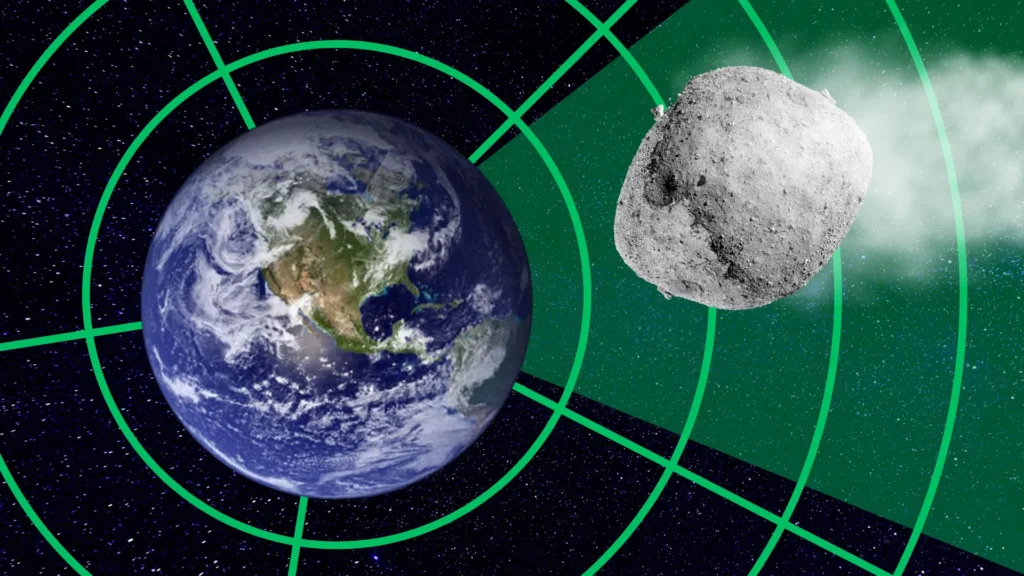
Most asteroid detection relies on ground-based optical telescopes that scan the night sky. However, these telescopes depend on reflected sunlight. Dark asteroids or those approaching from the direction of the Sun are extremely difficult to see. This is why many mid-sized asteroids remain hidden. Scientists compare it to trying to spot a dark pebble against a bright spotlight. Even the most advanced telescopes struggle under these conditions. Additionally, some asteroids have irregular shapes and slow rotation speeds, making their signatures even harder to identify.
The Near-Earth Object Surveyor: A New Hope
To address detection gaps, NASA is developing the Near-Earth Object (NEO) Surveyor space telescope. Unlike ground-based systems, this telescope will use infrared technology to detect the heat signatures of asteroids instead of relying solely on reflected sunlight. Because asteroids absorb sunlight and emit heat, infrared sensors can identify even dark objects hidden in space. The mission aims to dramatically increase the detection rate of city-killer asteroids and provide earlier warnings of potential threats. Scientists believe this telescope could help find up to 90 percent of dangerous near-Earth objects over time.
The DART Mission: Proof of Concept
In 2022, NASA successfully tested the Double Asteroid Redirection Test (DART) mission. The spacecraft intentionally crashed into Dimorphos, a small moonlet orbiting the asteroid Didymos, at nearly 14,000 miles per hour. The impact successfully altered the asteroid’s orbit, proving that kinetic impactors could potentially redirect threatening space rocks. The mission marked a historic milestone in planetary defense. For the first time, humanity demonstrated the ability to intentionally change the trajectory of a celestial object.
Why DART Isn’t a Ready-Made Solution

Despite DART’s success, scientists caution that we do not currently have deflection spacecraft ready for immediate deployment. Building and launching such missions requires years of preparation. If a city-killer asteroid were discovered with only a short warning window, there may not be enough time to design, build, and launch a deflection system. Planetary defense expert Dr. Nancy Chabot has emphasized that no backup DART spacecraft is sitting on standby. Funding and political priorities also limit how quickly such systems could be mobilized.
Could Nuclear Weapons Save Us?
Some experts have proposed using nuclear devices to deflect or fragment a dangerous asteroid, similar to the scenario depicted in Hollywood films like Armageddon. While technically possible, nuclear deflection carries risks. Fragmenting an asteroid could create multiple impact threats instead of one. Moreover, international treaties and space law complicate the use of nuclear weapons in space. Scientists generally prefer kinetic impactors or gravity tractors — spacecraft that slowly alter an asteroid’s path using gravitational pull — but these methods require significant lead time.
Asteroid 2024 YR4 and Recent Close Calls
One example that captured attention was asteroid 2024 YR4, initially estimated to have a small chance of impacting Earth in 2032. Later calculations ruled out an Earth collision but suggested a potential lunar impact. While the risk to Earth diminished, the episode demonstrated how quickly impact probabilities can evolve as new data becomes available. It also underscored the importance of continuous monitoring and rapid trajectory refinement.
Funding Gaps in Planetary Defense
Planetary defense programs compete for funding with other space missions and scientific initiatives. Although the threat of asteroid impacts is scientifically recognized, it often struggles to gain sustained political urgency. Critics argue that investment in planetary defense is modest compared to the potential consequences of an impact. Experts believe that establishing permanent deflection systems and rapid-response spacecraft would require significantly higher and more consistent funding.
How Often Do City-Killers Strike?
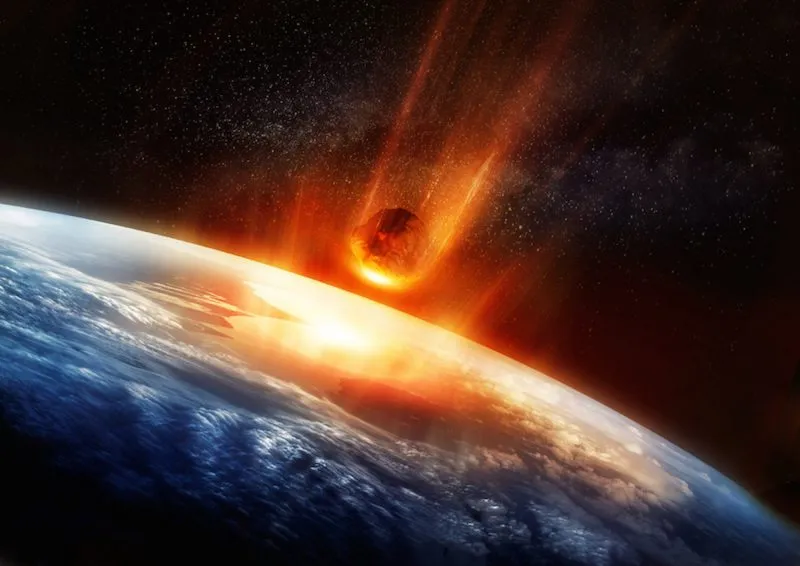
Statistical models suggest that city-killer impacts occur roughly once every few thousand years. While that may seem distant, it is not negligible. The Tunguska event of 1908, believed to have been caused by a smaller asteroid or comet fragment, flattened over 800 square miles of Siberian forest. Had it struck a populated city, the destruction would have been catastrophic. Tunguska serves as a reminder that even relatively small space objects can cause immense damage.
Are We Truly Defenseless?
The reality is nuanced. We are not completely defenseless — we have detection systems, tracking programs, and proof-of-concept deflection technology. However, we are not fully prepared either. Without comprehensive detection coverage and rapid-response capability, humanity remains vulnerable to surprise impacts. The greatest weakness is the unknown — asteroids we have not yet discovered.
What Needs to Happen Next
Experts agree that improving detection is the first priority. Expanding infrared observation, enhancing global telescope networks, and investing in data analysis systems are critical steps. Additionally, developing ready-to-launch deflection missions would significantly strengthen planetary defense readiness. International collaboration will also be essential, as asteroid threats are global in nature and require coordinated responses.
Balancing Fear with Scientific Reality
While headlines about “city-killer asteroids” can sound apocalyptic, scientists emphasize that panic is not warranted. The probability of a major impact in any given year is extremely low. However, preparation remains essential. As Kelly Fast noted, the concern lies not in certainty but in uncertainty. Responsible monitoring, funding, and planning can significantly reduce future risks.
Conclusion: A Manageable but Real Threat
City-killer asteroids represent one of the few natural disasters that humanity could theoretically prevent — if given enough warning and preparation. NASA’s growing concern reflects not immediate doom, but the need for vigilance. With improved detection systems like the NEO Surveyor and continued investment in deflection technology, Earth’s planetary defense strategy can become stronger. The question is not whether an asteroid will ever threaten a city again — history suggests it will — but whether we will be ready when it does.