


Introduction: A Deal That Redefines Everyday Brands
In one of the biggest consumer goods mergers of the decade, Kimberly-Clark Acquires Kenvue — bringing together household brands like Huggies, Kleenex, Tylenol, and Neutrogena — in a $48.7 billion cash and stock deal that could redefine the global consumer health market.
This deal isn’t just about scale. It’s a calculated bet on the growing convergence of personal care and healthcare brands, as companies race to serve consumers who are more health- and wellness-focused than ever before.
Who Are Kimberly-Clark and Kenvue?
Kimberly-Clark
Founded in 1872 and headquartered in Irving, Texas, Kimberly-Clark is a leader in personal hygiene and household products.
Its global portfolio includes:
- Huggies (baby care)
- Kleenex (tissues)
- Scott (paper products)
- Kotex (feminine hygiene)
The company generated $20.4 billion in revenue in 2024, according to its annual report.
Kenvue
Kenvue was spun off from Johnson & Johnson in 2023, marking J&J’s largest corporate restructuring in over a century.
It holds more than 25 trusted healthcare brands, including:
- Tylenol, Motrin – pain relief
- Band-Aid, Listerine – first aid and oral care
- Aveeno, Neutrogena – skincare
As of late 2025, Kenvue’s annual revenue stood at approximately $15 billion, but its stock had dropped nearly 35% since IPO, partly due to market skepticism and ongoing product litigations.
What Does the Deal Involve?
Under the merger terms:
- Kenvue shareholders will receive $3.50 in cash and 0.14625 Kimberly-Clark shares for each Kenvue share held.
- The total value equals roughly $21.01 per Kenvue share (based on November 2025 closing prices).
- The combined company will have estimated annual revenue of $32 billion and EBITDA of around $7 billion.
- Kimberly-Clark shareholders will own about 54% of the new entity, and Kenvue shareholders about 46%.
Mike Hsu, CEO of Kimberly-Clark, stated:
“This acquisition reflects our long-term vision — uniting science, care, and trust across generations. Together, we will reach billions of consumers through every stage of life.”
Why Kimberly-Clark Is Making This Move
The acquisition may look bold, but the logic behind it is strategic and clear.
1. Expanding into Healthcare
Kimberly-Clark is traditionally known for personal and household products, but consumer behavior has shifted toward preventive health and hygiene.
By acquiring Kenvue, the company gains instant access to the over-the-counter (OTC) health and wellness segment, worth more than $380 billion globally (Statista, 2025).
2. Brand Synergy
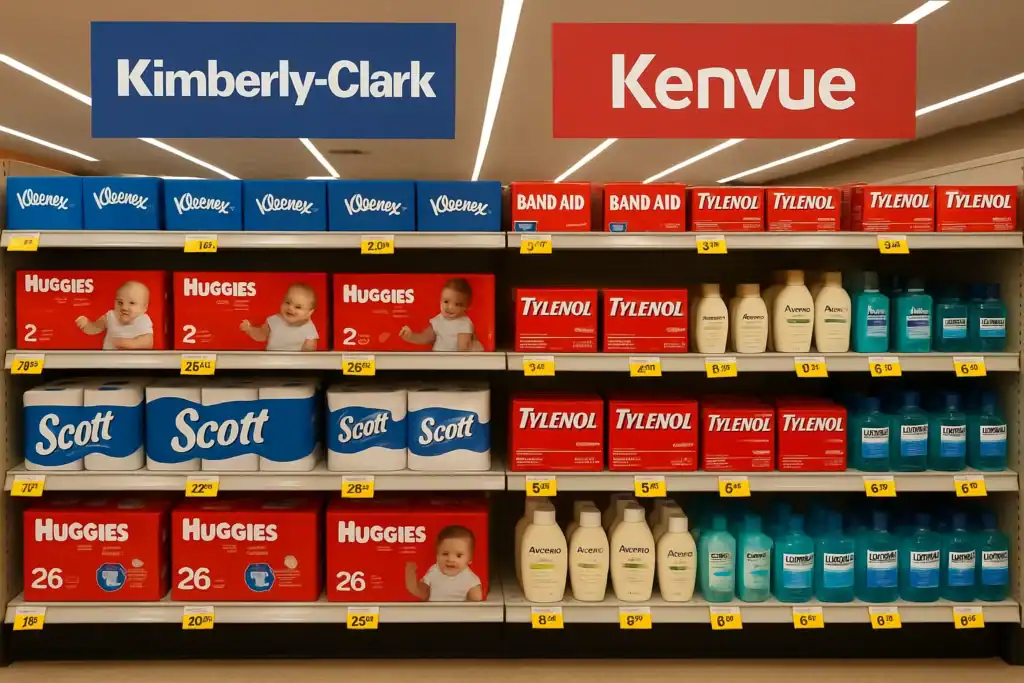
Both companies share shelf space in retail stores — from baby aisles to medicine cabinets. The merger aligns complementary categories:
- Huggies + Johnson’s Baby → Unified baby care portfolio
- Kleenex + Tylenol → Health and hygiene ecosystem
- Neutrogena + Kotex → Skincare and wellness crossover
3. Cost Synergies
Kimberly-Clark projects $1.9 billion in annual cost synergies within three years post-merger through:
- Streamlined supply chains
- Shared R&D
- Consolidated marketing
4. Portfolio Diversification
The deal reduces dependency on low-margin categories like tissue paper, strengthening Kimberly-Clark’s premium health product footprint.
Challenges and Controversies
No major merger comes without its complications.
1. Tylenol Litigation Risks
Kenvue faces lawsuits over claims linking acetaminophen (Tylenol) use during pregnancy to autism or ADHD.
While medical consensus, including the FDA and U.S. Health and Human Services, states there’s no conclusive evidence of harm, investor caution remains.
2. Talc Powder Lawsuits
Kenvue is also navigating legacy legal exposure tied to talc-based baby powder products, inherited from Johnson & Johnson’s consumer division.
3. Integration Complexity
Merging two giants with distinct cultures and global operations will require careful execution. Analysts estimate 12–18 months before full integration benefits materialize.
What This Means for the Consumer Market
This deal could reshape the consumer staples landscape globally.
| Company | 2025 Revenue | Key Brands |
|---|---|---|
| Procter & Gamble (P&G) | $84B | Pampers, Gillette, Olay |
| Kimberly-Clark + Kenvue | $32B (combined) | Huggies, Tylenol, Aveeno, Kleenex |
| Unilever | $62B | Dove, Lifebuoy, Vaseline |
Even though P&G remains much larger, this merger narrows the competitive gap and allows Kimberly-Clark to enter new high-margin segments — especially skincare and OTC health.
Industry Reactions
- Barclays Analysts noted: “While the price tag is steep, Kimberly-Clark is buying a powerful brand portfolio at a valuation discount — the upside lies in synergy realization.”
- Investors, however, have been cautious: Kimberly-Clark’s stock fell 13% after the announcement, while Kenvue jumped nearly 20%, reflecting confidence in Kenvue’s future value.
- Market Strategists say this could set off a wave of consolidation among consumer healthcare firms, as companies seek scale to combat rising input costs and shifting consumer patterns.
The Bigger Picture: A Shift Toward Health-Driven Consumption
This merger symbolizes a broader post-pandemic evolution — consumers now value health, hygiene, and trust more than ever.
From sanitizers to supplements, the line between consumer goods and healthcare has blurred.
Kimberly-Clark’s pivot reflects how legacy companies must redefine relevance by aligning with evolving global health consciousness.

Deal Snapshot Summary
| Metric | Value |
|---|---|
| Deal Size | $48.7 billion (cash + stock) |
| Expected Closing | Second half of 2026 |
| Annual Revenue (Projected) | $32 billion |
| Cost Synergies | $1.9 billion over 3 years |
| Headquarters | Irving, Texas |
| CEO | Mike Hsu (Kimberly-Clark) |
Frequently Asked Questions (FAQ)
1. Why is this deal significant?
Because it merges two of the world’s most recognizable consumer health and hygiene portfolios, creating a strong challenger to P&G and Unilever.
2. Will consumers see any change in product availability or pricing?
Not immediately. However, over time, integration may lead to streamlined product lines and new hybrid innovations (e.g., baby care products with dermatological benefits).
3. What’s the biggest risk for Kimberly-Clark?
Litigation uncertainty around Tylenol and the challenge of integrating two large organizations with overlapping product lines.
4. How will this affect the market?
Expect stronger competition in health and hygiene categories, potential price stabilization, and new product innovations leveraging combined R&D.
5. Who benefits most from the merger?
In the long run, consumers may gain access to better, science-backed products — while shareholders stand to benefit if the promised synergies are realized.
Key Takeaway
The Kimberly-Clark–Kenvue merger is more than a business deal — it’s a statement of intent.
It signals that the next era of growth in consumer goods will come not from household staples alone, but from products that combine trust, health, and innovation.
If executed right, this $48.7 billion move could turn Kimberly-Clark from a paper goods manufacturer into a global health-and-wellness powerhouse.