
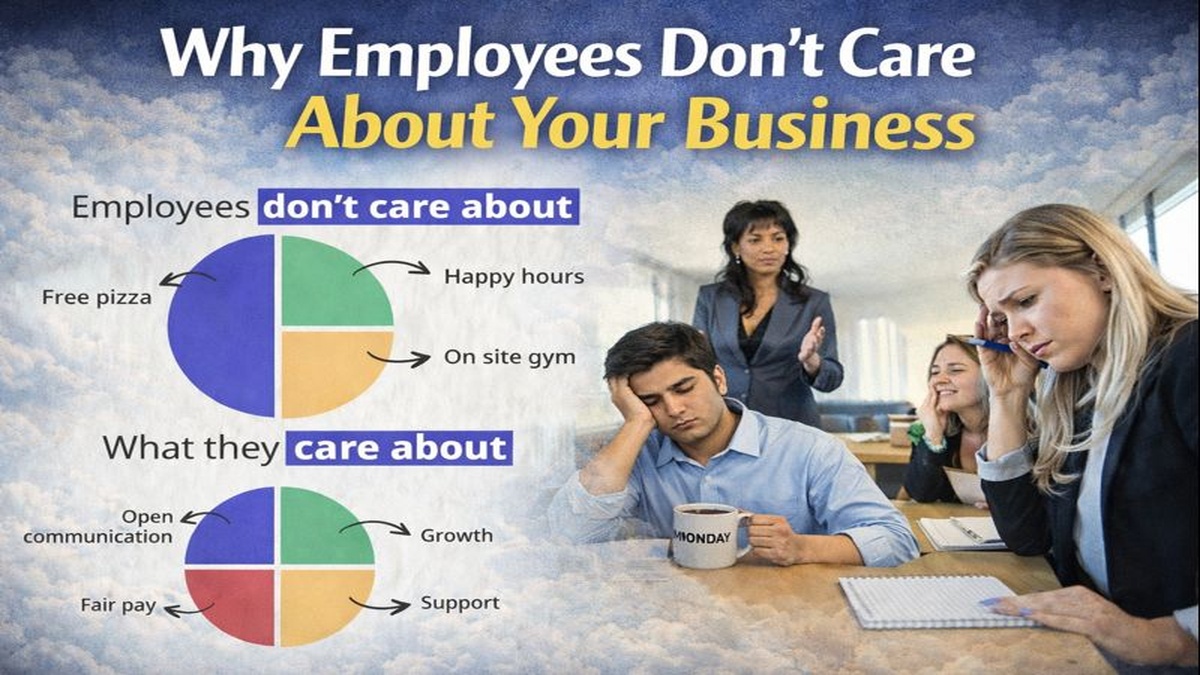
Why Employees Don’t Care About Your Business – And How to Fix It
If you are a business owner, startup founder, or manager, chances are you’ve asked yourself this painful question:
“Why don’t my employees care about my business?”
They arrive late.
They do only the bare minimum.
They avoid responsibility.
They show no emotional attachment.
And the moment they find a better opportunity, they leave.
This situation is frustrating—especially when you are the one who invested money, time, energy, and risk into building the business.
But here’s the uncomfortable truth:
Employees don’t automatically care about a business just because they work there.
In this article, we’ll break down:
- The real reasons employees don’t care
- Common leadership mistakes
- Psychological truths about motivation
- And most importantly, practical solutions to make employees engaged, loyal, and responsible
No theory. No fluff. Just reality.
The First Hard Truth: It’s Not Their Business

Let’s start with honesty.
You started the business.
You took financial risks.
You deal with profits and losses.
Your employees didn’t.
For most employees, the relationship is simple:
“I give my time and skills. You give me a salary.”
Expecting employees to care about your business like an owner is unrealistic.
Why This Matters
Many business owners get emotionally hurt when employees don’t show the same passion. But passion comes from ownership, purpose, and reward—not job titles.
Solution
Instead of expecting ownership-level emotions:
- Create shared goals
- Offer responsibility with authority
- Let employees feel like contributors, not just workers
Salary Pays Bills, Not Loyalty
One of the biggest myths in business is:
“I pay them well, so they should care.”
Salary is important—but it only satisfies basic needs.
It does NOT automatically create:
- Loyalty
- Passion
- Initiative
- Emotional commitment
Once salary becomes “normal,” motivation disappears.
What Employees Actually Want
- Growth opportunities
- Recognition
- Respect
- Career security
- Meaning in work
Solution
Combine salary with:
- Clear growth paths
- Performance-based rewards
- Learning opportunities
- Appreciation
Lack of Respect Kills Motivation
Respect is not optional—it’s essential.
Many employees silently lose interest because of:
- Public humiliation
- Harsh language
- Constant criticism
- Being treated as replaceable
Even high salaries cannot compensate for daily disrespect.
Reality Check
An employee who feels disrespected will:
- Stop caring emotionally
- Do minimum work
- Mentally quit long before resigning
Solution
- Correct in private, appreciate in public
- Speak professionally
- Treat employees as adults, not machines
Employees Don’t Know Your Vision
Ask yourself honestly:
Do your employees know where your business is going in the next 3–5 years?
If not, they’re just doing tasks—not building a future.
Without vision:
- Work feels meaningless
- There is no emotional attachment
- Employees see the job as temporary
Solution
- Share company goals openly
- Explain how each role contributes
- Connect daily tasks to long-term success
When people see a future, they invest effort.
No Growth = No Interest
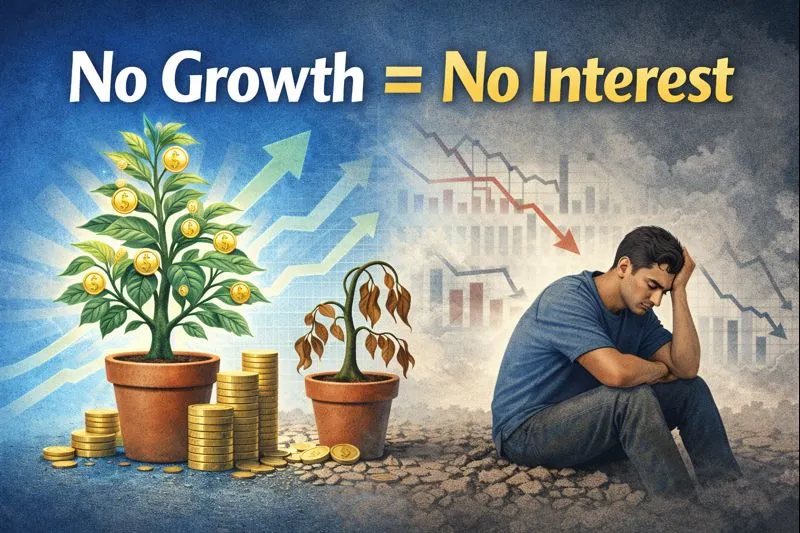
One of the biggest reasons employees stop caring is stagnation.
Same role.
Same salary.
Same routine.
For years.
At that point, employees aren’t working—they’re surviving.
Types of Growth Employees Expect
- Salary growth
- Skill development
- Promotion or role expansion
- Increased responsibility
Solution
- Create career ladders
- Offer training programs
- Assign challenging projects
- Reward improvement, not just results
Micromanagement Destroys Ownership
Constant supervision sends one message:
“I don’t trust you.”
When employees are micromanaged:
- Creativity dies
- Responsibility disappears
- Decision-making stops
They stop caring because they are not allowed to own anything.
Solution
- Set expectations clearly
- Measure outcomes, not every move
- Give autonomy with accountability
Trust creates ownership.
Employees Feel Like Just Numbers
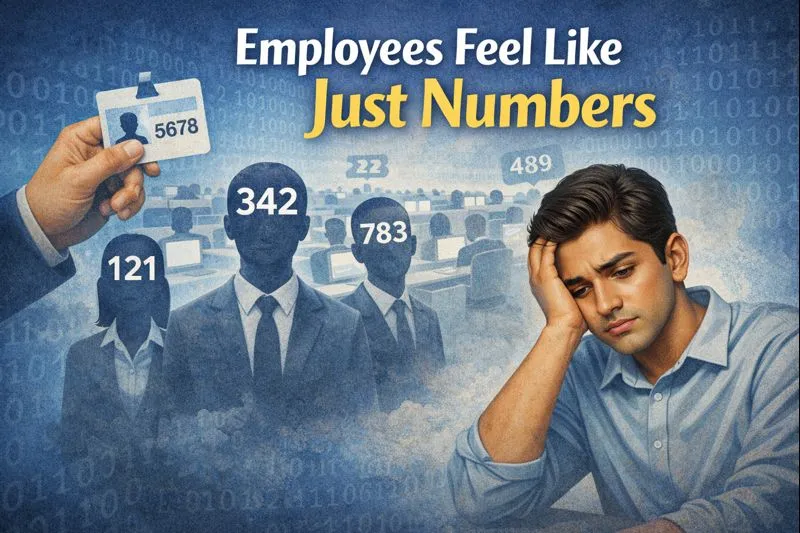
When businesses focus only on output, deadlines, and targets—employees feel invisible.
Employees are human beings:
- They have families
- They face stress
- They experience burnout
Ignoring this reality creates emotional detachment.
Simple Human Actions Matter
- Asking how they are
- Understanding occasional problems
- Showing empathy
Solution
A company that cares about people gets people who care about the company.
Appreciation Is Rare but Powerful
Many business owners believe:
“They are paid to do their job—why should I appreciate them?”
Here’s the truth:
- Appreciation costs nothing
- But its impact is priceless
Employees crave recognition more than money in many cases.
Solution
- Say “good job”
- Celebrate small wins
- Recognize effort, not just success
A recognized employee becomes a responsible employee.
Poor Leadership Is the Real Problem
If most of your employees don’t care, it’s not an employee problem—it’s a leadership problem.
Leadership failures include:
- Unclear expectations
- No feedback system
- No accountability structure
- No motivation strategy
Solution
Improve leadership before blaming employees.
Strong systems create strong teams.
Employees Care About Leaders, Not Companies
Here’s a powerful truth:
Employees don’t leave companies.
They leave managers.
And similarly:
Employees don’t care about businesses.
They care about leaders.
If employees respect you, trust you, and feel valued by you—they will care about your business.
How to Make Employees Care About Your Business (Action Plan)
Build Trust
Be honest. Be consistent. Keep promises.
Communicate Clearly
Define roles, goals, and expectations.
Offer Growth
No growth = no future.
Respect Always
Professional behavior builds loyalty.
Create Ownership
Give responsibility, not just instructions.
Appreciate Regularly
Recognition fuels motivation.
Final Answer: Why Employees Don’t Care About Your Business

Employees don’t care because:
- They don’t feel valued
- They don’t see growth
- They don’t feel respected
- They don’t feel connected
- They don’t feel trusted
Fix these—and everything changes.
Conclusion
Employees’ lack of interest is not the disease—it’s the symptom.
The real causes lie in:
- Leadership style
- Workplace culture
- Growth opportunities
- Emotional connection
When you fix the environment, employees automatically start caring.
Because people don’t give their best to companies—they give their best to leaders who value them.