


Andy Dick’s Hollywood Overdose Sparks New Concern About Addiction, Fame, and Recovery
On a bright December afternoon in Hollywood, what should have been an ordinary weekday became yet another troubling chapter in the long, public, and deeply complicated story of comedian Andy Dick. Photos obtained by multiple outlets revealed the 59-year-old entertainer slumped over a concrete staircase, unresponsive, as friends and passersby attempted to save his life. Within minutes, emergency responders arrived and administered Narcan, a lifesaving drug designed to reverse opioid overdoses.
The shocking scene spread rapidly across TMZ, the New York Post, and social media platforms—reigniting questions not only about Dick’s personal well-being but about the broader patterns of addiction, relapse, and public scrutiny that have followed him for decades.
The incident did not end in tragedy. Dick regained consciousness, refused hospitalization, and later confirmed simply that he was “alive and relieved.” But the moment nonetheless captured the fragile reality of substance-use disorders, the pressures of celebrity life, and the difficulty of addressing addiction when it unfolds under the glare of cameras.
This article examines what happened in Hollywood, what it reveals about Andy Dick’s long struggle with substance abuse, how first responders handled the situation, and why his story continues to resonate far beyond the borders of entertainment reporting.
A Public Emergency in Broad Daylight
According to eyewitness accounts, Andy Dick was seen “completely out of it,” his glasses lying on the ground, and his body limp as concerned individuals tried to rouse him. Several of Dick’s acquaintances immediately rushed toward him, yelling for him to wake up.
The photos, published by TMZ and later picked up by other outlets, show the gravity of the moment: Dick leaning against a wall, motionless, his normally animated expression replaced by blank stillness.
One bystander called for a dose of Narcan, which can rapidly reverse opioid-induced respiratory depression. The medication was administered quickly, and witnesses reported that Dick began responding within moments—consistent with how naloxone typically works during opioid-related emergencies.
Shortly afterward, units from the Los Angeles Fire Department (LAFD) and Los Angeles Police Department (LAPD) arrived at the scene. Officials later confirmed that they responded to an overdose involving a 59-year-old man but did not transport him to a hospital. This detail reflects a common challenge in overdose responses: once awakened by Narcan, many individuals decline further medical care.
Dick reportedly walked away after regaining consciousness. Hours later, he spoke briefly by phone, saying only that he was “OK,” without offering an explanation of what caused the medical emergency.
A Familiar Pattern: Addiction, Relapse, and a Public Struggle
For longtime fans and entertainment observers, the Hollywood incident feels tragically familiar. Andy Dick’s career has long been overshadowed by substance-use issues and a series of legal problems linked to intoxication, unpredictable behavior, and allegations of assault.
His history includes:
- A 2018 sexual battery incident involving an Uber driver, resulting in a 2022 conviction and a requirement to register as a sex offender.
- Multiple arrests for public intoxication, including a 2023 incident in Lake Elsinore where he was found disoriented and unregistered as required.
- A series of allegations in the early 2000s and 2010s that often centered around drug or alcohol use.
- Repeated attempts at rehabilitation, reported across interviews and entertainment news outlets.
While Dick has spoken about addiction in the past, describing it as a lifelong struggle, the latest incident highlights once again how persistent, unpredictable, and dangerous substance-use disorders can be—even for someone surrounded by friends, resources, and public attention.
Substance abuse experts note that relapse is not a sign of personal failure but a common, expected part of a chronic disease. For individuals with long-term opioid use, overdoses—both accidental and intentional—can occur multiple times before treatment stabilizes. Narcan may save a life in the moment, but it does not cure addiction or eliminate cravings.
This dynamic appears to be at the core of Dick’s ongoing challenges.
Why Narcan Matters: Understanding the Lifesaving Medication
The use of Narcan in Andy Dick’s case underscores its growing importance in responding to America’s opioid crisis.
Narcan (naloxone):
- Blocks opioid receptors in the brain, causing immediate reversal of overdose symptoms.
- Works within seconds to minutes, often restoring breathing and consciousness.
- Has no harmful effect if administered to someone not using opioids.
- Is increasingly available in public spaces, including schools, airports, music venues, and government buildings.
Public health authorities emphasize that widespread Narcan distribution is a crucial tool in reducing overdose fatalities. However, they also warn that naloxone’s effects wear off in 30 to 90 minutes. If opioids remain in the bloodstream, the individual can re-overdose, particularly if they refuse continued medical care—as Dick did.
This pattern, tragically, is well documented in emergency medicine.
Celebrity, Scrutiny, and the Burden of Public Struggles

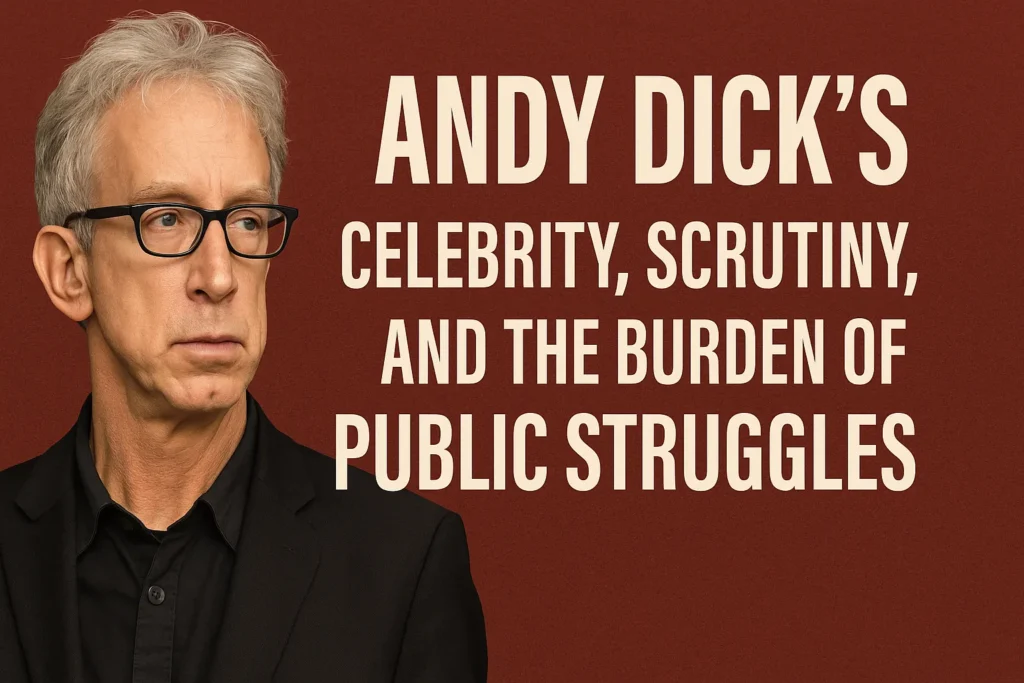
Andy Dick’s latest crisis brings renewed focus to the intersection between fame and addiction. Celebrity culture magnifies personal struggles, turning private battles into public narrative arcs that unfold in real-time.
There are three core challenges celebrities often face in such situations:
1. Public Pressure and Stigma
Celebrities have little control over the narrative of their struggles. Photos, headlines, and social media commentary shape perceptions instantly—often without nuance or context.
2. Enabling Environments
The entertainment industry can be both supportive and enabling. Fame can attract people who protect unhealthy habits or exploit vulnerable individuals for access or influence.
3. Difficulty Seeking Long-Term Treatment
Privacy becomes scarce. Even entering rehab can become media fodder. For some, this discourages seeking help until a crisis forces intervention.
Andy Dick’s story embodies these tensions. For decades, his behavior has been dissected by tabloids, fans, and critics alike. The public nature of his addiction may cast a long shadow over his career, but it also highlights how addiction is a disease that does not discriminate—even when lived in the spotlight.
A Career Overshadowed by Controversy
Before addiction took center stage in his public image, Andy Dick was widely known for:
- His role in NewsRadio, a 1990s sitcom beloved for its quirky humor.
- Appearances on The Ben Stiller Show and Less Than Perfect.
- Stand-up comedy tours known for blending chaotic unpredictability with sharp improvisational talent.
- Voicing characters in animated series and making cameo appearances in comedic films.
His comedic style—eccentric, high-energy, boundary-pushing—once defined his entertainment identity. But in recent years, it is his legal issues, personal controversies, and addiction struggles that have dominated headlines.
Many fans lament the loss of potential, noting that Dick once possessed a rare comedic spark. Others view his repeated misconduct as evidence of deeper problems left unaddressed. Either way, the Hollywood incident forces a reconsideration of what support and intervention look like for public figures battling chronic, life-altering disorders.
What Happens Next?
At this time, Dick has not shared details about whether he plans to seek treatment or change course after the overdose scare. Friends and former colleagues have expressed concern, with some privately advocating for a renewed commitment to rehabilitation.
Experts say that individuals who decline medical evaluation after Narcan administration remain at serious risk. Long-term recovery often requires:
- Medication-assisted treatment
- Behavioral therapy
- Supportive social environments
- Consistent follow-up care
- Removal from high-risk settings
For someone with Dick’s public profile, accessing such support can be complicated. But the Hollywood incident may serve as a turning point—or at least another reminder—of the urgency of sustained care.
The Larger Conversation: Addiction in America
Andy Dick’s overdose is not an isolated event. It is part of a larger national crisis marked by:
- Record-high opioid overdose deaths
- Increasing presence of synthetic opioids like fentanyl
- Rising rates of polysubstance abuse (opioids + stimulants)
- The ongoing need for accessible mental health services
Stories like Dick’s, while celebrity-focused, also highlight the vulnerability of millions of Americans facing addiction. They serve as reminders that relapse is common, stigma is dangerous, and compassionate intervention saves lives.
Media Ethics and the Line Between Concern and Exploitation

The wide circulation of photos showing Andy Dick unconscious raises important ethical questions:
- When does documenting an incident become exploitation?
- Do such images help raise awareness—or simply generate clicks?
- How should media balance public interest with a person’s dignity during crisis moments?
Public reaction has been mixed. Some viewers expressed alarm and sympathy, arguing that the images highlight the severity of addiction. Others criticized the intrusive nature of publishing such vulnerable moments.
Nevertheless, these visuals undeniably shaped public conversation, prompting discussions about mental health, addiction recovery, and the pressures of fame.
A Community Reaction: Concern, Fatigue, and Hope
In comment sections and social threads, reactions ranged from sadness to frustration. Many longtime fans expressed genuine fear for Dick’s life, noting that repeated crises point to dangerous downward trends. Some lamented that he has been “on this path for too long,” while others held out hope that this incident might become a catalyst for meaningful change.
There is, however, a growing recognition that the cycle of addiction does not resolve easily—or publicly. True recovery requires structure, support, and long-term commitment.
Whether this latest incident will prompt Andy Dick to seek sustained treatment remains unclear.
A Moment That Could Have Ended Differently
When the photos first surfaced, many feared the worst. Overdose scenes often end in tragedy before paramedics arrive. The fact that Andy Dick survived owes much to:
- Quick action by bystanders
- Availability of Narcan
- Rapid response from emergency services
This combination prevented the incident from becoming yet another entry in the expanding list of celebrity overdose deaths.
It is not an exaggeration to say the intervention saved his life.
Moving Forward: What Andy Dick’s Story Means Today
Andy Dick is not simply a celebrity with a troubled past—he is a person navigating a chronic illness that millions struggle with quietly. His overdose should serve as a reminder of several truths:
- Addiction is not a moral failure.
- Relapse is common, not shameful.
- Intervention and support save lives.
- Public figures need privacy and compassion as much as anyone else.
The Hollywood sidewalk incident was not merely a celebrity scandal. It was a human emergency. And it may become a moment that spurs renewed attention to addiction awareness, public health policy, and the need for better mental health support systems.
For Andy Dick, the path ahead remains uncertain. But for now, at least, he is still alive—a fact that seemed far from guaranteed until Narcan brought him back.
In a world where overdose deaths continue to rise, that alone is worth acknowledging.