
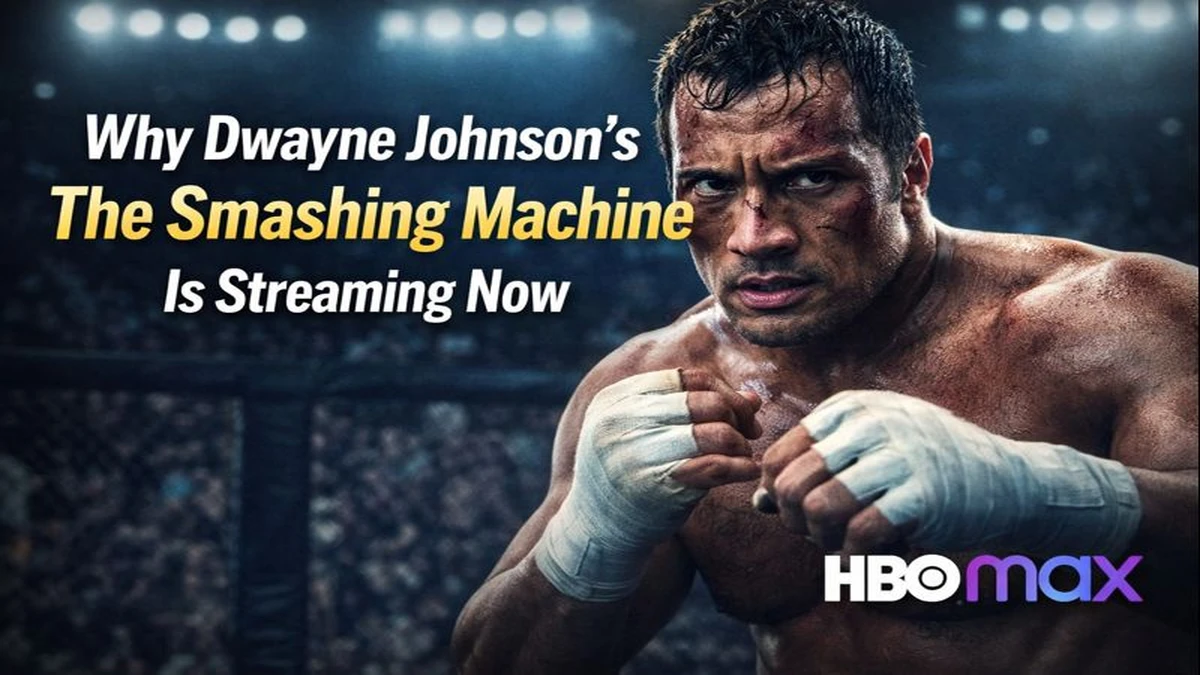
Dwayne Johnson’s ‘The Smashing Machine’ Brings Mark Kerr’s Painful Story to Streaming
The True Story Behind The Smashing Machine
The Smashing Machine is not just another sports movie—it is a deeply personal biographical drama based on the life of real-life mixed martial arts pioneer Mark Kerr, whose rise to fame in the late 1990s helped define the early era of professional MMA. Known as “The Smashing Machine,” Kerr was a dominant competitor, winning two UFC Heavyweight Tournament Championships and competing internationally in Japan’s Pride Fighting Championships. But behind the victories was a man battling opioid addiction, emotional isolation, and a growing conflict between his gentle personality and the violent profession that made him famous.

Dwayne Johnson’s Most Dramatic Career Transformation
In one of the boldest performances of his career, Dwayne Johnson steps completely outside his usual blockbuster persona to portray Mark Kerr. Gone is the invincible action hero; instead, Johnson delivers a restrained, emotionally layered performance that many critics describe as the most challenging role he has ever taken on. Using prosthetics, physical transformation, and subdued body language, Johnson becomes almost unrecognizable, emphasizing Kerr’s vulnerability rather than his power, and proving his ability to “disappear” into a character.
Why the Film Is Called The Smashing Machine
The title comes directly from Kerr’s nickname during his MMA career, but it also reflects the emotional core of the story. While Kerr was known for physically smashing opponents in the ring, the film explores how addiction, fame, and internal conflict were slowly smashing his personal life. The title was first popularized by the 2002 HBO documentary of the same name, which revealed the darker realities of early MMA culture and Kerr’s struggles behind the scenes.
A Film Inspired by the 2002 HBO Documentary
The movie draws inspiration from the original HBO documentary The Smashing Machine, which aired in 2002 and shocked audiences by showing the raw, unfiltered reality of Mark Kerr’s life. That documentary helped expose the physical and psychological toll of MMA at a time when the sport was still fighting for mainstream legitimacy. The new film expands on that foundation, using dramatic storytelling to explore the emotional cost of painkillers, fame, and fractured relationships.
The Role of Addiction in Mark Kerr’s Life
One of the most powerful elements of The Smashing Machine is its unflinching portrayal of opioid addiction. Kerr’s reliance on painkillers is shown not as a moral failing, but as a consequence of constant physical damage, pressure to perform, and a lack of support systems in early MMA. The film makes it clear that Kerr’s addiction was intertwined with the sport itself, where injuries were routine and mental health resources were nearly nonexistent.

Emily Blunt’s Performance as Dawn Staples
Emily Blunt stars as Dawn Staples, Kerr’s longtime partner, whose relationship with him becomes increasingly strained as addiction and emotional distance take hold. While Kerr is physically dominant in the ring, the film shows how powerless he often feels in his personal life, and Dawn becomes both a source of love and a mirror reflecting the cost of his self-destruction. Her character represents the emotional fallout experienced by those closest to athletes struggling with addiction.
How the Film Depicts Early MMA Culture
The Smashing Machine offers a rare look at the chaotic early days of professional MMA, when rules were inconsistent, fighter safety was secondary, and the sport was frequently criticized for being too violent. The film contrasts the glamour of international competitions with the brutal reality of physical punishment, emphasizing how fighters like Kerr helped build a multibillion-dollar industry while paying a heavy personal price.
Why the Movie Struggled at the Box Office
Despite strong performances and critical discussion, The Smashing Machine struggled commercially, earning only around $6 million during its theatrical run. Analysts point to its dark tone, lack of traditional sports-movie triumph, and focus on addiction rather than victory as reasons why it failed to attract mainstream audiences. Unlike feel-good sports dramas, this film intentionally avoids easy inspiration in favor of emotional honesty.
Dwayne Johnson’s Personal Connection to the Role
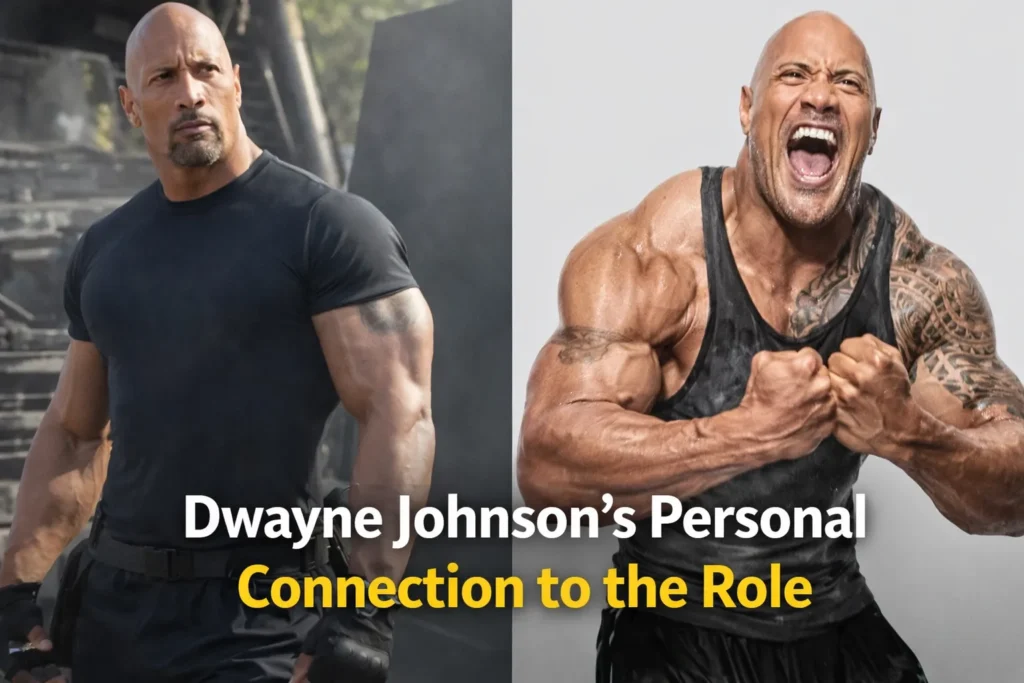
Johnson has openly stated that playing Mark Kerr changed his life. In interviews and social media posts, he explained that the role allowed him to explore vulnerability in ways he never had before. Rather than chasing box-office success, Johnson emphasized the importance of commitment to storytelling, saying that while he can’t control ticket sales, he can control how deeply he commits to a performance.
Benny Safdie’s Gritty Direction Style
The film is directed by Benny Safdie, known for intense, realism-driven storytelling. Safdie avoids traditional sports-movie clichés, focusing instead on internal conflict, quiet moments, and psychological tension. Fight scenes are filmed from unsettling angles, emphasizing discomfort rather than spectacle, reinforcing the film’s message that violence carries lasting consequences.
When and Where to Watch The Smashing Machine
The Smashing Machine officially began streaming on HBO Max on January 23, 2026. New releases typically drop at 3:01 a.m. ET / 12:01 a.m. PT, making it available to subscribers worldwide. The film also aired on HBO’s television channel shortly after its streaming debut.
Other Platforms Where the Film Is Available
In addition to HBO Max, the film is available for digital purchase and rental on platforms such as Amazon Prime Video, Apple TV, and Fandango at Home. This wide availability allows viewers to choose between streaming subscriptions or one-time rentals.
Is The Smashing Machine a True Story?
Yes, the film is firmly rooted in real events from Mark Kerr’s life, though certain moments are dramatized for narrative clarity. Kerr himself has acknowledged that while the movie condenses timelines and relationships, it accurately reflects the emotional truth of his experiences, particularly his addiction struggles and conflicted feelings about fighting.
Critical Reception and Audience Reaction
While the film did not become a box-office hit, critics largely praised Johnson’s performance and the film’s emotional depth. Many reviewers noted that the movie is difficult to watch at times, but intentionally so, arguing that its refusal to glamorize violence or addiction is one of its greatest strengths. Audience reactions have been mixed, with some viewers appreciating its honesty and others finding it emotionally heavy.
Why the Film Matters More on Streaming
The move to streaming has given The Smashing Machine a second life. On HBO Max, the film is reaching audiences who may have skipped it in theaters but are now discovering it as a serious, character-driven drama. Streaming allows viewers to engage with the film on their own terms, making its slower, introspective pace more accessible.
The Legacy of Mark Kerr Today
Today, Mark Kerr’s story stands as both a cautionary tale and a testament to survival. His struggles helped spark conversations about fighter safety, addiction, and mental health in combat sports. By bringing his story to a wider audience, The Smashing Machine ensures that Kerr’s legacy is not just about victories, but about the human cost of being a pioneer.
Final Thoughts: Why You Should Watch
The Smashing Machine is not an easy watch, but it is an important one. Through a fearless performance by Dwayne Johnson and a raw portrayal of Mark Kerr’s life, the film challenges audiences to rethink how we define success, strength, and heroism. Now streaming on HBO Max, it stands as one of the most honest sports biopics in recent years.