
Trump, Bad Bunny, and the Most Divisive Super Bowl Halftime Show Ever
Introduction: When Music, Politics, and the Super Bowl Collided
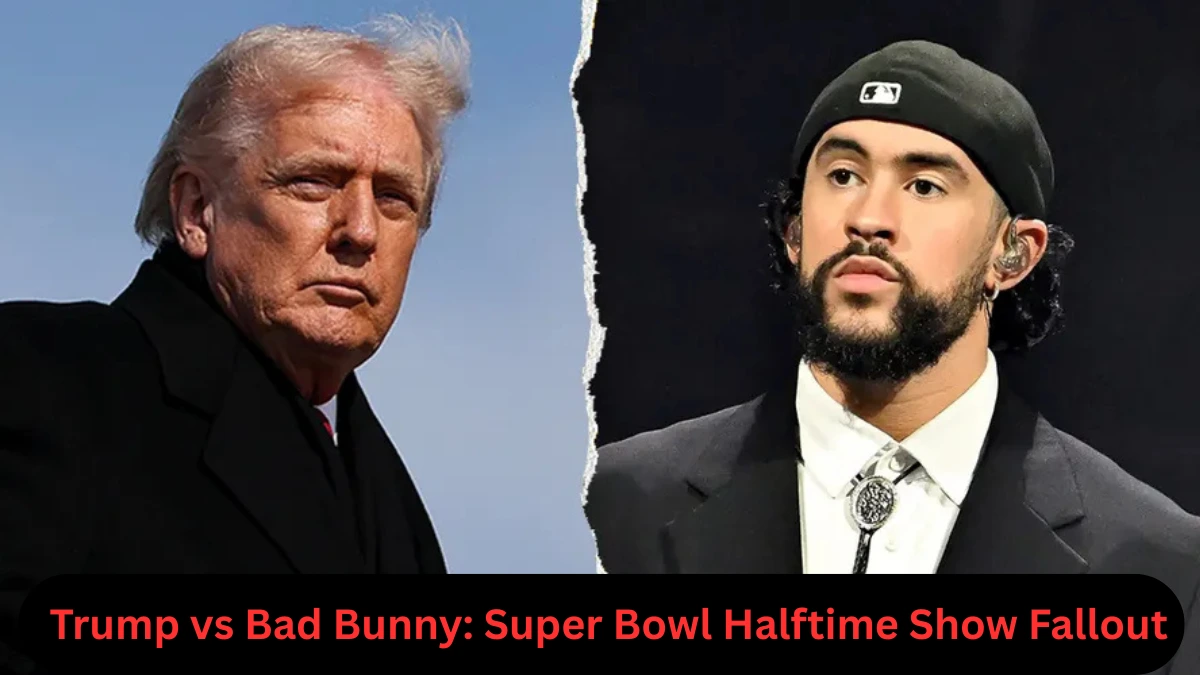
The Super Bowl halftime show has always been more than entertainment—it is a cultural mirror reflecting America’s values, tensions, and identity. But Super Bowl LX crossed a new line. What was meant to be a celebration of music became a political and cultural battleground after Latin superstar Bad Bunny headlined a predominantly Spanish-language halftime show that triggered outrage, praise, and fierce debate. At the center of the storm stood Donald Trump, whose blistering reaction turned the performance into one of the most controversial moments in Super Bowl history.
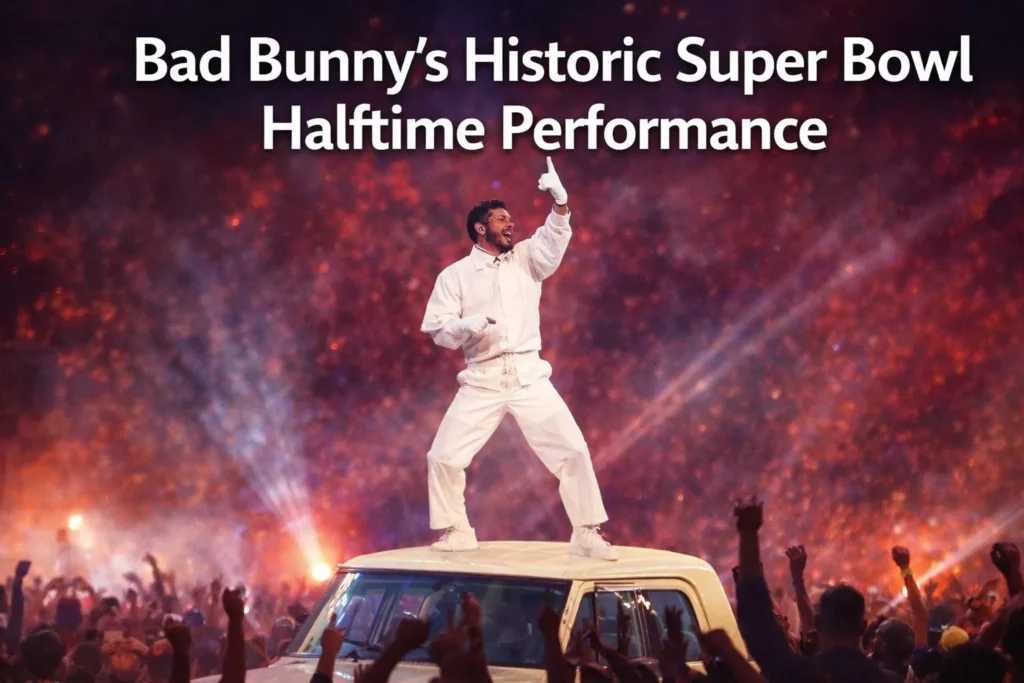
Bad Bunny’s Historic Super Bowl Halftime Performance
Bad Bunny entered Super Bowl LX as the first Latin trap artist to headline the halftime show almost entirely in Spanish. His performance celebrated Puerto Rican culture, Latino identity, and the broader Americas, using symbolism instead of direct political slogans. Sets featured sugarcane fields, neighborhood markets, Puerto Rican flags, and imagery tied to migration, resilience, and heritage. For millions of viewers, it was joyful, historic, and inclusive. For others, it felt unfamiliar, uncomfortable, and political by design.
Donald Trump’s Explosive Reaction on Truth Social
Shortly after the show ended, Donald Trump posted a furious message on Truth Social, calling the halftime performance “one of the worst ever.” He criticized the lack of English lyrics, the choreography, and what he described as an affront to American values. Trump framed the show as unrepresentative of “success, creativity, and excellence,” language that instantly polarized viewers and amplified the controversy across social media and cable news.
Why Trump’s Words Sparked a National Firestorm
Trump’s criticism went beyond musical taste. By linking the performance to immigration, language, and national identity, he transformed a pop culture moment into a political statement. Supporters echoed his concerns, while critics accused him of cultural intolerance and Latinophobia. The reaction revealed how deeply entertainment, politics, and identity are now intertwined in America’s biggest sporting event.
Logan Paul, Jake Paul, and Influencer Backlash
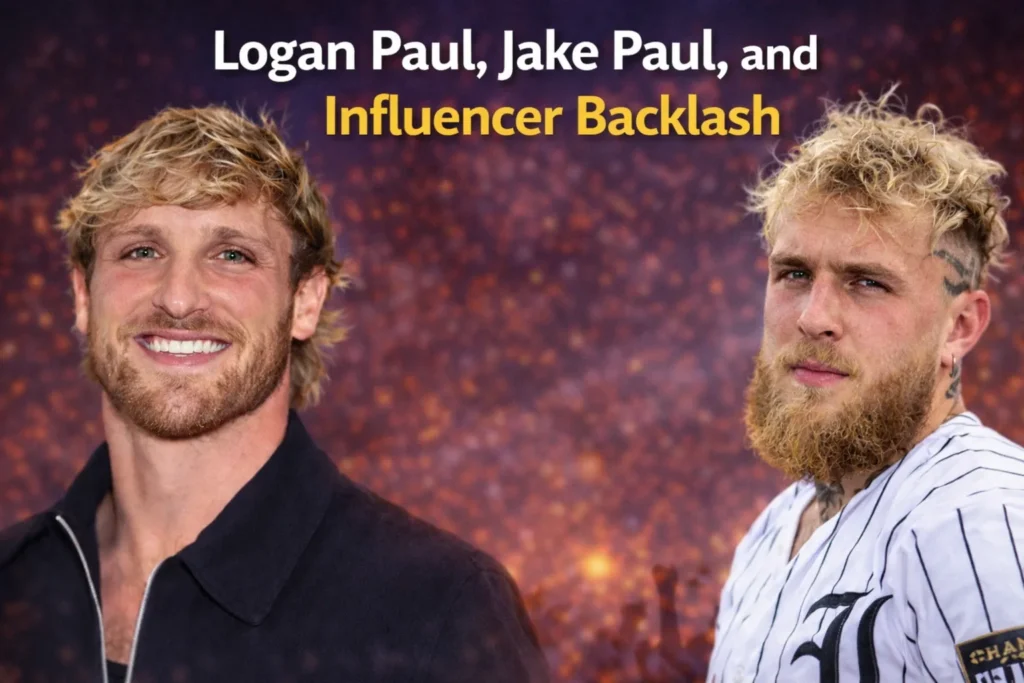
Social media personalities played a major role in shaping the backlash. Influencer and boxer Logan Paul appeared visibly unimpressed during broadcast coverage, while his brother Jake Paul openly boycotted the performance, accusing Bad Bunny of being “anti-American.” Their comments went viral, reinforcing the narrative that the halftime show represented a cultural shift some Americans felt excluded from.
Was This the Worst Halftime Show Ever?
Search trends exploded with phrases like “worst halftime show ever” and “worst Super Bowl ever.” Critics argued that the show alienated English-speaking audiences and leaned too heavily into symbolism. Supporters countered that many past halftime shows—from Beyoncé to Kendrick Lamar—also faced backlash before being re-evaluated as culturally important. The debate exposed how subjective “greatness” has become in a divided media landscape.
Halftime Show Views and Audience Reactions
Despite the controversy, halftime show viewership remained massive. Millions tuned in, and online engagement surged. Clips from the performance dominated Instagram, TikTok, and YouTube. Ironically, criticism fueled visibility, making it one of the most discussed halftime shows in history. Whether loved or hated, the performance succeeded in capturing attention.
The Spanish Language Controversy Explained
One of the loudest criticisms was that the show was “mostly in Spanish.” For supporters, this was precisely the point: Puerto Ricans are U.S. citizens, and Spanish is part of American life. Bad Bunny even said “God bless America” in English during the show. The backlash highlighted a deeper debate about what language, culture, and identity “belong” on America’s biggest stage.
Bad Bunny and Trump: A Clash of Symbols
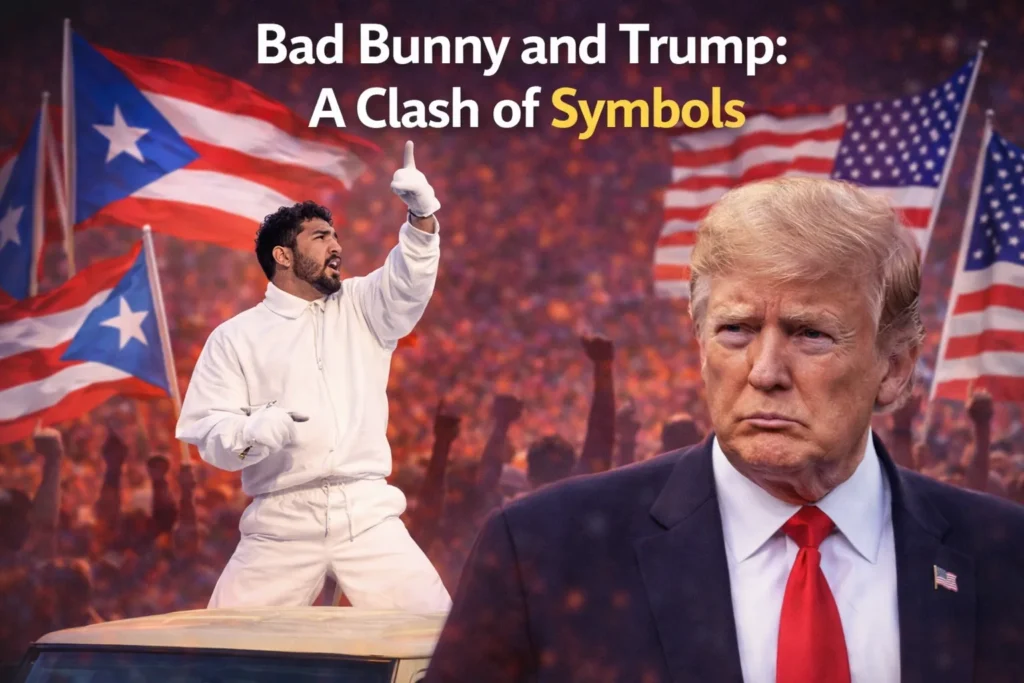
Bad Bunny did not directly attack Trump during the performance, but his symbolism spoke volumes. From Puerto Rican flags to immigrant imagery, the show contrasted sharply with Trump’s hardline immigration rhetoric. Trump’s response confirmed that the message landed exactly where intended—without a single explicit political slogan.
Why Some Americans Skipped the Halftime Show
A notable number of viewers chose to skip the official halftime show entirely, instead tuning into an alternative broadcast headlined by Kid Rock and promoted by conservative groups. This split viewing behavior underscored how entertainment choices are now aligned with political identity, even during a football game.
NFL’s Defense of Bad Bunny
NFL Commissioner Roger Goodell defended the decision to select Bad Bunny, emphasizing the league’s global audience and commitment to inclusivity. The NFL framed the performance as an effort to unite people through creativity. However, the league also faced criticism for underestimating the political reaction.
Why Is Bad Bunny Disliked by Some Americans?
Bad Bunny’s critics often cite his outspoken views on immigration, Puerto Rico’s treatment by the U.S. government, and his refusal to conform to traditional American pop norms. His success challenges long-standing ideas about what mainstream American entertainment should look and sound like.
Instagram, Truth Social, and the Social Media War
Bad Bunny’s Instagram posts celebrating the performance received millions of likes, while Trump’s Truth Social post dominated conservative media. The parallel reactions showed how Americans now live in separate digital ecosystems, consuming entirely different narratives about the same event.
Super Bowl LX as a Political Battlefield
Super Bowl LX demonstrated that the halftime show is no longer politically neutral. Artists understand the symbolism of the stage, and politicians understand the power of reacting to it. The result is a cultural tug-of-war played out in real time.
Comparing This Show to Past Controversial Halftime Performances
From Janet Jackson’s 2004 wardrobe malfunction to Beyoncé’s Black Panther imagery and Kendrick Lamar’s patriotic symbolism, controversy has often followed innovation. Bad Bunny’s show fits squarely into this tradition, challenging audiences to reconsider what patriotism looks like in a changing America.
Is This the Worst Super Bowl Ever—or the Most Honest?
Labeling Super Bowl LX as “the worst ever” may say more about America’s divisions than the quality of the show itself. For many viewers, the discomfort came not from the music, but from being confronted with a version of America that feels different from the one they expect.
What the Halftime Show Says About America in 2026
The backlash revealed a country wrestling with identity, language, and inclusion. Bad Bunny’s performance suggested that America is broader, louder, and more multilingual than ever. Trump’s response showed that many Americans are not ready to embrace that reality.
Why This Moment Will Be Remembered
Years from now, Super Bowl LX will likely be remembered not just for the game, but for the halftime show that forced a national conversation. Like many controversial cultural moments, time may soften reactions and highlight its significance.
Final Thoughts: Culture Wars on the World’s Biggest Stage
The clash between Donald Trump and Bad Bunny was never really about music. It was about who gets to define America’s image on its biggest night. Whether viewed as offensive or inspiring, the halftime show succeeded in one undeniable way—it made people talk, argue, and reflect. And in modern America, that may be the most powerful performance of all.