


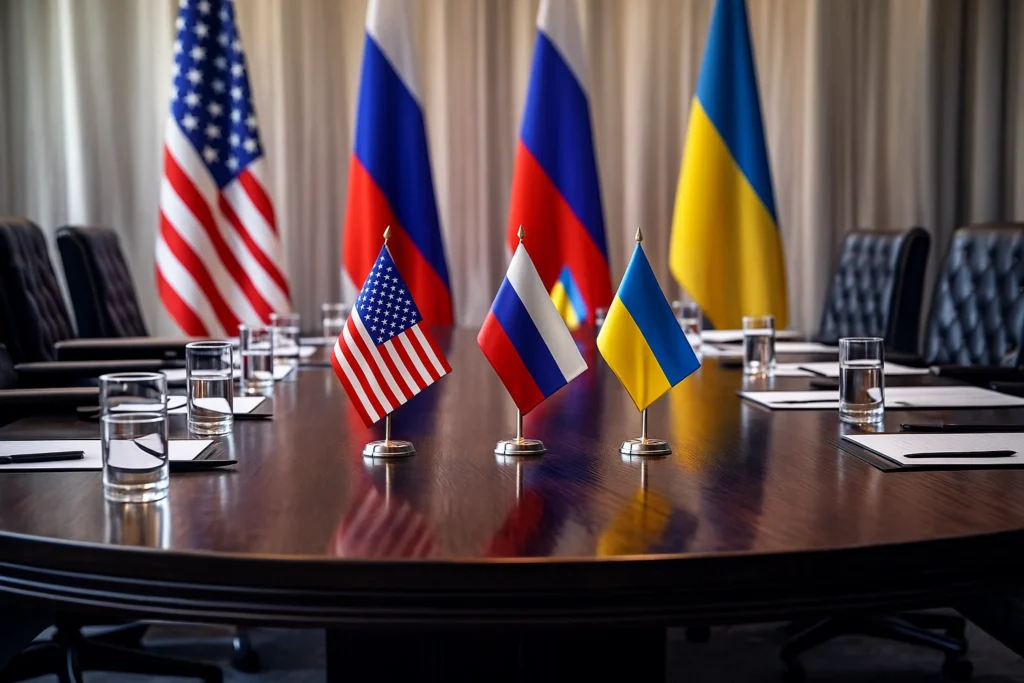
A critical week of diplomacy is underway as the United States, Ukraine, Russia and key European partners enter a new round of negotiations aimed at finding a path toward ending the nearly four-year war in Ukraine.
US special envoy Steve Witkoff, joined by senior adviser Jared Kushner, is scheduled to meet Russian President Vladimir Putin in Moscow on Tuesday. The visit follows several days of discussions between US and Ukrainian officials in Florida, where negotiators worked on refining a peace framework that all sides say has improved but still faces major unresolved issues.
A Pivotal Meeting in Moscow
The Moscow meeting marks one of the most direct diplomatic contacts between Washington and Moscow in months. A White House spokesperson said the administration remains “very optimistic” about progress, noting that recent talks in the US “were very constructive.”
The Kremlin confirmed the meeting’s timing but declined to comment on Russia’s negotiating position, saying only that diplomacy should occur “without megaphones.”
Kyiv’s Priorities: Sovereignty, Security and No Territorial Concessions
Speaking in Paris on Monday, Ukrainian President Volodymyr Zelenskyy said Ukraine supports diplomatic efforts but emphasized that the country’s sovereignty, security guarantees and territorial integrity are non-negotiable.
Zelenskyy said an updated version of the peace plan “looks better” after revisions made in recent days, but he cautioned that “some tough issues still need to be worked through.” Ukraine has repeatedly stated it will not cede control of territories it still holds, arguing that doing so would reward aggression and undermine long-term stability.
Europe Warns Against Pressure on Ukraine
European leaders are watching the US-Russia meeting closely.
French President Emmanuel Macron said any peace framework must be developed with full Ukrainian and European involvement.
EU foreign policy chief Kaja Kallas warned that negotiations must not shift pressure onto Kyiv, saying peace should not be achieved by forcing Ukraine to make concessions. She stressed the importance of remembering which side initiated the conflict and emphasized the need to protect civilians and critical infrastructure.
What’s in the Updated Peace Framework
A previous draft peace proposal circulated last month generated concern in Kyiv and across Europe, with leaders saying it favored Russia too heavily. Key contentious elements reportedly included:
- Conditions related to Ukraine’s future security guarantees
- Arrangements for frozen Russian assets held abroad
- Questions around Ukrainian market access in Europe
- Limitations on Ukraine’s defense capabilities
- Territorial recognition issues
Negotiators say the updated framework addresses several of these concerns, though disagreements remain—particularly regarding territory and long-term security.
Russia’s Position and Battlefield Claims
Russia has said the discussions so far are based on proposals that “could form the basis” of future agreements. At the same time, Moscow has continued to restate long-standing demands, including restrictions on Ukraine’s security partnerships and recognition of territories Russia currently controls.
Russian officials also claimed new battlefield advances, including the capture of two towns in eastern Ukraine. However, open-source monitoring groups say the areas remain contested and have not confirmed full Russian control.
On-the-Ground Reality: Conflict Continues
Despite diplomatic activity, the war continues. Officials in Ukraine’s Dnipropetrovsk region reported a missile strike on the industrial city of Dnipro, which killed four people and wounded dozens. Emergency services said commercial buildings, vehicles and local businesses were damaged in the attack.
The incident underscores the ongoing humanitarian toll and the urgency felt by negotiators on all sides.
Why This Week Matters
The combination of negotiations in Florida, Zelenskyy’s talks in Paris and the upcoming Moscow meeting suggests a concentrated effort to determine whether meaningful progress toward a ceasefire or structured peace process is possible.
Diplomats say the next steps will depend heavily on:
- Whether Russia shows flexibility on territorial and security issues
- Whether Ukraine receives firm security guarantees
- Whether the updated peace framework gains broad international support
- How battlefield developments influence political decisions
FAQ Section
1. What is the purpose of the Moscow meeting?
The meeting aims to continue discussions on a potential peace framework for ending the Ukraine war. US envoy Steve Witkoff and adviser Jared Kushner are meeting Russian President Vladimir Putin to review progress and understand each side’s position.
2. Has a final peace plan been agreed?
No. Negotiators say an updated framework is being developed and has improved after recent revisions, but major issues — especially territory and long-term security guarantees — are still unresolved.
3. What are Ukraine’s main conditions?
Ukraine insists on preserving its sovereignty, receiving strong security guarantees, and avoiding territorial concessions. Kyiv maintains it will not give up land it still controls.
4. Why are European leaders concerned?
European officials say peace efforts must not pressure Ukraine into concessions. They want any agreement to involve Ukraine and European partners fully and to ensure long-term security and stability.
5. What is the US position on the peace talks?
The US administration says it is “very optimistic” about progress and believes recent negotiations have moved the process forward. However, US officials acknowledge that several difficult issues remain.
Is the war still ongoing during these negotiations?
Yes. Despite diplomatic activity, fighting continues across multiple regions. Ukraine’s Dnipro region recently experienced a deadly missile strike, highlighting that the conflict remains active.
What happens next after the Moscow meeting?
Following the discussions in Moscow, negotiators expect further consultations among Ukraine, the US, and European partners. Additional revisions to the peace framework may be made based on Russia’s feedback.
What to Watch Next
Following the Moscow meeting, attention will turn to:
- The response from Kyiv
- Feedback from European partners
- Any revisions proposed by Russia
- A potential follow-up conversation between Zelenskyy and US President Donald Trump
Negotiators continue to stress that while diplomatic momentum is growing, significant differences remain—and meaningful progress will require careful coordination among Ukraine, the US, Europe and Russia.