

Understanding the Health Insurance Business
Have you ever wondered how health insurance companies make money while paying out lakhs of rupees for medical claims? Many people believe insurers are trying to avoid paying claims to maximize profits, but the reality is far more nuanced and transparent than most realize.
Health insurance companies in India operate under strict IRDAI (Insurance Regulatory and Development Authority of India) regulations that mandate transparency, fair practices, and financial stability. They must maintain minimum solvency ratios, publish annual reports, and justify premium increases. Understanding their business model removes the mystery and helps you make informed decisions about your coverage.
In 2024-25, India’s health insurance industry collected over ₹80,000 crores in premiums and paid out approximately ₹60,000 crores in claims. With over 50 crore Indians now covered by some form of health insurance, this sector has become a crucial pillar of India’s healthcare ecosystem. But how health insurance company works financially is a fascinating balance of mathematics, risk assessment, and prudent investment—not the predatory business many imagine.
This article demystifies the health insurance business model, explaining exactly how companies earn revenue, manage risks, pay claims, and still remain profitable—all while serving millions of policyholders across India.
Overview of the Health Insurance Business Model
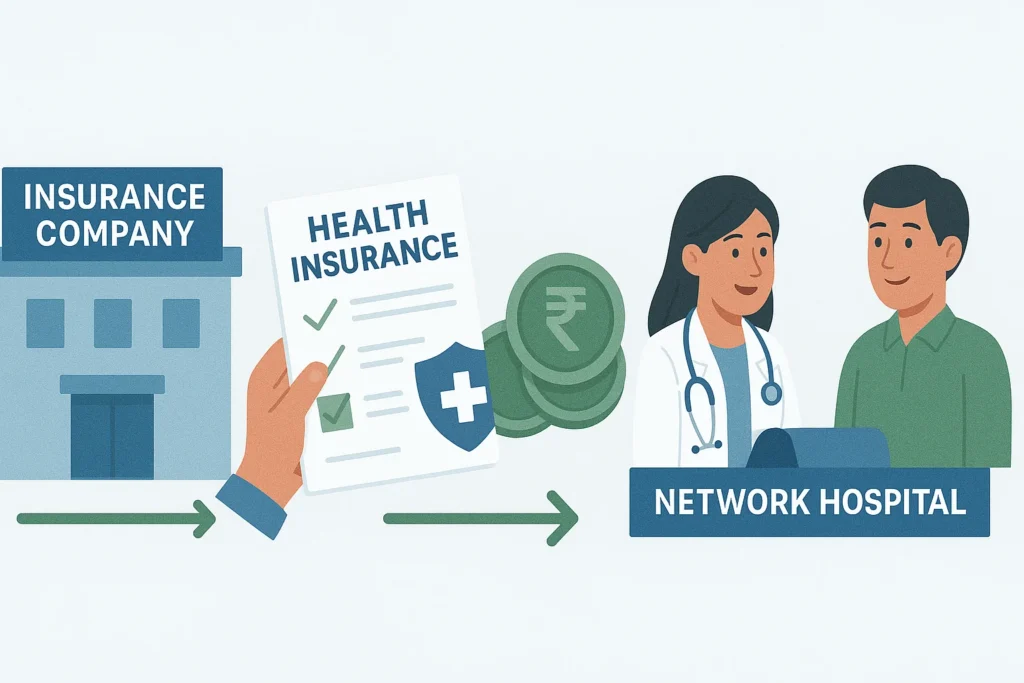
The health insurance business model operates on a simple principle: risk pooling. Thousands of people pay small premiums into a common pool, and when someone needs expensive medical treatment, the money comes from this shared fund. Not everyone falls sick simultaneously, so the math works in favor of both policyholders and insurers.
The Basic Revenue-Expense Formula:
Revenue Sources:
- Premium Income (primary source: 85-90%)
- Investment Returns (10-15%)
- Add-on Products & Riders (3-5%)
Expense Categories:
- Claims Paid (60-75% of premiums)
- Administrative Costs (10-15%)
- Agent Commissions (8-12%)
- Marketing & Distribution (3-5%)
- Reserves & Regulatory Requirements (5-10%)
- Technology & Infrastructure (2-4%)
Profit Margin: Typically 5-15% of premium income for well-managed insurers.
How Money Flows:
Step 1 – Premium Collection:
You pay ₹15,000 annual premium. Multiply by 10 lakh policyholders = ₹1,500 crores collected.
Step 2 – Claim Payment:
That year, 1.5 lakh people file claims totaling ₹1,050 crores (70% claim ratio).
Step 3 – Operating Expenses:
Administrative costs, salaries, technology, marketing = ₹225 crores (15%).
Step 4 – Investment Income:
₹1,500 crores invested in government securities earning 7% = ₹105 crores additional income.
Step 5 – Profit:
Total Income: ₹1,605 crores
Total Expenses: ₹1,275 crores
Net Profit: ₹330 crores (22% profit margin in this example)
This simplified calculation shows how health insurance companies make money—through careful risk assessment, efficient operations, and smart investments, not by denying legitimate claims.
Why This Model Works:
Actuarial Science: Insurance companies employ actuaries—mathematicians who calculate the probability of claims based on massive datasets. They know that out of 1,000 people aged 30-35, approximately 45 will need hospitalization in a given year, costing an average ₹80,000 per claim. This predictability allows accurate premium pricing.
Law of Large Numbers: With millions of policyholders, individual variations smooth out. Some years you claim, most years you don’t. Your premium pays for others’ claims this year; others’ premiums pay for your claims when needed.
Regulatory Oversight: IRDAI mandates that insurance companies must maintain a minimum solvency margin (ability to pay all claims even if revenue stops). This protects policyholders from company insolvency.
How Premium Money Is Actually Used

When you pay your ₹15,000 premium, here’s the exact journey your money takes:
1. Claims Payment (60-75% of Premiums)
This is the largest expense and the core purpose of insurance. In 2024, the average health insurance company in India paid out 68-72% of collected premiums as claims—called the “claims ratio” or “loss ratio.”
Example – Star Health Insurance (2023-24):
- Premiums Collected: ₹14,500 crores
- Claims Paid: ₹10,150 crores
- Claims Ratio: 70%
For every ₹100 you pay, approximately ₹70 goes directly toward paying hospital bills for policyholders who need treatment that year.
Types of Claims Paid:
- Hospitalization expenses (surgeries, ICU, treatments)
- Cashless settlements with network hospitals
- Reimbursement payments to policyholders
- Pre and post-hospitalization expenses
- Day-care procedures
- Emergency ambulance costs
Why Not 100%? If a company paid out 100% in claims, there would be zero money for operations, employee salaries, technology infrastructure, customer service, or expansion to serve more people. The company would collapse, leaving millions without coverage.
2. Administrative & Operational Costs (10-15%)
Running an insurance company requires significant infrastructure:
Employee Salaries:
Claims processors, customer service teams, medical experts, actuaries, IT professionals, legal teams—Star Health alone employs over 8,000 people.
Technology Infrastructure:
Mobile apps for claim filing, AI-powered fraud detection, hospital integration systems, customer portals, data security systems. HDFC Ergo invested ₹200+ crores in technology in 2023-24.
Medical Networks:
Maintaining partnerships with 14,000+ hospitals (Star Health’s network), negotiating rates, quality audits, training hospital staff on cashless processes.
Claim Processing:
Medical experts reviewing each claim, verifying treatments, detecting fraud, coordinating with hospitals—processing 50 lakh+ claims annually requires sophisticated systems.
Customer Service:
24/7 helplines, multilingual support, claim assistance, grievance handling, email and chat support.
Regulatory Compliance:
Reporting to IRDAI, audits, legal compliance, consumer protection measures, grievance redressal systems.
3. Distribution & Marketing Costs (8-15%)
Agent Commissions (8-12%):
Insurance agents earn 10-15% commission on first-year premiums and 5-7% on renewals. For a ₹15,000 policy, the agent earns ₹1,500-₹2,250 in year one.
Marketing & Advertising (2-3%):
Television commercials, digital marketing, brand building, educational content. Niva Bupa’s “Rashmika Mandanna” campaign, Care Health’s “Ayushmann Khurrana” ads—these celebrity endorsements cost crores but build trust and awareness.
Digital Acquisition:
Online comparison portals, SEO, paid ads, affiliate partnerships. Increasingly, companies are shifting to digital distribution, which reduces costs from 12% (agent model) to 3-5% (direct online).
4. Reserves & Statutory Requirements (5-10%)
IRDAI Mandates:
Insurance companies must maintain reserves—funds set aside to pay future claims even if premium income stops. This ensures policyholder protection.
Types of Reserves:
- Claim Reserves: Money set aside for reported claims not yet settled
- IBNR (Incurred But Not Reported): Claims that occurred but haven’t been filed yet
- Solvency Margin: Minimum 150% of required solvency ratio (if expected claims are ₹100 crores, must have ₹150 crores in assets)
This is why insurance companies cannot spend 100% of premiums—regulations prevent it to ensure long-term stability.
5. Investments (Critical Revenue Generator)
Here’s where how health insurance companies make money becomes interesting. Premium money isn’t sitting idle—it’s invested to generate returns.
IRDAI Investment Guidelines:
Insurance companies can only invest in low-risk, stable instruments:
- Government securities (bonds, treasury bills)
- High-rated corporate bonds (AAA/AA rated)
- Infrastructure bonds
- Bank fixed deposits
- Limited equity exposure (maximum 15%)
Returns Generated:
In 2023-24, health insurers earned 6-8% returns on investments. For a company collecting ₹10,000 crores in premiums annually, that’s ₹600-800 crores in investment income.
Example – HDFC Ergo (2023-24):
- Premium Income: ₹8,200 crores
- Investment Income: ₹580 crores (approximately 7% return)
- Total Income: ₹8,780 crores
Investment income contributes 10-15% of total revenue, significantly boosting profitability. This is perfectly legal and even encouraged by regulators, as it strengthens the company’s financial position to pay large claims when needed.
Top Revenue Sources for Health Insurance Companies

1. Premium Income (85-90% of Revenue)
Individual Health Plans:
Policies sold directly to individuals and families. Average premium: ₹12,000-₹25,000 annually for family floater with ₹10 lakh coverage. This segment has grown 18% annually over the past five years.
Corporate Group Insurance:
Employer-provided coverage for employees. Companies buy group policies covering thousands of employees. Average premium per employee: ₹4,000-₹8,000. Volume makes this segment highly profitable.
Government Schemes:
Ayushman Bharat and state health schemes where private insurers act as Third-Party Administrators (TPAs). Fixed premium per beneficiary (typically ₹1,000-₹1,500 per family annually), but massive volume—millions of beneficiaries.
Senior Citizen Plans:
High premiums (₹30,000-₹60,000 annually) but also higher claim ratios. Profitable if underwritten carefully with appropriate loading for age and conditions.
Premium Trends in 2024-25:
Average premiums increased 15-25% across insurers due to medical inflation and higher claim frequencies. While unpopular with customers, this ensures companies can pay rising treatment costs.
2. Investment Returns (10-15% of Revenue)
As explained earlier, premiums are invested in safe instruments generating 6-8% annual returns. This investment income is crucial for profitability, especially in years with high claim ratios.
Real Example:
Star Health in 2022-23 had a claims ratio of 82% (very high)—meaning ₹82 paid out for every ₹100 in premiums. Without investment income of 8%, the company would have reported losses. Investment returns brought overall financial performance to breakeven/slight profit.
3. Add-Ons, Riders & Value-Added Services (3-5% of Revenue)
OPD Coverage (Outpatient Department):
Doctor consultations without hospitalization—sold as add-on for extra ₹2,000-₹4,000 annually. High demand, moderate claims, good profitability.
Wellness Programs:
Health check-ups, gym memberships, telemedicine services bundled with policies. Creates customer stickiness and reduces claim frequency (healthier policyholders).
Top-Up Plans:
Super top-ups providing additional coverage above base policy. Low cost (₹3,000-₹5,000 for ₹10 lakh top-up), rarely claimed in full, highly profitable.
Personal Accident Cover:
Accidental death or disability coverage added to health policies. Premiums: ₹500-₹1,000, very low claim ratio (accidents are rare), excellent profitability.
Maternity & Newborn Care:
Pregnancy coverage add-on charging ₹5,000-₹8,000 extra annually. Since maternity has waiting periods and sub-limits, profitability is managed.
4. Cross-Selling & Bancassurance (Emerging Revenue)
Insurance companies partnering with banks to sell policies through bank branches. Banks earn 15-20% commission, but the distribution cost is still lower than traditional agent networks, and volumes are much higher.
Example:
HDFC Bank sells HDFC Ergo policies to its 70 million+ customers. In 2023-24, bancassurance contributed 35% of HDFC Ergo’s new business.
Risk Assessment & Underwriting: The Heart of the Business
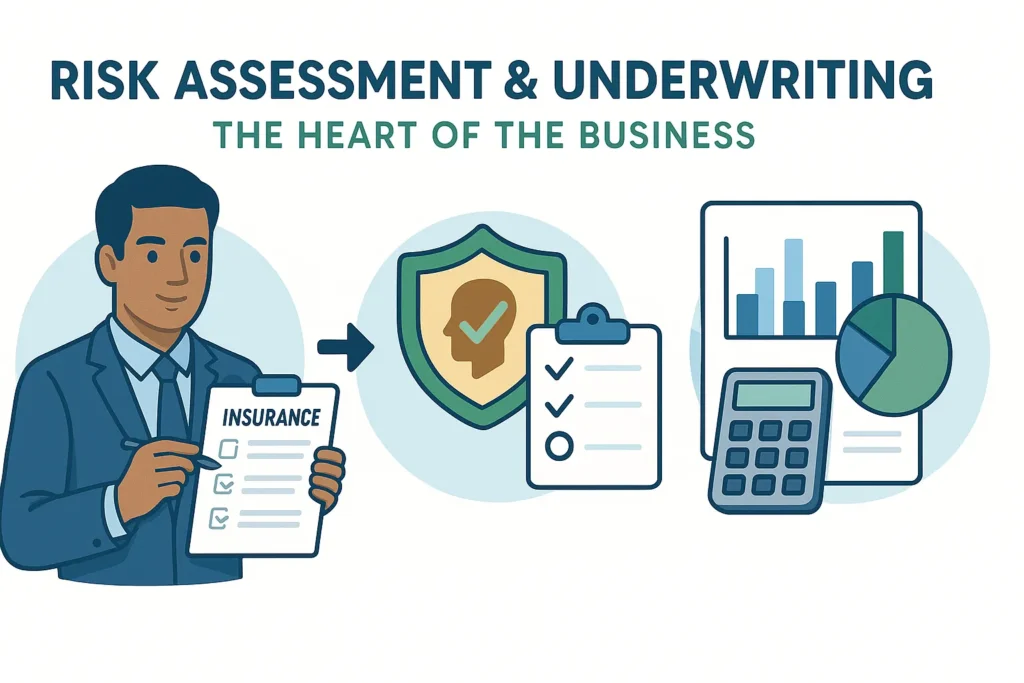
Underwriting health insurance is the process of evaluating risk before issuing a policy. This determines whether to accept an applicant, at what premium, and with what exclusions or loadings.
How Underwriting Works:
Step 1 – Application Review:
When you apply, you provide details:
- Age, gender, location
- Height, weight (BMI calculation)
- Medical history (diabetes, hypertension, surgeries, medications)
- Family medical history
- Lifestyle (smoking, alcohol, occupation)
Step 2 – Risk Classification:
Based on data, you’re classified:
- Standard Risk: Healthy individual, normal premium
- Sub-Standard Risk: Pre-existing conditions, loaded premium (20-50% higher)
- Declined: Severe health issues, coverage denied (or offered with major exclusions)
Step 3 – Premium Calculation:
Actuaries use statistical models:
Base Premium Formula:
Base Premium = (Expected Claims + Operating Costs + Profit Margin) / Number of Policyholders in Risk Pool
Individual Adjustment Factors:
- Age: 25-year-old pays ₹6,000; 45-year-old pays ₹14,000; 60-year-old pays ₹32,000 (for same ₹5 lakh coverage)
- Location: Metro residents pay 10-15% more than tier-2 city residents (higher treatment costs)
- Sum Insured: ₹10 lakh costs less than double of ₹5 lakh (economies of scale)
- Medical History: Diabetes adds 25-40% loading; heart disease history adds 50-100%
- BMI: Obesity (BMI >30) adds 15-25% loading
- Smoking: Smokers pay 20-30% higher premiums
- Occupation: High-risk jobs (mining, construction) add 10-15%
Real Underwriting Examples:
Example 1 – Healthy Young Adult:
- Profile: 28-year-old, non-smoker, no medical history, BMI 23, IT professional, Pune
- Coverage: ₹10 lakh individual
- Premium: ₹8,500 annually
- Risk Assessment: Low risk, standard rates
Example 2 – Middle-Aged with Diabetes:
- Profile: 48-year-old, controlled diabetes for 5 years, non-smoker, BMI 27, manager, Mumbai
- Coverage: ₹10 lakh individual
- Premium: ₹22,000 annually (vs ₹15,000 standard for age)
- Risk Assessment: Sub-standard risk, 45% loading for diabetes and location
Example 3 – Senior Citizen:
- Profile: 65-year-old, hypertension, cholesterol controlled, non-smoker, retired, Bangalore
- Coverage: ₹5 lakh senior citizen plan
- Premium: ₹38,000 annually
- Risk Assessment: Age + conditions = high risk but acceptable with appropriate premium
Why This Matters:
Accurate underwriting health insurance ensures:
- Fair Pricing: Healthy individuals don’t subsidize high-risk individuals excessively
- Company Sustainability: Premium income matches expected claims
- Fraud Prevention: Medical underwriting deters people from hiding conditions to get cheaper premiums
Why Health Insurance Premiums Increase Every Year
This is the most misunderstood aspect of how health insurance companies make money. Policyholders often feel cheated when premiums rise 10-20% annually, but there are legitimate reasons rooted in economics and healthcare inflation.
Primary Reasons for Premium Increases:
1. Medical Inflation (10-14% Annually)
Healthcare costs in India rise much faster than general inflation (4-6%).
Why Healthcare Costs Increase:
- Advanced Treatments: Robotic surgeries, targeted cancer therapies, gene treatments—these cost 3-5x more than older methods
- Imported Medical Devices: Stents, pacemakers, artificial joints—70% are imported, affected by currency fluctuations
- Doctor & Hospital Charges: Specialist fees rising 8-12% annually; corporate hospital room rents up 10-15% yearly
- Diagnostics: MRI, CT scans, PET scans becoming standard—adding ₹15,000-₹40,000 per hospitalization
- Pharmaceutical Costs: New medicines (especially for cancer, heart disease) costing ₹50,000-₹5 lakh per treatment cycle
Real Numbers:
- 2020: Average hospitalization cost in Mumbai = ₹1.2 lakhs
- 2025: Same treatment = ₹1.8 lakhs (50% increase in 5 years)
If treatment costs rise 12% annually, premiums must rise proportionally to maintain the same coverage value.
2. Increased Claim Frequency
More people are using health insurance now than five years ago.
Statistics:
- 2019: Claim ratio = 62% (₹62 paid for every ₹100 premium)
- 2024: Claim ratio = 71% (₹71 paid for every ₹100 premium)
Reasons for Higher Claims:
- Awareness: People now understand their coverage and file claims they previously ignored
- Cashless Network Expansion: 14,000+ network hospitals make claiming easy—earlier only 4,000-5,000
- Lifestyle Diseases: Diabetes, hypertension, obesity affecting younger Indians—25% of claims now from people under 45 (vs 15% a decade ago)
- Post-COVID Effects: Long COVID complications, renewed focus on health leading to more medical investigations and treatments
When more people claim more often, premium pools must grow to pay these claims.
3. Regulatory Changes & IRDAI Mandates
2025 IRDAI Guidelines:
- Mental health coverage now mandatory (adds 2-3% to base premium)
- Cashless claim approval in 1 hour for emergencies (requires technology investment)
- Reduced waiting periods for pre-existing diseases (higher risk = higher premiums)
- OPD coverage encouraged (doctor consultations increase claim frequency)
Each regulatory improvement, while consumer-friendly, adds costs that are passed through premiums.
4. Age-Based Premium Increase
Your premium automatically increases as you age, even if you stay healthy. This is because age is the single biggest predictor of health claims.
Age-Based Premium Escalation:
- 30 years old: ₹8,000 (base)
- 35 years old: ₹9,500 (+19%)
- 40 years old: ₹12,000 (+26%)
- 45 years old: ₹15,500 (+29%)
- 50 years old: ₹20,000 (+29%)
By age 50, you’re paying 2.5x what you paid at 30, even with zero claims and perfect health.
5. Previous Year’s Claim Experience
If your insurance company had an exceptionally high claim year, they adjust premiums upward to rebuild reserves.
Example – Care Health 2023:
- 2022-23: Claims ratio jumped to 89% (usually 70-75%)
- Reason: Post-COVID surge in hospitalizations
- Response: 2023-24 premiums increased 18-22% to stabilize finances
6. GST Impact
Health insurance premiums attract 18% GST. If base premium rises from ₹10,000 to ₹11,500, with GST:
- Old: ₹10,000 + ₹1,800 GST = ₹11,800
- New: ₹11,500 + ₹2,070 GST = ₹13,570
Effective increase: 15% feels like 18% due to compounding GST.
Loss Ratio vs Profitability: How Companies Measure Success
The loss ratio (also called claims ratio) is the percentage of premium income paid out as claims. This is the most critical metric in the health insurance business model.
Loss Ratio Formula:
Loss Ratio = (Total Claims Paid / Total Premiums Collected) × 100
What Different Ratios Mean:
50-60% Loss Ratio:
Very profitable, but potentially unfair to customers—company keeping ₹40-50 for every ₹100 collected. IRDAI scrutinizes companies with consistently low ratios for undercharging claims or overcharging premiums.
65-75% Loss Ratio:
Healthy, sustainable range. Company paying most premiums as claims while maintaining operations and profitability. This is the industry standard target.
80-90% Loss Ratio:
Challenging profitability. Company paying ₹80-90 per ₹100 premium, leaving only ₹10-20 for operations, administration, and profit. Requires investment income and cost optimization to remain profitable.
95%+ Loss Ratio:
Loss-making territory. Company paying more in claims than it collects in premiums. Unsustainable without capital infusion. Premium increases inevitable.
Real Company Examples (2023-24 Data):
Star Health Insurance:
- Premiums Collected: ₹14,500 crores
- Claims Paid: ₹10,150 crores
- Loss Ratio: 70%
- Investment Income: ₹1,050 crores
- Net Profit: ₹650 crores (4.5% profit margin)
HDFC Ergo:
- Premiums Collected: ₹8,200 crores
- Claims Paid: ₹5,740 crores
- Loss Ratio: 70%
- Investment Income: ₹580 crores
- Net Profit: ₹920 crores (11% profit margin)
Niva Bupa:
- Premiums Collected: ₹5,600 crores
- Claims Paid: ₹3,920 crores
- Loss Ratio: 70%
- Investment Income: ₹420 crores
- Net Profit: ₹520 crores (9% profit margin)
Care Health:
- Premiums Collected: ₹6,800 crores
- Claims Paid: ₹5,100 crores
- Loss Ratio: 75%
- Investment Income: ₹490 crores
- Net Profit: ₹380 crores (5.5% profit margin)
Key Insights:
- Industry Average Loss Ratio: 68-72% in 2024
- Profit Margins: 5-12% for most health insurers
- Investment Income Critical: Without 6-8% investment returns, most insurers would struggle with profitability
- Volume Matters: Larger insurers (Star, HDFC) achieve economies of scale reducing administrative costs per policy
Why 70% Loss Ratio is Fair:
Critics argue, “Why not pay 90% in claims?” Here’s why 70-75% is actually reasonable:
- Operations (10-12%): Claims processing, customer service, technology, medical experts
- Distribution (8-10%): Agents, marketing, digital platforms
- Reserves (5-7%): Regulatory requirements to protect policyholders
- Profit (5-8%): Return on investment for shareholders who provided capital to start the company
Total: 28-37% non-claim expenses, leaving 63-72% for claims—which is where industry averages sit.
Transparency & Regulation: Why Insurers Can’t Cheat
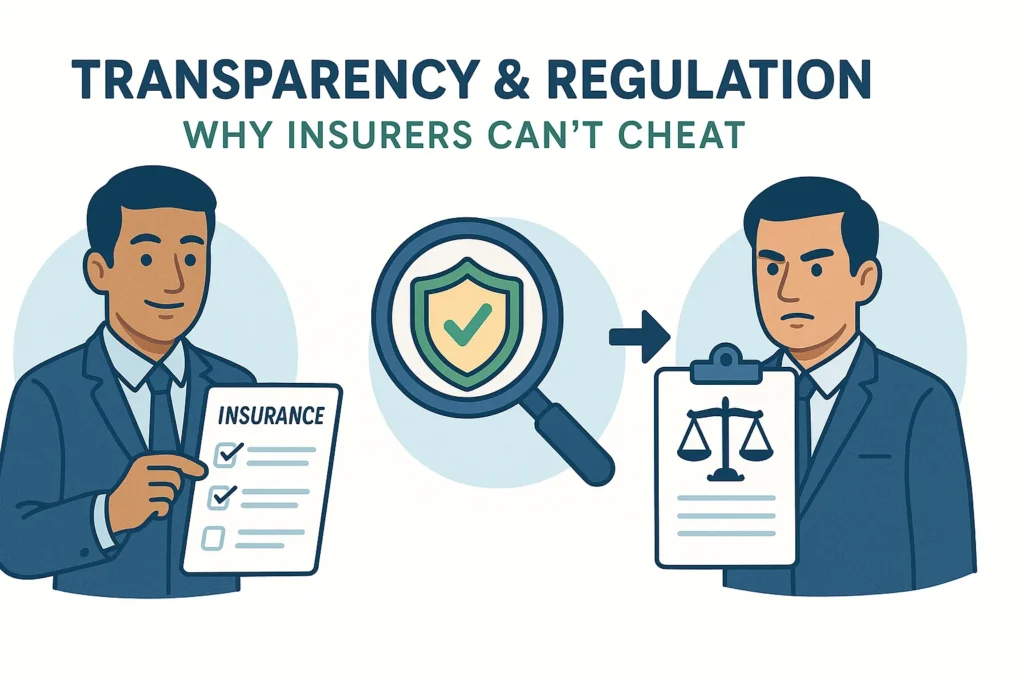
Many believe health insurance companies intentionally deny claims to maximize profits. While claim disputes exist, systemic fraud is prevented by strict regulations.
IRDAI’s Role:
Claim Settlement Ratio Monitoring:
IRDAI publishes annual claim settlement ratios for every insurer. Companies with ratios below 80% face scrutiny and must explain rejections.
Grievance Redressal:
If your claim is unfairly rejected, you can escalate to:
- Company’s Internal Grievance Cell (must respond in 15 days)
- Insurance Ombudsman (free, independent, binding decisions up to ₹50 lakhs)
- Consumer Courts
Mandatory Disclosures:
Annual reports must detail:
- Total premiums collected
- Total claims paid
- Loss ratios by product
- Investment income and returns
- Solvency margins
Standardization:
IRDAI mandates standard definitions for terms like “hospitalization,” “pre-existing disease,” “emergency,” making policies comparable and preventing misleading coverage claims.
Why Legitimate Claims Get Rejected:
When claims are denied, it’s usually due to:
- Non-disclosure: Policyholder hid medical history at application
- Exclusions: Treatment not covered per policy terms (cosmetic surgery, alternative medicine)
- Waiting Periods: Claim filed before waiting period expired
- Incomplete Documentation: Missing bills, reports, discharge summary
- Fraud Detection: Fake bills, inflated expenses, unnecessary treatments
Less than 5% of claim rejections are due to insurer error or unreasonable interpretation. Most rejections are for valid policy violations.
The Future of Health Insurance Profitability
Challenges Ahead:
Rising Medical Costs:
With treatment costs increasing 12-14% annually, premiums must keep pace. This creates affordability issues for middle-class families.
Aging Population:
India’s senior citizen population will double by 2040. Older policyholders mean higher claims, requiring careful actuarial planning.
Chronic Diseases:
Diabetes, hypertension, obesity becoming epidemic—affecting people in their 30s-40s. Long-term management costs strain premium pools.
Technology Costs:
AI, blockchain, telemedicine integration—while improving efficiency, requires massive upfront investment.
Opportunities for Sustainable Profitability:
Preventive Healthcare:
Insurers investing in wellness programs, health check-ups, gym memberships to keep policyholders healthy—reducing claim frequency.
Digital Distribution:
Online sales reduce acquisition costs from 12% to 3-5%, improving margins significantly.
Data Analytics:
Predictive analytics identifying high-risk individuals for early intervention, preventing expensive hospitalizations.
Bundled Products:
Comprehensive plans combining health, life, and critical illness coverage—cross-subsidizing risks for better overall profitability.
Government Partnerships:
Ayushman Bharat and state schemes provide volume and stable revenue streams, subsidizing individual market challenges.
Conclusion: A Balanced Business Model
how health insurance companies make money is not a secret or a scam—it’s a transparent, regulated, mathematically-driven business model balancing policyholder protection with financial sustainability.
Key Takeaways:
- Insurers collect premiums and invest them, generating returns
- 68-75% of premiums are paid as claims—the industry standard
- Investment income (6-8% returns) is crucial for profitability
- Administrative costs, agent commissions, and reserves consume 20-25%
- Net profit margins are typically 5-12%, not the windfall profits many imagine
- Premium increases reflect medical inflation, not profiteering
For Policyholders:
Understanding this business model helps you:
- Choose Better: Pick insurers with healthy loss ratios (70-80%)—too low means they reject claims, too high means financial instability
- Negotiate Smartly: Understand what costs insurers control (operations) vs. what they don’t (medical inflation)
- Claim Confidently: Knowing 70%+ of premiums are paid as claims, don’t hesitate to file legitimate claims
- Plan Long-Term: Premium increases are inevitable—budget accordingly and buy adequate coverage while young
Related Resources:
- Why Health Insurance Premiums Are Increasing – Detailed analysis of premium trends and medical inflation
- How Premiums Are Calculated – Understanding the factors that determine your premium
- Best Health Insurance Companies in India – Compare loss ratios, claim settlement, and financial strength
Health insurance companies aren’t your enemy—they’re essential partners in healthcare financing. Transparency about how health insurance company works financially builds trust and helps the industry serve over 100 crore Indians in the coming decade.