
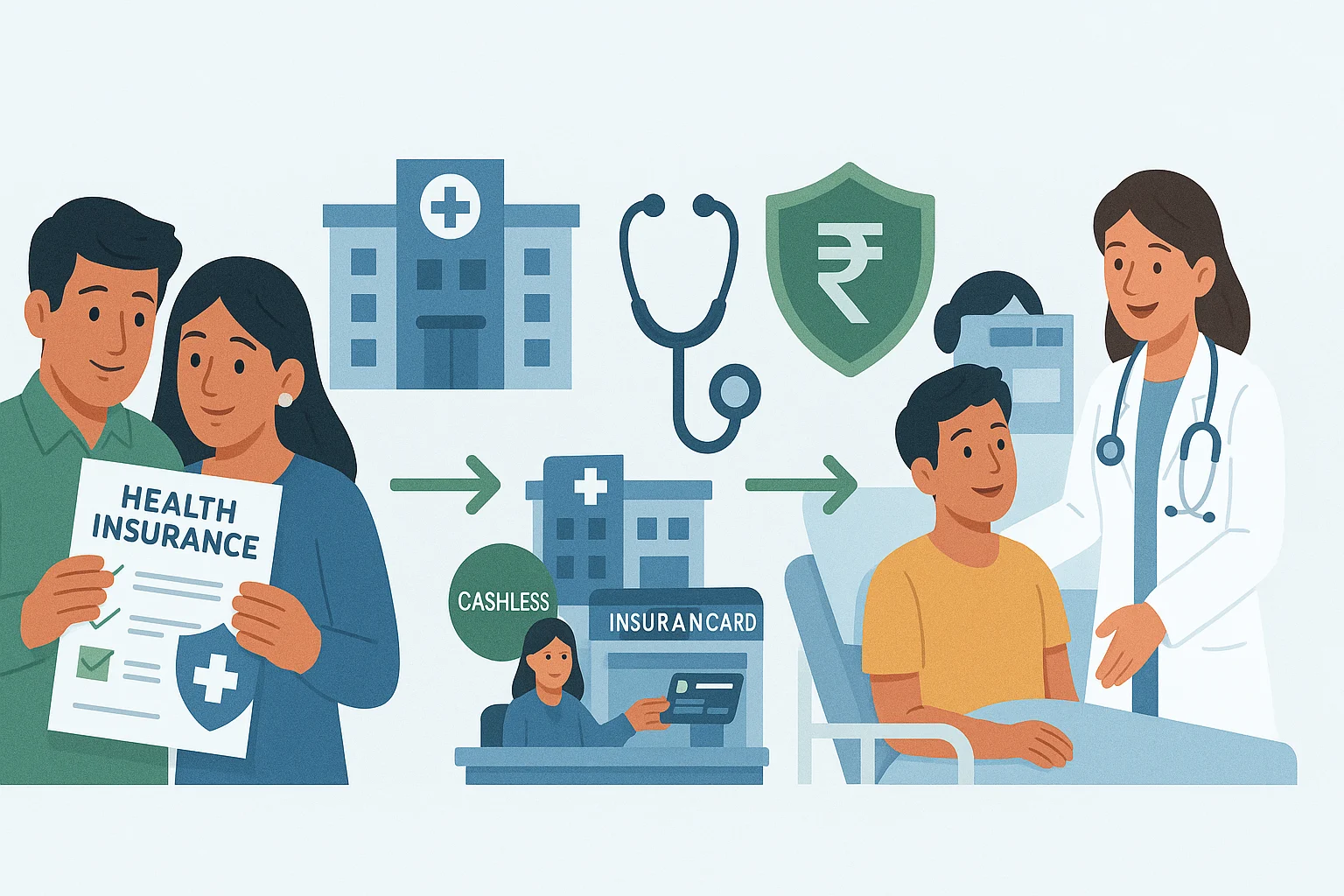
Introduction: Understanding Healthcare Costs in India
Medical emergencies arrive without warning, and the bills that follow can devastate your savings overnight. A routine appendix surgery costs ₹50,000-₹80,000, a heart bypass surgery demands ₹3-6 lakhs, and cancer treatment can exceed ₹10 lakhs. For most Indian families, these amounts represent years of savings wiped out in weeks.
Healthcare costs in India are rising at an alarming 14% annually—nearly double the general inflation rate. What cost ₹1 lakh for treatment today will cost ₹1.14 lakhs next year and ₹1.48 lakhs in three years. Middle-class families are particularly vulnerable: they earn too much to qualify for government schemes but struggle to afford quality private healthcare.
The real crisis hits when you need hospitalization. A single dengue fever case requiring 5 days of hospitalization costs ₹40,000-₹60,000. COVID-19 treatment with ICU admission ran into ₹5-15 lakhs per patient. Lifestyle diseases like diabetes complications, heart attacks, and kidney failures are affecting Indians younger—people in their 30s and 40s facing bills their parents never imagined.
This is precisely why health insurance is needed. It transforms catastrophic medical expenses into manageable monthly payments. Instead of paying ₹5 lakhs from your pocket, you pay ₹15,000 annually and let the insurance company handle the hospital bills. It’s financial protection that ensures medical emergencies don’t become financial emergencies.
What is Health Insurance?
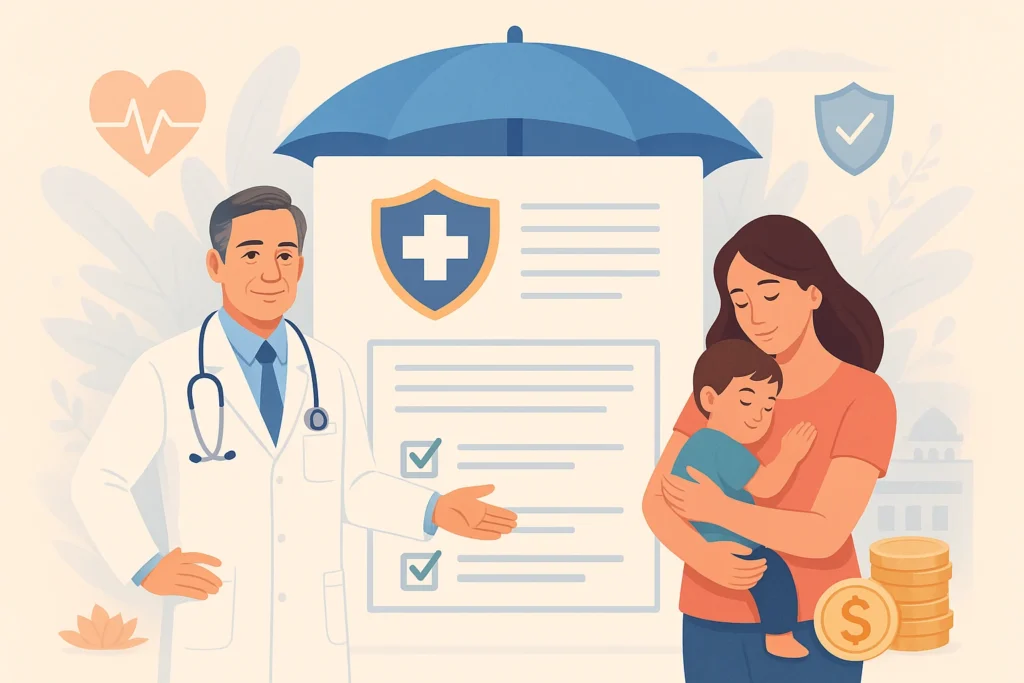
Health insurance in India is a contract between you and an insurance company. You pay a fixed amount every year (called a premium), and in return, the company promises to pay your medical bills when you fall sick or need hospitalization.
Think of it like this: You’re essentially prepaying for future healthcare needs through small yearly installments. When you actually need expensive treatment, the insurance company steps in and covers the costs up to your policy limit.
The Basic Exchange:
You Pay: ₹10,000-₹30,000 per year (varies by age and coverage)
Insurance Company Covers: ₹5 lakhs to ₹50 lakhs+ in medical expenses when needed
Key Components You Need to Know:
Premium: The yearly fee you pay to keep your policy active. For a 30-year-old, a ₹5 lakh coverage typically costs ₹6,000-₹8,000 annually. This amount increases with age, coverage amount, and pre-existing health conditions.
Sum Insured: The maximum amount your insurer will pay for your medical expenses in one policy year. Common amounts are ₹3 lakhs, ₹5 lakhs, ₹10 lakhs, or higher. Once this limit is reached, you pay out of pocket for additional expenses.
Coverage: This refers to what medical expenses your policy will pay for. Standard health insurance basics include hospitalization exceeding 24 hours, surgeries, ICU charges, doctor fees, medicines during hospitalization, and diagnostic tests related to your illness.
Network Hospitals: Hospitals that have agreements with your insurance company. At these hospitals, you can receive cashless treatment—meaning the hospital bills the insurer directly, and you don’t pay upfront (except for excluded items).
Deductible: Some policies have deductibles—an amount you must pay first before insurance kicks in. For example, with a ₹50,000 deductible, you pay the first ₹50,000 of any claim, and insurance covers amounts beyond that.
What Makes Health Insurance Valuable:
Without insurance, a ₹3 lakh hospital bill forces you to liquidate investments, take loans, or sell assets. With insurance, you walk into the hospital, show your policy card, get treated, and walk out—often without paying anything beyond minimal co-payments.
The peace of mind alone is invaluable. You can choose better doctors, opt for recommended treatments without hesitation, and focus on recovery instead of worrying about bills.
How Health Insurance Works in India (Step-by-Step Process)
Understanding how health insurance works transforms it from a confusing financial product into a simple protection tool. Let’s break down the entire journey:
Step 1: Research and Choose Your Plan
Start by assessing your needs:
- Family size and ages
- Existing health conditions
- Budget for annual premiums
- Preferred hospitals in your area
Compare plans based on:
- Sum insured: Aim for minimum ₹5 lakhs in tier-2 cities, ₹10 lakhs+ in metros
- Network hospitals: Check if quality hospitals near you are included
- Coverage: What treatments are covered and excluded
- Claim settlement ratio: Choose insurers with 85%+ settlement rates
- Waiting periods: Shorter is better
Popular options include individual policies, family floater plans, and senior citizen-specific plans. Use online comparison tools or consult insurance advisors for personalized recommendations.
Step 2: Purchase the Policy and Pay Premium
Once you’ve selected a plan:
Online Purchase: Visit the insurer’s website, fill your details, answer health questions honestly, make payment through net banking/credit card, and receive your policy instantly via email.
Offline Purchase: Contact an agent, fill physical forms, undergo medical tests if required (usually for older applicants or high coverage), submit documents, pay premium via cheque/online transfer, and receive policy document within 7-15 days.
Critical: Disclose ALL pre-existing conditions honestly. Non-disclosure leads to claim rejections later, which defeats the entire purpose of buying insurance.
You’ll receive:
- Policy document (physical or digital)
- Policy number
- E-card (digital insurance card)
- Network hospital list
- Toll-free claim helpline number
Step 3: Policy Becomes Active
Most policies have waiting periods:
Initial Waiting Period: Typically 30 days from policy start. No claims accepted during this period except for accidents.
Pre-Existing Disease Waiting Period: Usually 2-4 years for conditions you had before buying the policy (diabetes, hypertension, asthma, etc.)
Specific Disease Waiting Period: 1-2 years for certain conditions like hernia, cataract, joint replacement, etc.
After these periods pass, you’re fully covered. Mark these dates on your calendar.
Step 4: Medical Emergency Occurs
When you or a family member needs hospitalization:
For Planned Procedures (surgeries, treatments): You know in advance, so you have time to arrange pre-authorization.
For Emergency Situations (accidents, sudden illness): You need immediate admission—cashless or direct payment decisions happen quickly.
This is where how health insurance works in india becomes practical and crucial.
Step 5: Choose Between Cashless or Reimbursement
CASHLESS TREATMENT (At Network Hospitals)
This is the most convenient option. Here’s exactly what happens:
Before Admission:
- You arrive at a network hospital
- Go to the insurance desk/help desk (every network hospital has one)
- Show your insurance card and provide policy details
- Hospital generates a pre-authorization request
- Request is sent electronically to your insurance company
Pre-Authorization Process: 6. Insurance company reviews your policy, medical necessity, and coverage 7. Approval typically comes within 2-6 hours (1 hour for emergencies as per 2025 IRDAI rules) 8. Hospital receives approval with sanctioned amount
During Treatment: 9. You receive treatment—surgeries, medicines, doctor consultations, diagnostic tests 10. Hospital tracks all expenses against the approved amount 11. If additional procedures needed, hospital requests enhanced authorization
At Discharge: 12. Hospital prepares final bill 13. Insurer-covered expenses are directly billed to insurance company 14. You pay only for excluded items: – Room rent difference (if you chose a room above your policy limit) – Consumables not covered (gloves, masks, certain disposables) – Non-medical expenses (attendant food, phone calls) – Treatments not covered by your policy
Real Example: Rajesh gets admitted for gallstone surgery at Apollo Hospital, a network hospital. Surgery cost: ₹2.5 lakhs. His policy covers ₹5 lakhs. Pre-authorization approved in 3 hours. He stayed 3 days, received treatment, and paid only ₹8,000 at discharge (₹5,000 for room upgrade, ₹3,000 for consumables). Insurance paid the remaining ₹2.42 lakhs directly to the hospital.
REIMBURSEMENT CLAIM (At Non-Network Hospitals)
When you go to a hospital outside your insurer’s network:
During Treatment:
- You pay the entire hospital bill from your pocket
- Collect ALL documents:
- Original bills and receipts
- Discharge summary
- Doctor’s prescriptions
- Diagnostic test reports
- Pharmacy bills
- Hospital registration papers
- Payment receipts
After Discharge: 3. Fill the claim form (available on insurer’s website or app) 4. Attach all documents (originals, not photocopies) 5. Submit physically at insurer’s branch OR upload via mobile app/website 6. Include your bank account details for reimbursement
Claim Processing: 7. Insurance company receives your claim 8. Medical team reviews documents 9. Verifies policy coverage and claim validity 10. Calculates payable amount (may deduct for policy limits, room rent caps, non-covered items) 11. Processes payment to your bank account
Timeline: Usually 15-30 days from claim submission to money receipt.
Real Example: Priya had an emergency and went to a nearby private hospital (non-network). Total bill: ₹1.8 lakhs. She paid the full amount. After discharge, she submitted all documents online through her insurer’s app within 5 days. The claim was processed in 18 days, and ₹1.65 lakhs was credited to her account (₹15,000 deducted for room rent exceeding policy limit).
Step 6: Policy Renewal
Every year before your policy expiry:
- Insurer sends renewal notice 30-45 days in advance
- Review your coverage—increase sum insured if needed
- Pay renewal premium before expiry date
- Grace period available: usually 30 days, but claims during grace period may not be honored
- Continuous renewals build benefits like no-claim bonus and reduce waiting periods for some conditions
Never let your policy lapse. If it lapses, buying again means:
- Restarting all waiting periods
- Fresh medical underwriting
- Possible premium increases or coverage denials
Real-Life Scenario Examples
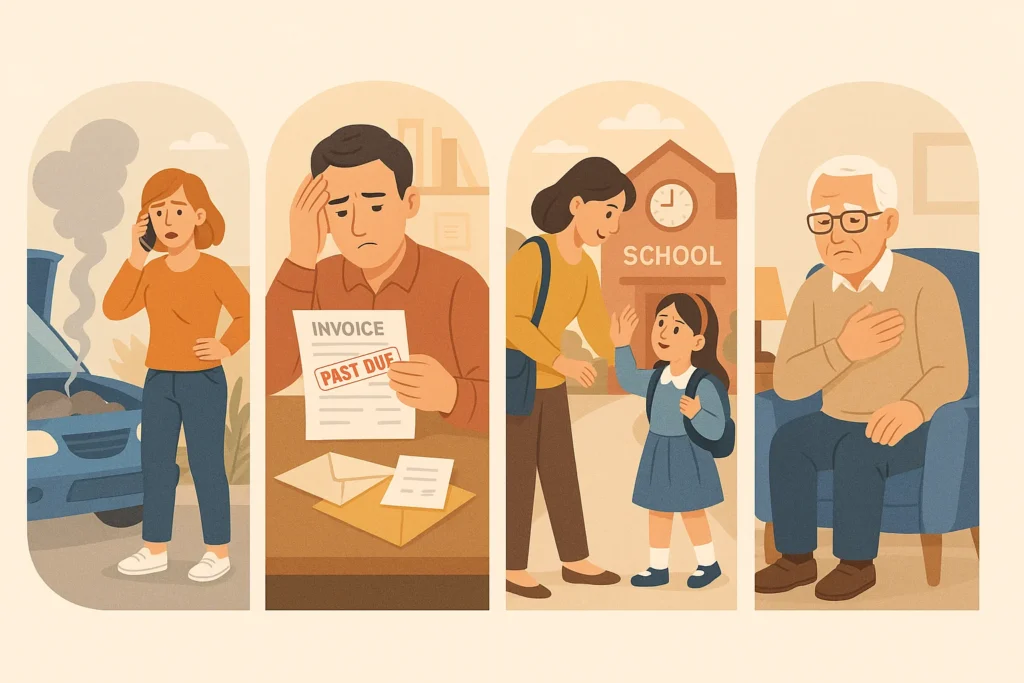
Example 1: ₹5 Lakh Bill Using Cashless Treatment
Profile: Amit (42) and his wife Kavita (38) have a family floater policy with ₹10 lakh sum insured from HDFC Ergo. Annual premium: ₹18,000.
Situation: Amit suffers a severe heart attack and needs immediate angioplasty.
Process:
- Kavita rushes him to Fortis Hospital (network hospital)
- At admission desk, she provides Amit’s insurance e-card
- Hospital insurance desk contacts HDFC Ergo within 30 minutes
- Pre-authorization request sent: Estimated treatment cost ₹5.5 lakhs
- HDFC Ergo approves ₹5.5 lakhs within 90 minutes (emergency)
- Amit undergoes angioplasty, stays in ICU for 2 days, then general ward for 3 days
- Total treatment cost: ₹5.2 lakhs
- At discharge:
- Insurance covered: ₹5 lakhs
- Amit paid: ₹20,000 (₹15,000 for room rent above limit, ₹5,000 for attendant meals and consumables)
Outcome: Life-saving treatment received immediately. Instead of arranging ₹5+ lakhs, family paid only ₹20,000. Remaining ₹5 lakh sum insured available for rest of the year if needed.
Example 2: Network vs Non-Network Hospital
Profile: Neha (35) has individual health insurance with Star Health, ₹5 lakh coverage. Premium: ₹8,500 annually.
Scenario A – Network Hospital:
- Neha diagnosed with ovarian cyst requiring surgery
- Chooses Max Hospital (network)
- Applies for pre-authorization 3 days before surgery
- Approved: ₹1.8 lakhs
- Surgery done, 2-day hospitalization
- Final bill: ₹1.65 lakhs
- Neha pays: ₹5,000 (consumables)
- Insurance pays hospital directly: ₹1.60 lakhs
Scenario B – Non-Network Hospital:
- Same surgery at a prestigious non-network hospital
- Neha pays entire ₹1.95 lakhs upfront
- Collects all documents
- Files reimbursement claim after discharge
- Waits 20 days
- Insurance reimburses: ₹1.55 lakhs (deducted ₹40,000 for higher room rent and non-standard charges)
- Neha’s out-of-pocket: ₹40,000
Key Insight: Cashless at network hospitals is convenient and cost-effective. Non-network hospitals mean paying first, waiting for reimbursement, and potentially higher out-of-pocket expenses.
Example 3: Claim Approval vs Rejection
Approved Claim – Ravi’s Story:
- Ravi (55) bought health insurance 4 years ago, honestly disclosed his diabetes
- Recently hospitalized for diabetic foot ulcer complication
- Surgery cost: ₹2.2 lakhs
- Claim approved seamlessly because:
- Pre-existing condition waiting period (3 years) already completed
- Proper disclosure at policy purchase
- Treatment medically necessary and covered
- Paid: ₹2.15 lakhs (nearly full amount)
Rejected Claim – Suresh’s Story:
- Suresh (48) bought health insurance 1 year ago, did not disclose his hypertension (trying to save on premium)
- Hospitalized for heart attack
- Bill: ₹4.5 lakhs
- Claim rejected because:
- Insurance investigation found undisclosed pre-existing hypertension
- Medical records showed he was on BP medication for 3 years before policy purchase
- Non-disclosure violates policy terms
- Suresh paid entire ₹4.5 lakhs from pocket, policy cancelled
Lesson: Always disclose all health conditions honestly. Short-term premium savings lead to devastating claim rejections when you need coverage most.
Important Concepts You Must Understand
Waiting Periods Explained
Initial Waiting Period (30 days):
- No claims accepted except accidents
- Applies to all new policies
- Example: If you buy policy on Jan 1, coverage starts Feb 1 (except for accidents, which are covered from day 1)
Pre-Existing Disease Waiting Period (2-4 years):
- Conditions you have before buying policy
- Diabetes, hypertension, asthma, thyroid, etc.
- Standard waiting: 3-4 years; some modern policies: 1-2 years
- After waiting period, fully covered
- Example: If you have diabetes when buying policy, diabetes-related hospitalizations covered only after waiting period expires
Specific Disease Waiting Period (1-2 years):
- Certain treatments like cataract, hernia, joint replacement, tonsillectomy
- Typically 1-2 year waiting
- After period, covered normally
Pro Tip: Buy insurance when you’re young and healthy to minimize waiting period impact. The clock starts from day one of your policy.
Network Hospitals – Your Cashless Access Points
Network hospitals are healthcare facilities that have direct billing agreements with your insurance company. These partnerships enable cashless treatment.
Why Network Matters:
- Convenience: No upfront payment needed
- Faster approvals: Hospitals have dedicated insurance desks familiar with the process
- Cost control: Negotiated rates between insurer and hospital often mean lower bills
How to Check:
- Insurer’s website has network hospital locator
- Mobile app shows nearest network hospitals
- Call customer care before admission to confirm
Key Point: Network hospitals vary by insurer. When choosing insurance, check if your preferred hospitals (near home, near office, where your family doctor practices) are in the network.
Pre-Authorization – The Green Light for Cashless Treatment
Pre-authorization is formal approval from your insurance company to proceed with cashless treatment. It’s the insurance company saying, “Yes, we’ll pay for this treatment.”
Process:
- Hospital submits pre-authorization request with:
- Patient’s policy details
- Diagnosis and medical reports
- Proposed treatment plan
- Estimated costs
- Insurance company reviews:
- Policy validity and coverage
- Medical necessity
- Sum insured availability
- Decision typically within 2-6 hours (emergencies: 1 hour)
- Approval specifies sanctioned amount
Outcomes:
- Approved: Treatment proceeds cashless
- Partially Approved: Some treatments approved, others patient pays
- Rejected: Treatment not covered; patient pays entirely
Emergency Situations: If life-threatening, hospitals provide treatment immediately and request pre-authorization simultaneously. IRDAI mandates 1-hour approval for genuine emergencies.
No-Claim Bonus (NCB) – Reward for Staying Healthy
No-claim bonus rewards you for not filing claims. If you don’t make any claims in a policy year, you earn benefits:
Types of NCB:
- Cumulative Bonus: Sum insured increases by 5-10% every claim-free year (up to 50-100%)
- Premium Discount: Next year’s premium reduces by 5-10%
Example: You buy ₹5 lakh policy. After first claim-free year, coverage increases to ₹5.5 lakhs. After second claim-free year: ₹6 lakhs. After five claim-free years: could reach ₹7.5 lakhs—all without extra premium.
What Happens When You Claim:
- You lose accumulated NCB
- Sum insured returns to base amount
- Some insurers offer “super NCB” protection where one claim doesn’t erase all bonus
Smart Strategy: For small claims (₹20,000-30,000), sometimes it’s better to pay out of pocket to preserve NCB, especially if you’ve built significant bonus over years.
Pro Tips for Using Health Insurance Effectively
Before You Need It:
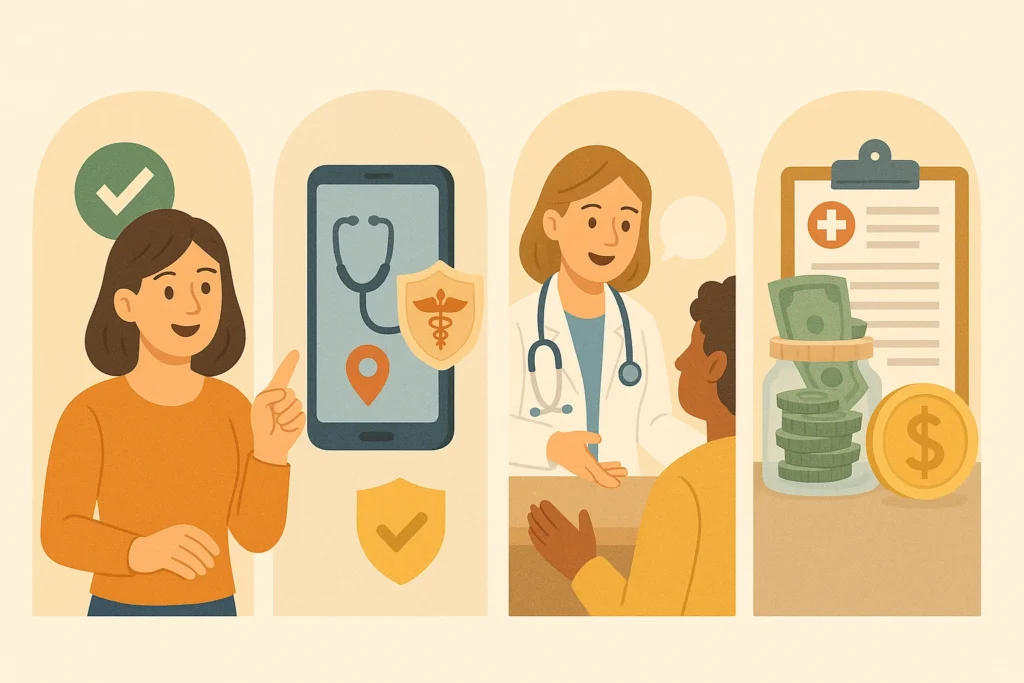
- Keep policy documents accessible: Store e-card on phone, keep physical copy at home
- Know your coverage: Read policy document—understand what’s covered and excluded
- Save insurer’s helpline number: Speed matters during emergencies
- List network hospitals: Know which quality hospitals near you offer cashless
- Enable auto-renewal: Never accidentally let policy lapse
When You Need Treatment:
- Inform insurer immediately: Within 24 hours of hospitalization (even if cashless)
- Carry policy documents: E-card, policy number, ID proof
- Choose network hospitals when possible: Cashless is easier and faster
- Keep all medical records: Even for cashless—useful if queries arise
- Understand discharge bill: Check what insurer paid vs what you’re paying
After Treatment:
- Keep copies of all documents: Discharge summary, bills, test reports
- Follow up on claims: Track reimbursement status via app/website
- Report issues promptly: If claim rejected unfairly, escalate immediately
- Update insurer about ongoing treatment: Chronic conditions may need intimation
For Claim Success:
- Complete documentation: Missing papers cause rejections
- Submit within deadlines: Usually 15 days for reimbursement
- Be honest: False claims lead to policy cancellation
- Respond to queries quickly: If insurer asks for additional info, provide immediately
Common Mistakes to Avoid
Mistake 1: Buying Insufficient Coverage
₹2-3 lakh coverage was adequate 10 years ago. Today’s treatment costs demand ₹10 lakh+ in metros.
Mistake 2: Not Reading Exclusions
People assume everything’s covered, then face claim rejections for excluded treatments.
Mistake 3: Choosing Based Only on Price
Cheapest policy often has maximum exclusions and poor claim settlement.
Mistake 4: Hiding Medical History
Claim investigations uncover non-disclosure, leading to rejections when you need coverage most.
Mistake 5: Letting Policy Lapse
Rebuying means restarting all waiting periods and higher premiums at older age.
Mistake 6: Not Comparing Plans
First policy you find may not be best for your needs.
Mistake 7: Delaying Purchase
Premiums increase with age, and you might develop conditions that make insurance expensive or unavailable.
Conclusion: Your Health Insurance Action Plan
How health insurance works in india is straightforward once you understand the core process: choose plan → pay premium → get coverage → seek treatment → file claim → receive payment.
The real power of health insurance isn’t just financial—it’s the freedom to prioritize health over costs. When your child needs surgery, you focus on finding the best doctor, not on arranging ₹3 lakhs. When your parent has a heart attack, you rush to the hospital, not to the bank.
Your Next Steps:
- Assess your needs: Calculate ideal coverage based on family size, age, and city
- Research plans: Compare at least 3-4 insurers
- Check network hospitals: Ensure quality hospitals are included
- Buy adequate coverage: Minimum ₹10 lakhs for metro families
- Disclose honestly: Don’t hide medical history
- Keep documents safe: Digital and physical copies
- Review annually: Increase coverage as costs rise
Related Resources:
- Understanding Health Insurance Premiums – Learn how premiums are calculated and how to reduce them
- Complete Claims Guide – Step-by-step instructions for filing successful claims
- What Health Insurance Covers – Detailed breakdown of inclusions and exclusions
- Choosing the Best Plan – Compare top insurers and find your ideal policy
Health insurance isn’t an expense—it’s an investment in your family’s security and peace of mind. The best time to buy was yesterday. The second-best time is today.