


India vs South Africa 3rd ODI: A High-Stakes Decider Driven by Toss Luck, Dew Factor & de Kock’s Brilliance
The third ODI between India vs South Africa in Visakhapatnam has delivered everything a decider promises—momentum swings, tactical gambles, outstanding batting, and pressure on both captains. With the series locked at 1-1, India came into the final ODI desperate to reverse their recent trend of losing tosses, batting in the wrong conditions, and battling the evening dew.
Against all odds, skipper KL Rahul finally won a toss after 20 consecutive ODI toss losses, instantly lighting up the stadium with a triumphant fist pump and a relieved “Yes!” picked up by the stump microphone. Opting to bowl first, Rahul hoped India could finally exploit early seam movement and avoid bowling with a slippery ball later in the night.
The match, however, has been anything but predictable. South Africa recovered sharply after losing Ryan Rickelton early, thanks to Quinton de Kock’s explosive batting and Captain Temba Bavuma’s anchoring role, taking the Proteas to a strong position heading into the middle overs.
India’s Toss Luck Finally Breaks – KL Rahul’s Big Moment

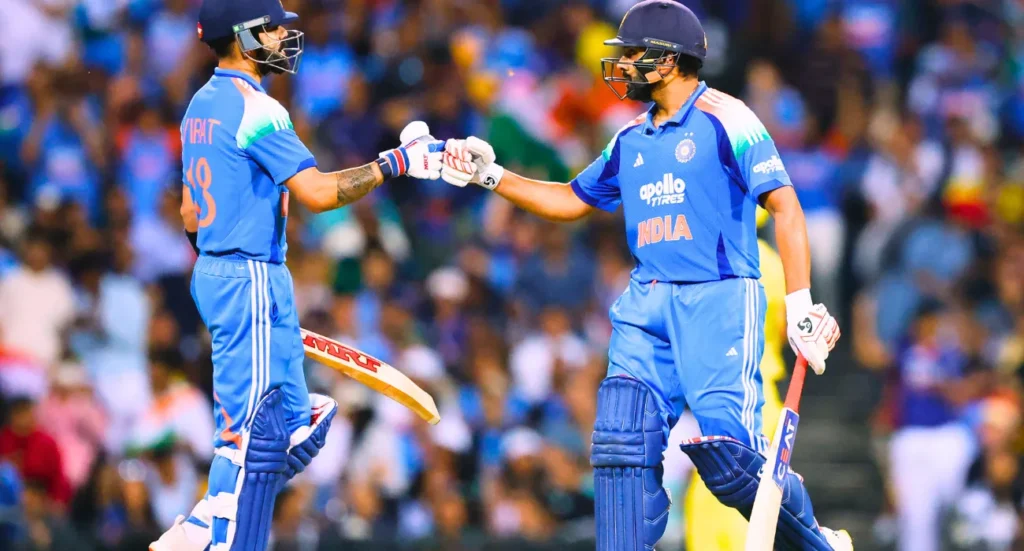
Across formats, India’s luck with coin tosses has been miserable, and the streak had become a widely discussed statistic. Assistant coach Ryan ten Doeschate even joked earlier:
“We’re one in a million right now statistically. If we lose another toss, we’ll be two million.”
Rahul winning the toss was more than symbolic—it allowed India to avoid the dew disadvantage they had endured throughout the series.
After the toss, Rahul explained:
“We trained here last night and there was dew, but not as early as Ranchi or Raipur. We want to see how we bowl first and change things up.”
The decision signaled a shift in India’s tactical approach for the final ODI.
Early Wickets and de Kock’s Counterattack
India made the perfect start as Arshdeep Singh struck in the first over, removing Ryan Rickelton for a duck with a delivery that angled across and lifted just enough to catch the edge.
But South Africa refused to crumble.
Quinton de Kock, already one of the standout batters of the series, unleashed a counterassault on the Indian bowlers. He struck three massive sixes off Prasidh Krishna, showcasing sublime timing and aggressive intent. De Kock’s innings quickly went from steady to spectacular, racing into the 70s while maintaining a strike rate well above 120.
His partnership with Temba Bavuma stabilized South Africa and kept pressure firmly on India.
By the 20-over mark, South Africa were 104/1, a strong recovery considering the early blow.
Temba Bavuma Falls, But Not Before Showing Class
Captain Temba Bavuma, who had been approaching his fifty, looked confident until he played one shot too early. Attempting to push Jadeja against the spin, he edged one toward slip where Virat Kohli took an outstanding, low catch—sharp, athletic, and reminiscent of his prime years of fielding excellence.
This wicket gave India a crucial opening, but with de Kock still dominating, South Africa remained in control.
Gautam Gambhir’s Bold Team Selection Draws Attention
Ahead of the match, the Indian team management—led by Gautam Gambhir—made bold changes:
- Washington Sundar dropped
- Tilak Varma included
- Prasidh Krishna retained despite expensive spells
These decisions sparked plenty of debate among fans. Sundar’s omission surprised many, especially given his utility during dew-heavy evening games.
Gambhir, however, has consistently backed Prasidh, valuing his height, bounce, and wicket-taking ability. The management also wanted to strengthen the middle order with Tilak Varma.
Whether the gamble pays off depends largely on India’s chase later in the evening.
Dew: India’s Invisible Opponent Throughout the Series
Assistant coach Ryan ten Doeschate admitted the dew factor has swung the momentum repeatedly in South Africa’s favor:
“Dew makes a 10 to 20% difference in results. Bowling with a wet ball is extremely difficult.”
He also acknowledged India’s struggles with tosses and the unfairness it created:
“We end up bowling when it’s toughest, and batting when it’s toughest.”
Teams in this series have been practicing bowling with wet balls, adjusting field placements, and simulating grip loss.
But as ten Doeschate pointed out, ODI rules complicate things:
Impact of single-ball rule after 34 overs:
- Ball wears unevenly
- Dew makes one ball too wet for control
- Umpires allow frequent ball changes
- Replacement balls tend to be harder, helping batters more
This rule change has had real match impact.
India’s Strategy: Reassessing Targets and Batting Plans
India’s batting units have recalibrated what “par” means on dew-heavy nights:
- In Ranchi, 320 was expected to be par
- It moved to 350–360 in Raipur
- The dew made even 360 look insufficient
Ten Doeschate shared deeper insights:
“We talked a lot about maximizing starts, identifying better release shots, and pushing totals upward. Even with dew, 360 felt defendable.”
The Indian squad has been focusing on how to structure innings more efficiently, especially with middle-order acceleration.
South Africa’s Perspective: Bavuma’s Confidence and Stability

Temba Bavuma noted at the toss:
“The pitch looks good. We wanted to bowl too, but if we can get a competitive score, our bowlers can defend.”
South Africa made two forced changes:
- Burger out (injury)
- de Zorzi out (injury)
- Rickelton and Baartman brought in
Despite setbacks, Bavuma has relied on his squad’s discipline and the superior utilization of dew conditions throughout the series.
The Broader Series Narrative: Pressure, Momentum & Redemption
India’s Struggles So Far
India lost the Test series 2-0 before entering the ODIs. The mood in the camp has been tense but determined.
Ten Doeschate admitted:
“Losses have stacked up. Performances haven’t met our standards. The boys want to win this series badly.”
South Africa’s Hunger
South Africa sees this as a chance to secure a rare white-ball series win in India.
The young talent—Brevis, Breetzke, and Jansen—has been electric, and de Kock’s form has been devastating.
This final ODI is as much about momentum as series victory.
Live Match Status at the Time of Writing
South Africa: 132/2 (23.2 overs)
De Kock: 77* (64)
Breetzke: 4 (5)
Jadeja: 1/37 (6 overs)
Tilak Varma: Bowling his first overs
India won the toss and elected to bowl first.
The match is finely balanced.
Key Battles to Watch
1. De Kock vs Indian Spinners
If de Kock reaches a hundred, SA could cross 300+ comfortably.
2. India’s chase under lights
This has been the defining problem all series.
3. Dew vs Indian bowlers
Even a 330 chase becomes easier with dew.
4. Gambhir’s XI decisions
Tilak Varma’s selection will be judged heavily.
What Each Team Needs to Win
South Africa’s Winning Path
- De Kock must bat long
- Middle order needs a strong boundary phase between 30–45 overs
- Jansen, Ngidi, and Maharaj must adapt early with the ball
India’s Winning Path
- Early wickets in middle overs
- Restrict South Africa under 300
- Top order must fire—no early collapses
- Bowlers must survive dew pressure
Predicted Turning Points
- De Kock’s wicket
- Jansen’s spell with the wet ball
- Kohli’s impact chase innings
- The dew factor
This game may come down to the last five overs.
Conclusion: The Perfect Decider for a Dramatic ODI Series
The India vs South Africa 3rd ODI has every ingredient of a classic—momentum swings, tactical battles, strong performances, and environmental variables like dew adding a layer of unpredictability.
With the series tied and both teams fighting for pride, consistency, and momentum ahead of future tournaments, the final ODI in Visakhapatnam represents more than a match—it defines each team’s resilience.
South Africa’s aggressive batting, India’s new selection strategy, KL Rahul’s long-awaited toss win, and the constant unpredictability of dew make this a compelling cricket story.
The outcome now depends on execution under pressure.
One innings, one partnership, one spell could decide the series.