

Are We in an AI Bubble? Why Markets Are Turning Selective on Tech
Introduction: A Market Built on AI Hype Meets Reality
Global financial markets are entering a critical moment as fears of an artificial intelligence bubble grow louder. What began as excitement over AI’s transformative potential has now shifted into anxiety about soaring costs, unclear profits, and potential disruption to existing industries. Investors are no longer buying anything labeled “AI.” Instead, they are asking harder questions about value, returns, and sustainability, triggering sharp sell-offs across technology stocks and reshaping market leadership.
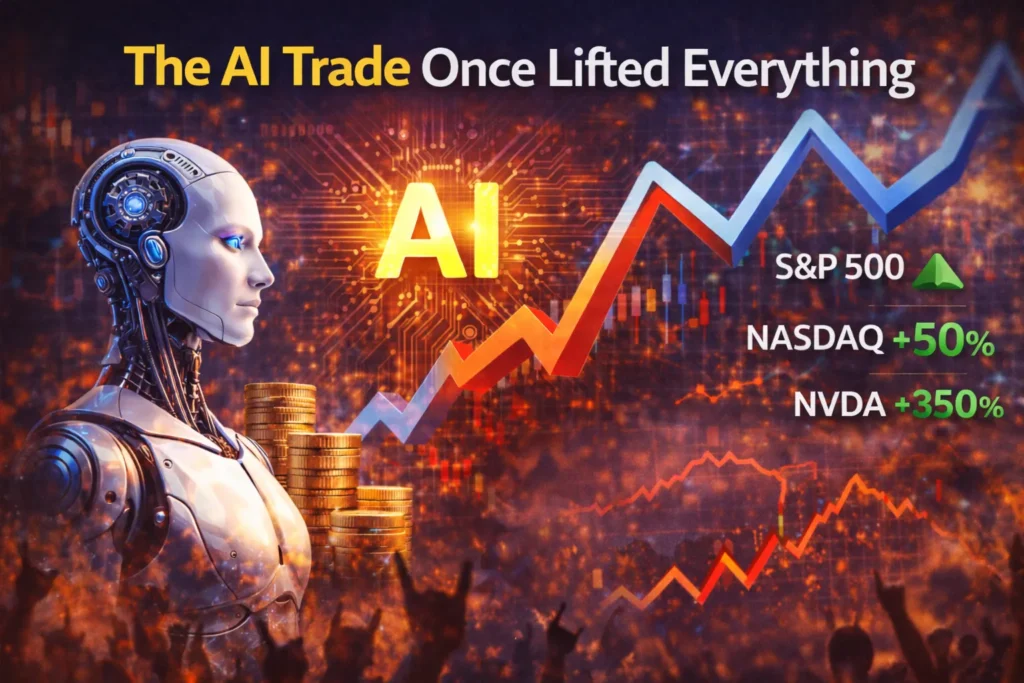
How the AI Trade Once Lifted Everything
When generative AI tools first went mainstream, nearly every company tied to the technology benefited. Chipmakers, software firms, cloud platforms, and even data providers surged as investors assumed AI adoption would automatically translate into profits. Giants like Microsoft, Amazon, and Alphabet built massive expectations by announcing unprecedented spending on AI infrastructure.
Why Software Stocks Are Now Under Pressure
The narrative began to crack when new AI tools demonstrated they could replace, rather than enhance, many existing software services. A new generation of AI coding and automation platforms raised fears that enterprise software, consulting, analytics, and even legal services could be disrupted. This realization sent software stocks into a sharp decline, with investors suddenly seeing AI not as a growth engine, but as a competitive threat.
The Role of New AI Tools in the Sell-Off
Advanced AI models capable of writing code, analyzing data, and performing professional tasks have accelerated the sell-off. Investors fear that these tools could commoditize software products that once generated stable subscription revenue. As a result, companies previously viewed as AI beneficiaries are now being reclassified as potential losers in the AI revolution.
Big Tech Spending Raises Red Flags
Another major concern is the sheer scale of capital spending. Big Tech companies have committed hundreds of billions of dollars to data centers, chips, and cloud infrastructure. While this spending fuels growth for hardware suppliers, investors are increasingly skeptical about whether these investments will generate acceptable returns. Markets are no longer rewarding spending for vision alone.
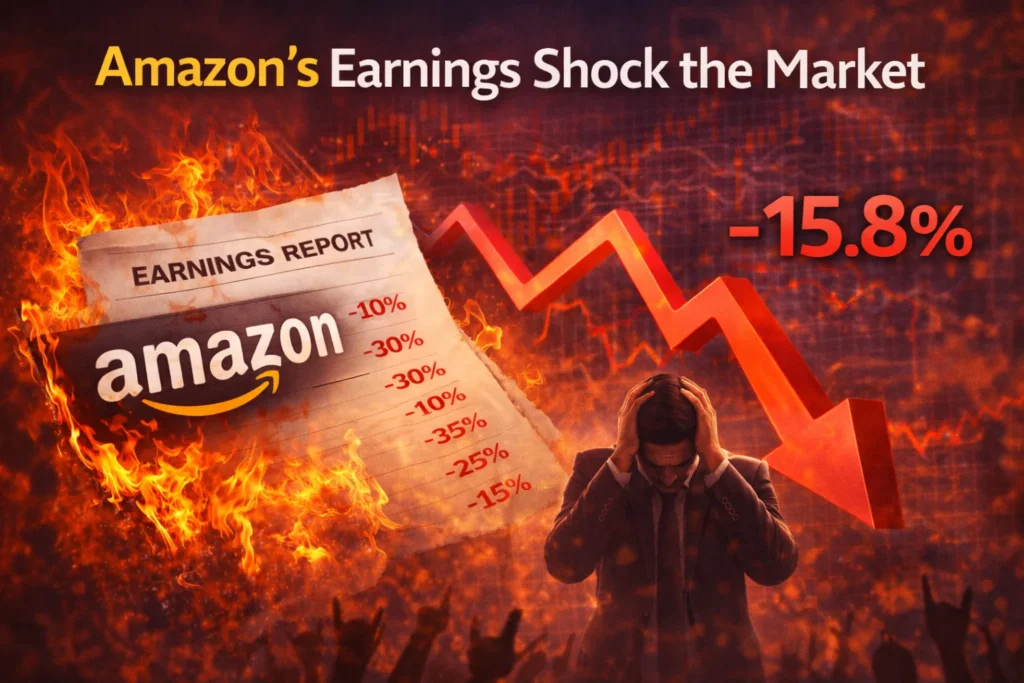
Amazon’s Earnings Shock the Market
The shift in sentiment became obvious after Amazon reported earnings that disappointed investors. Despite strong revenue, the company warned of massive spending increases that weighed on profit expectations. Amazon shares fell sharply, dragging down the broader tech sector and reinforcing fears that AI growth may come at the cost of near-term earnings.
Microsoft and Alphabet Face Investor Scrutiny
Microsoft and Alphabet have also faced pressure despite solid earnings. Investors reacted negatively to rising capital expenditures, questioning whether AI-driven growth would justify the cost. This marked a clear turning point: markets are no longer satisfied with AI promises without visible financial payoff.
Nvidia Remains Strong—but Not Untouchable
Chipmaker Nvidia remains one of the biggest winners of the AI boom, benefiting from massive demand for its processors. However, even Nvidia has not been immune to volatility, as investors consider whether AI hardware demand can sustain current valuations indefinitely.
Markets Are Now Picking Winners and Losers
The AI trade is no longer unified. Investors are distinguishing between “picks and shovels” companies—those supplying hardware and infrastructure—and firms whose products may be replaced by AI. Semiconductor and memory producers have held up better than software and analytics companies, signaling a more selective investment environment.
The Magnificent Seven No Longer Move Together
Once seen as a single unstoppable force, the “Magnificent Seven” tech giants are now diverging. Some stocks rise while others fall, depending on spending discipline, margins, and perceived AI efficiency. This breakdown reflects a broader shift from thematic investing to fundamentals-driven decision-making.
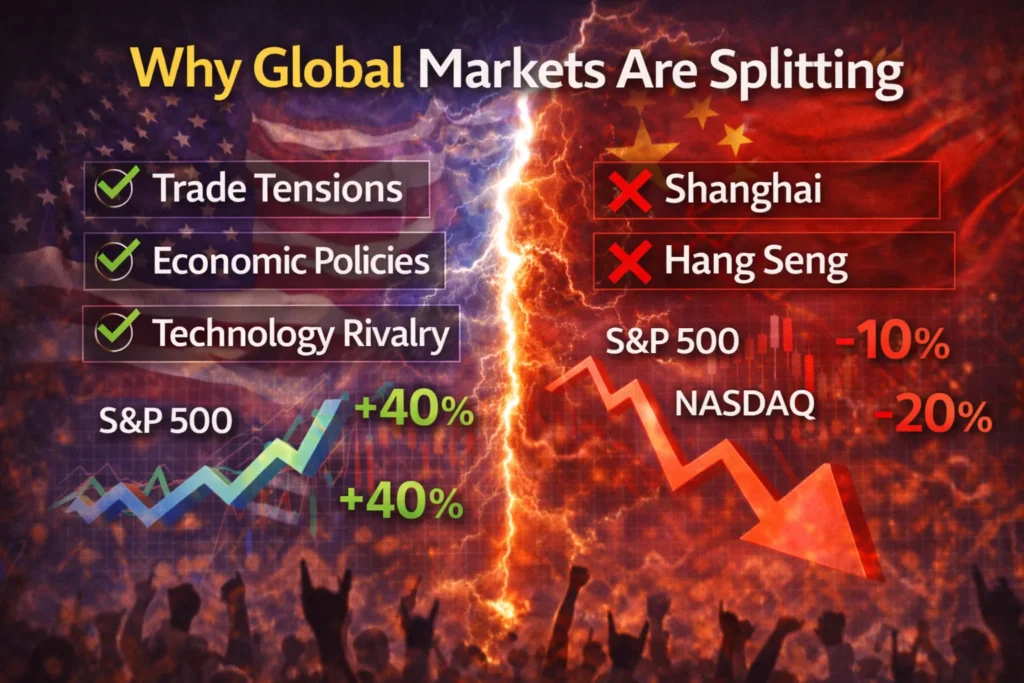
Why Global Markets Are Splitting
The AI trade is also fragmenting geographically. Countries heavily involved in memory and chip production have benefited, while regions dominated by software and services have lagged. This divergence highlights how AI’s economic impact is uneven, favoring certain sectors and nations over others.
Investor Fear and Rising Volatility
Market volatility has increased as investors react to rapid changes in sentiment. The spike in volatility indexes reflects uncertainty rather than panic, but it underscores how fragile confidence has become. Even small earnings surprises or guidance changes now trigger outsized reactions.
The Broader Stock Market Feels the Impact
While tech stocks have led the decline, the weakness has spread to major indexes like the S&P 500 and the Nasdaq. However, the damage has been uneven, with non-tech sectors showing resilience.
Why This Is Not a Full Market Crash
Despite sharp sell-offs in tech, this is not a traditional market collapse. Earnings outside the technology sector remain solid, and economic data suggests the broader economy is still on stable footing. The sell-off reflects valuation concerns rather than systemic financial stress.
Investors Rotate Away From Tech
As confidence in tech weakens, investors are rotating into sectors like energy, industrials, consumer staples, and financials. These areas benefit from stable cash flows, lower valuations, and reduced exposure to AI disruption.
Small-Cap Stocks Gain Attention
Smaller companies, particularly those outside the tech sector, have quietly outperformed. With lower valuations and sensitivity to interest rates, small-cap stocks are attracting investors seeking growth without AI-related risk.
Why Equal-Weight Strategies Are Gaining Popularity
Some investors are turning to equal-weight index strategies to reduce dependence on mega-cap tech stocks. These approaches spread risk more evenly across sectors, offering protection if tech continues to underperform.
Is This Really an AI Bubble?
The current sell-off does not necessarily mean AI is a failed technology. Instead, it suggests that expectations became unrealistic. AI will likely transform industries over time, but the path to profitability is proving longer and more complex than early hype suggested.
Lessons From Past Tech Cycles
History shows that transformative technologies often experience boom-and-bust cycles. The internet, smartphones, and cloud computing all faced periods of skepticism before delivering long-term value. AI may follow a similar trajectory.
What Long-Term Investors Should Do Now
For long-term investors, the key is patience and selectivity. Avoid chasing hype, focus on companies with clear revenue models, and diversify beyond tech. AI may still offer opportunities, but only for businesses that can turn innovation into profits.
Short-Term Risks Remain High
In the near term, volatility is likely to persist. Earnings reports, spending announcements, and macroeconomic data will continue to drive sharp market moves. Investors should be prepared for continued swings, especially in tech-heavy portfolios.
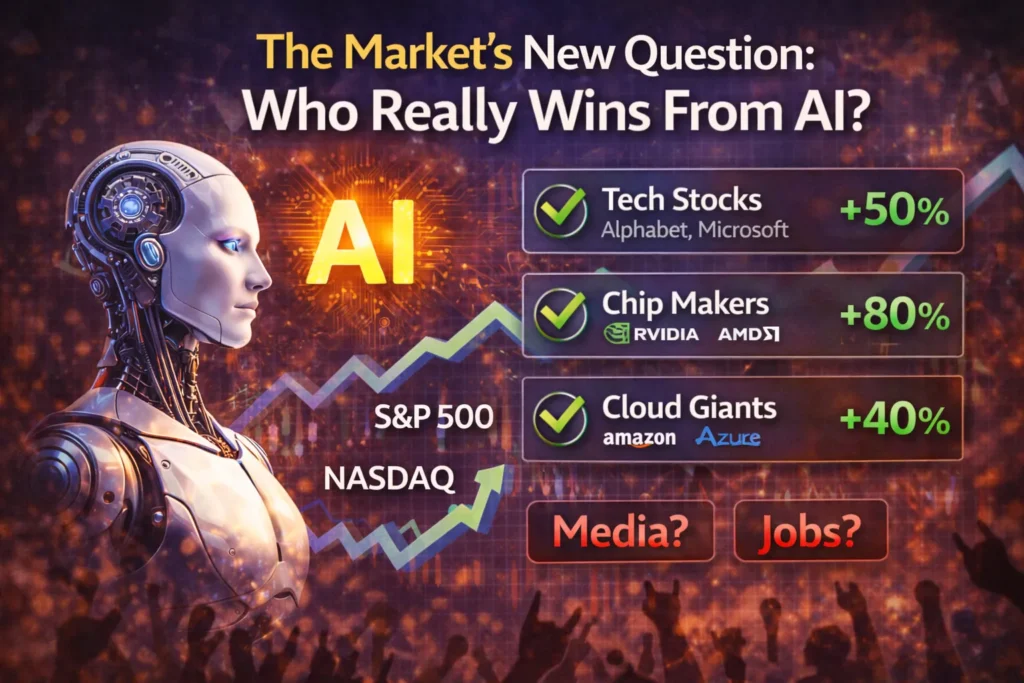
The Market’s New Question: Who Really Wins From AI?
The central question facing markets today is no longer whether AI is powerful, but who truly benefits. Companies that enable AI infrastructure appear better positioned than those whose services AI could replace.
Conclusion: From AI Mania to Market Maturity
The AI-driven market of 2026 marks a shift from blind optimism to disciplined analysis. The sell-off in tech stocks is painful, but it may ultimately create a healthier investment environment. As hype fades, fundamentals are taking center stage, forcing investors to separate genuine opportunity from speculative excess.