
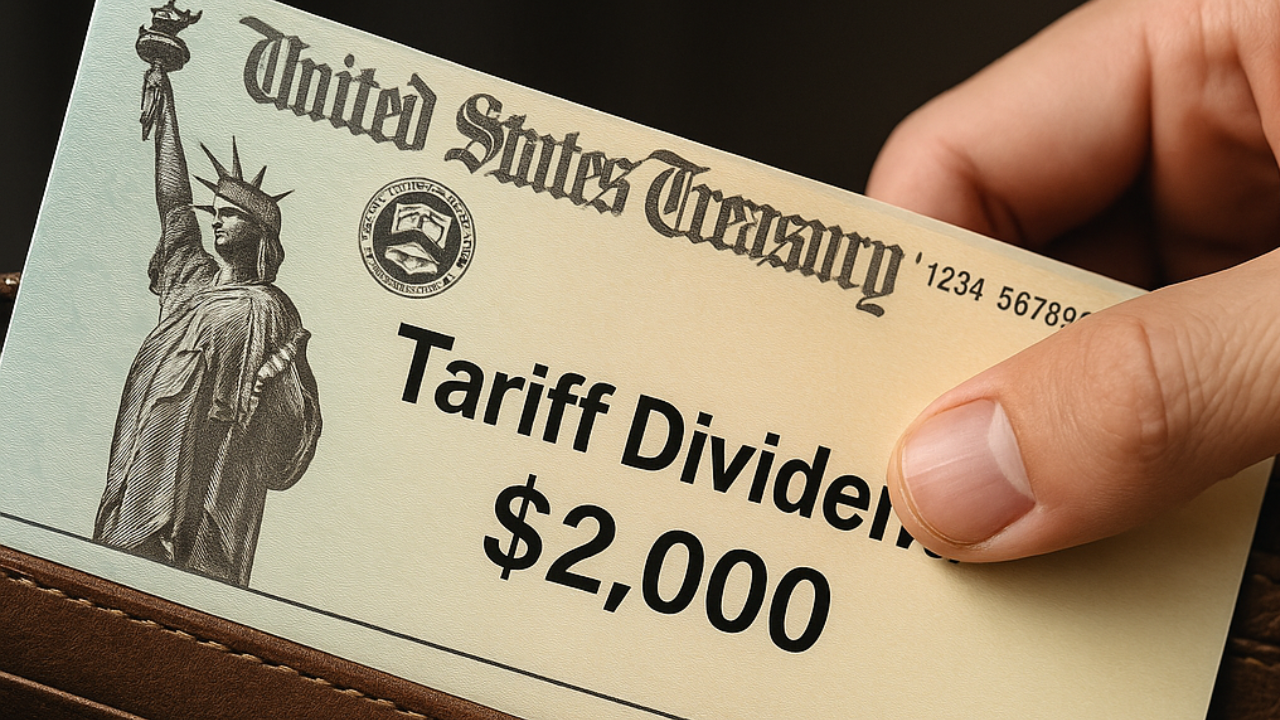
Trump’s $2,000 Tariff Dividend: What It Really Means for You
What’s Going On?
If you’ve been scrolling through your feed lately, you’ve probably seen people talking about a $2,000 “tariff dividend” or a new stimulus check in 2025.
The idea came from Donald Trump, who said most Americans could receive a $2,000 payment funded by money collected from tariffs — basically taxes on goods imported into the U.S.
Sounds like a nice surprise, right? But before you start refreshing your bank app, let’s break down what this actually means, what’s confirmed, and what’s still talk.
What Trump Said
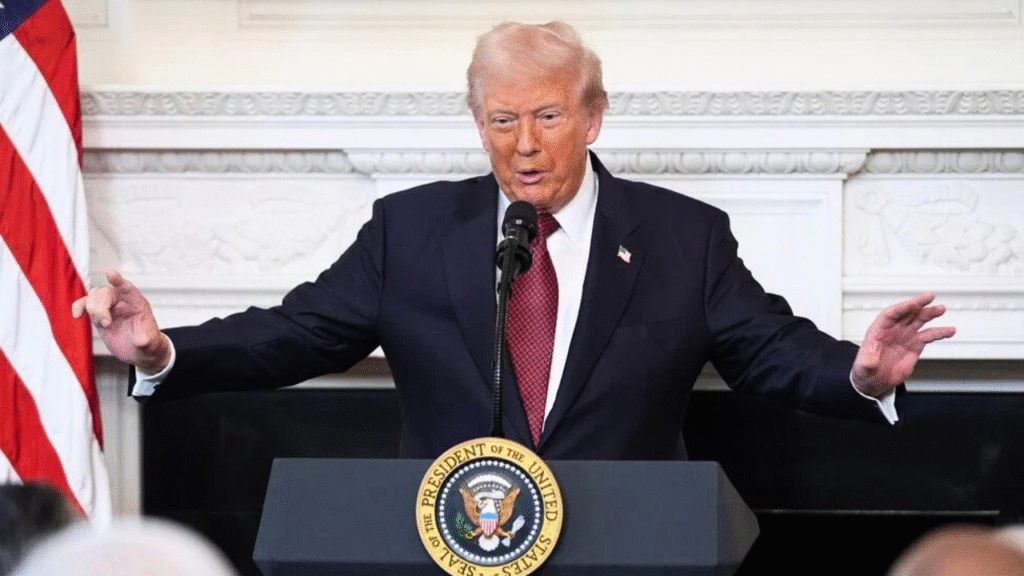
In early November 2025, Trump announced that his administration is working on a plan to send out a $2,000 check to most Americans, which he called a “Tariff Dividend.”
He claimed the money would come from the revenue made through U.S. import tariffs — duties charged on goods brought into the country — and that this dividend would help middle-class families handle inflation and rising costs.
“It’s a dividend for the American people,” Trump said, “paid for by the tariffs on foreign imports — not by your taxes.”
What Is a Tariff Dividend, Exactly?
Think of it like this:
When other countries sell goods in the U.S., they pay tariffs — basically a fee to the government.
Trump’s idea is to redistribute that money directly to Americans as a kind of “thank you” for supporting U.S. industries and paying higher prices due to those tariffs.
So instead of the government keeping all that tariff money, it would send some back to citizens — like a “cash-back bonus” from America’s trade policies.
How Much Money Are We Talking About?
The proposal mentions a $2,000 payment per person, not including higher-income households.
That means if two adults in a home qualify, the family could get around $4,000 in total.
The U.S. government collected over $190 billion in tariff revenue in 2025, so on paper, it’s technically possible — but it depends on how the funds are distributed and whether Congress agrees.
If the plan becomes real, it would be similar in size to past stimulus checks that Americans received during the pandemic.
When Would the $2,000 Check Arrive?
That’s the biggest question everyone’s asking.
Right now, there’s no official release date. The idea is still a proposal, not a law. It would need to pass through Congress or be approved under an executive policy — both of which take time.
So while headlines are calling it the “Trump $2,000 check,” you won’t see it in your account just yet.
⚠️ Beware of scams!
Fake websites and social posts are already claiming to offer “instant $2,000 tariff checks.” There are no official applications right now — so don’t share personal or bank information anywhere online.
Who Would Qualify (If It Happens)
Trump said the payments would go to “most Americans, except high-income earners.”
That likely means:
- Low and middle-income taxpayers
- Possibly those who filed taxes in 2024–2025
- Seniors, veterans, and social security recipients could be included (if it follows past stimulus models)
Exact income limits haven’t been announced yet. But if it mirrors older stimulus programs, the phase-out could start around $75,000 income for individuals or $150,000 for joint filers.
Where the Money Comes From
The funding would come from tariff revenue — the money the U.S. earns by taxing imported goods from countries like China, Mexico, and others.
Tariffs are meant to make imported products more expensive, encouraging people to buy American-made goods.
So in Trump’s view, the $2,000 check is a “dividend” — a reward for American consumers who deal with those higher prices.
However, economists point out that tariffs often increase prices for regular people too.
So while you might get a check, you may also pay more for items like phones, clothes, or appliances.
The Math Behind It
Let’s do some quick math:
- Tariff revenue in 2025: about $195 billion so far
- Estimated eligible Americans: about 150 million adults
- $2,000 each × 150 million = $300 billion total cost
That means the plan would need either additional funding or reduced eligibility — or both.
Economists say it’s possible, but it would take careful planning to avoid adding to national debt or inflation.
Supporters vs Critics
Supporters say:
- It’s a smart way to use tariff money to help Americans.
- It could boost consumer confidence and spending.
- It rewards citizens, not corporations.
Critics say:
- Tariffs make products more expensive.
- Giving checks might raise inflation again.
- The idea sounds good politically but could be hard to sustain financially.
🇺🇸 What It Means for Everyday Americans
For many families, $2,000 could cover rent, groceries, credit card bills, or car repairs — even a small boost makes a big difference in today’s economy.
In cities like New York, where living costs are higher, it could help offset monthly expenses like utilities or transportation.
But remember — this isn’t free money yet. It’s a proposal that still needs approval, structure, and funding before anyone sees a deposit.
What to Watch Next
Here’s what to keep an eye on:
- White House or Treasury announcements — these will confirm if checks are actually happening.
- Congress debates — lawmakers will discuss how the payments could be distributed.
- Eligibility updates — income limits, tax requirements, or dependents might be added later.
If the plan moves forward, payments could start sometime in mid to late 2026.
Real Voices
“People are struggling with prices, and a $2,000 payment could really help,” said Alicia Thompson, a single mom from Brooklyn.
“But I don’t want promises — I want clear details on who qualifies and when.”
Her sentiment reflects millions of Americans who want real answers — not just headlines.
Quick Summary
| Category | Details |
|---|---|
| Program Name | Tariff Dividend or $2,000 Stimulus Check |
| Amount | $2,000 per person (proposed) |
| Funding Source | U.S. tariff revenue |
| Status | Proposed, not yet approved |
| Eligibility | Most Americans, excluding high-income earners |
| Estimated Rollout | TBD – possibly mid 2026 if approved |
| Main Purpose | Economic support using trade revenue |
Frequently Asked Questions
Q1: Is Trump really giving $2,000 checks?
He announced the plan, but it’s not finalized or approved yet.
Q2: What is a tariff dividend check?
It’s a one-time payment funded by the money collected from tariffs on imported goods.
Q3: Who qualifies for the $2,000 tariff stimulus?
Likely low and middle-income Americans — but income limits haven’t been confirmed.
Q4: When will stimulus checks arrive?
No date has been set. The plan is still in discussion.
Q5: Do I need to apply for the check?
No — if approved, payments will likely go automatically to taxpayers via direct deposit or mail, like previous stimulus checks.
Final Thoughts
It’s understandable to get excited about another stimulus payment — who wouldn’t want an extra $2,000?
But right now, this “tariff dividend” is more of an idea than a reality.
Until official government details are released, treat it as a proposal, not a promise.
Still, the discussion highlights what many Americans already know: everyday life costs more than ever, and direct support would help millions stay afloat.
So keep your eyes open — and stay tuned for updates right here on Interact Room.
“If this becomes real, it could be the biggest direct payment to Americans since the pandemic.”