
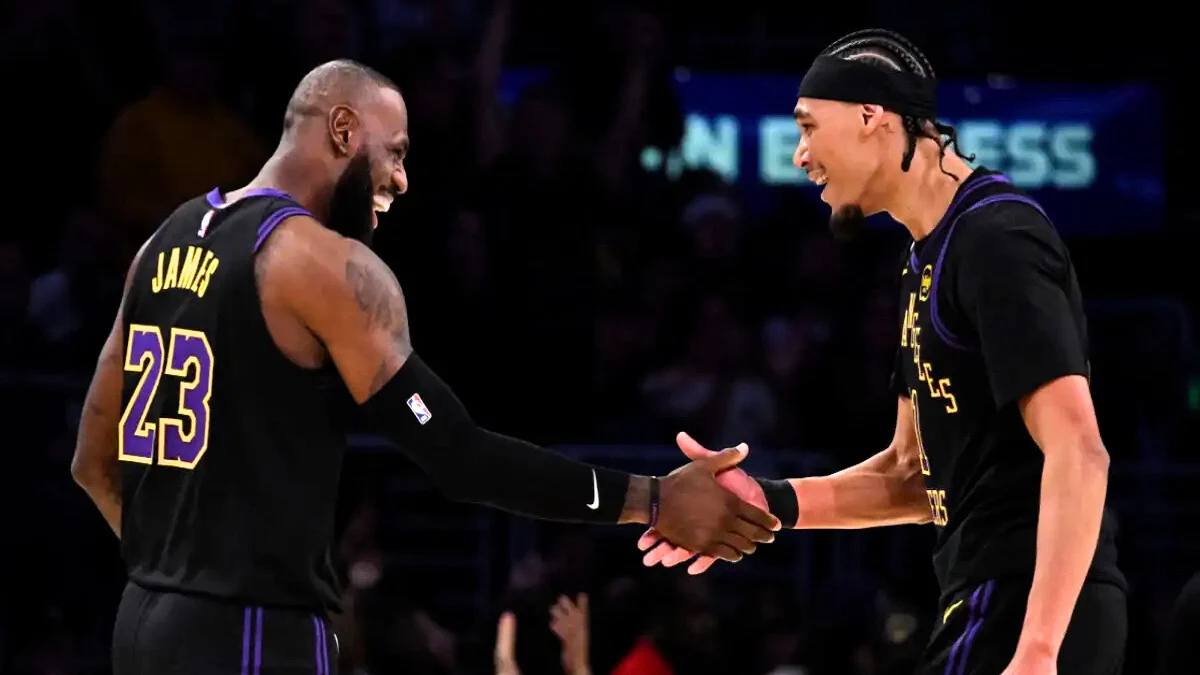
LeBron James Returns vs Utah Jazz as NBA’s Star Injury Crisis Deepens
LeBron James officially began his historic 23rd NBA season on Tuesday night against the Utah Jazz, becoming the first player in league history to reach such longevity. At 40 years old, the Lakers superstar returned to the floor at Crypto.com Arena to cheers, anticipation, and national attention. His comeback, after missing the first 14 games of the season due to sciatica, delivered one of the biggest storylines in basketball this week.
But LeBron’s triumphant return also arrives at a strange and troubling moment for the NBA. While one of its greatest icons is stepping back onto the court, a growing list of NBA stars—including Victor Wembanyama, Ja Morant, Kyrie Irving, Jayson Tatum, and Giannis Antetokounmpo—are sidelined with injuries. In fact, the league is experiencing one of its worst early-season injury waves in modern history, prompting concerns from coaches, analysts, and players about whether fast-paced play, scheduling, and year-round physical demands are pushing athletes to a breaking point.
This is the story of two parallel realities: LeBron James defying time once again, and an NBA struggling to keep its biggest stars healthy.
LeBron Makes History With His 23rd Season
Wearing his iconic No. 23 jersey, LeBron walked onto the court to a roaring crowd and an announcement highlighting his new league record: the longest career in NBA history. Before this game, LeBron shared the mark at 22 seasons with Vince Carter. Now, he stands alone with 23.
The moment carried emotional weight, especially after his long absence at the start of the season. LeBron had been ruled out due to sciatica, a painful nerve condition affecting his lower back and leg. He spent weeks away from team activities, then rejoined the Lakers for full-contact practice only two days before his return.
Before the game, LeBron joked:
“My lungs feel like a newborn baby. I just need to get them back to a grown man.”
In his first game back, he was placed on a strict minutes restriction. Still, the star forward showed flashes of his trademark court vision and leadership. Though he didn’t score immediately, he contributed rebounds, assists, and defensive stops that helped stabilize the Lakers after a shaky start.
The Jazz led by as many as 11 points in the first quarter, taking advantage of the Lakers’ rust. But once LeBron settled in, the Lakers looked more composed and balanced on both ends.
The Lakers With LeBron vs. Without LeBron
The Lakers had struggled without their superstar, starting the season inconsistently and battling chemistry issues. His absence forced the team to rely heavily on Austin Reaves, D’Angelo Russell, and Anthony Davis.
LeBron’s return immediately brought:
- Better spacing
- Improved ball movement
- Stronger leadership
- More confidence from role players
Even under a minutes cap, his influence was felt.
This return also marked LeBron’s first game under new head coach JJ Redick, making this the beginning of a new chapter in Lakers history.
The NBA’s Star Injury Crisis: What Is Going On?
While LeBron was returning, the league as a whole was suffering an alarming wave of injuries. According to a Yahoo Sports report, NBA stars have already missed over 200 combined games this season—twice as many as at this point two years ago.
NBA’s “Star Participation Rate” Has Collapsed
Normally, NBA stars play in 85–90% of games by mid-November.
This season?
Just 67.6%.
That means one out of every three games this season is missing a star player.
The league has not seen this kind of shortage in decades.
High-Profile Injuries This Month
Giannis Antetokounmpo — Groin Strain (Out 1–2 Weeks)
Giannis was averaging:
- 32.6 PPG
- 63% FG
- 11.3 RPG
- 7.1 APG
He left Monday’s game grabbing his groin, later diagnosed as a low-grade strain.
Victor Wembanyama — Calf Strain
Wembanyama’s dominant start was interrupted after the Spurs shut him down for multiple weeks.
Ja Morant — Calf Strain
Memphis’ superstar will miss extended time, a blow to a team already struggling.
Other Major Absences
- Jayson Tatum — Achilles tear
- Tyrese Haliburton — Achilles injury
- Damian Lillard — Achilles tear
- Kyrie Irving — ACL tear
- Anthony Davis — calf strain
- Dylan Harper — calf strain
- Stephon Castle — hip flexor
This is not normal. The volume, severity, and early timing of these injuries have raised red flags across the NBA.
Why Are So Many Stars Getting Hurt?
1. The NBA Pace Is Higher Than Ever
According to ESPN:
- Pace is the fastest since 1988–89
- Players now average 34.3 miles per game
- Speed averages 4.43 mph (highest in tracking history)
Steve Kerr said:
“Players are running faster and further than ever. There’s no rest. No practice. Just game after game after game.”
2. The 82-Game Schedule Is Too Heavy
Teams are playing:
- More back-to-backs
- More travel miles
- Fewer practice days
- Higher possession games
The Lakers just completed a 5-game road trip with no full practices.
3. Load Management Rules Backfired
The NBA’s new 65-game minimum for awards was meant to increase star participation. Instead, players returning too soon have suffered re-injuries—and teams are afraid to push stars too early.
Impact on the League
The NBA is facing:
- Lower star participation
- Declining early-season ratings
- Frustrated fans
- Overworked players
- Skeptical broadcasters
- Competitive imbalance
This season was supposed to feature:
- LeBron’s historic year
- Wembanyama’s rise
- Giannis chasing MVP
- Luka and Edwards battling for the throne
Instead, nearly every contender has lost its top players.
How LeBron’s Return Helps the NBA
In a season filled with injuries, setbacks, and uncertainty, LeBron’s return brings:
- A major boost to viewership
- Stability for the Lakers
- Star power for national broadcasts
- Momentum for struggling Western Conference ratings
- Reassurance for fans worried about the league’s direction
There is also symbolism.
At 40 years old, in his 23rd season, LeBron remains one of the most durable and consistent athletes in sports history—even as a younger generation struggles to stay healthy.
What’s Next for LeBron and the Lakers?
The Lakers will slowly increase LeBron’s minutes over the next 2–3 games, monitoring pain levels from his sciatica. The team hopes to return him to 30+ minutes per night in December.
With LeBron back, the Lakers now aim to:
- Climb the Western Conference standings
- Improve offensive efficiency
- Integrate new rotations under JJ Redick
- Reduce pressure on Davis
- Build momentum heading into Christmas Day
If LeBron stays healthy, the Lakers instantly become a playoff threat again.
Conclusion
LeBron James’ return against the Utah Jazz was more than just another milestone in a legendary career. It came at a time when the NBA desperately needed good news—amid a wave of injuries that has left fans, teams, and analysts worried about the league’s long-term health.
LeBron standing on the court represents durability, stability, and excellence.
The NBA will hope that other stars can soon follow.