
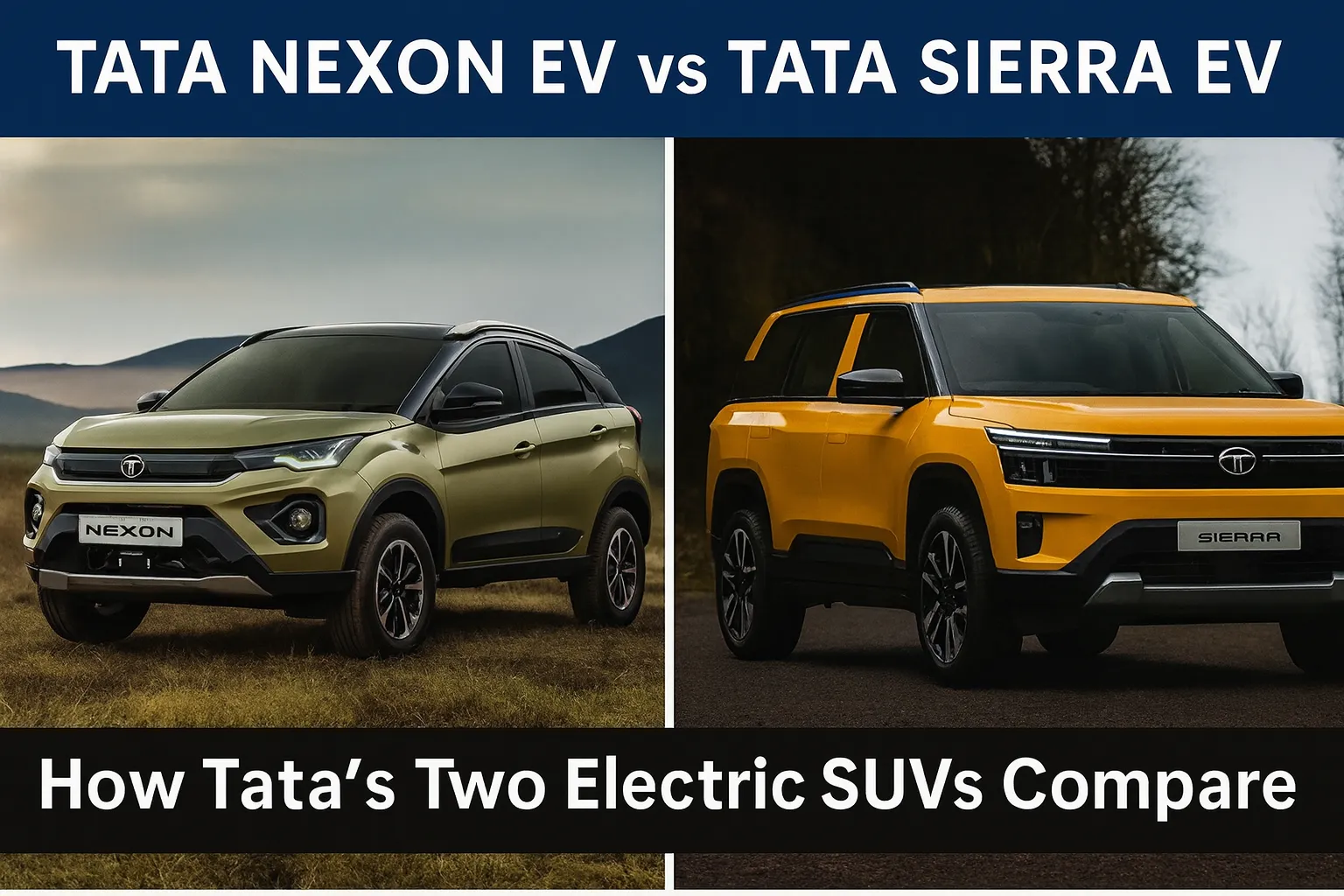
Tata Nexon EV vs Tata Sierra EV: A Detailed Comparison
India’s electric vehicle market is evolving rapidly, and Tata Motors continues to play a leading role in shaping it. With the Tata Nexon EV already established as the country’s best-selling electric SUV and the Tata Sierra EV set to arrive as a premium electric offering, many buyers are now comparing these two models despite them targeting slightly different segments.
While the Nexon EV focuses on affordability and mass adoption, the Sierra EV aims to redefine Tata’s premium electric SUV space. This article takes a neutral, fact-based look at how the Tata Nexon EV and Tata Sierra EV compare across pricing, design, performance, features, and expected ownership experience.
Market Positioning

The Tata Nexon EV has been on sale for several years and has become a benchmark in India’s electric SUV segment. It caters mainly to urban families and first-time EV buyers looking for a practical, well-priced electric vehicle with proven reliability.
The Tata Sierra EV, on the other hand, is positioned as a more premium, lifestyle-oriented electric SUV. Reviving the iconic Sierra nameplate, Tata aims to attract buyers who want a larger, more feature-rich EV with modern design and advanced technology.
Price and Expected Cost
Price remains one of the biggest differences between the two models.
The Tata Nexon EV currently starts at around ₹12.49 lakh (ex-showroom) and goes up to approximately ₹17.49 lakh depending on the variant and battery pack. This pricing has helped it dominate the sub-₹20 lakh EV segment.
The Tata Sierra EV is expected to be priced around ₹15 lakh to ₹18 lakh (ex-showroom) at launch, though final pricing will only be confirmed closer to its market debut. Positioned above the Nexon EV, the Sierra EV is expected to justify its premium with additional features, space, and design upgrades.
Design and Road Presence
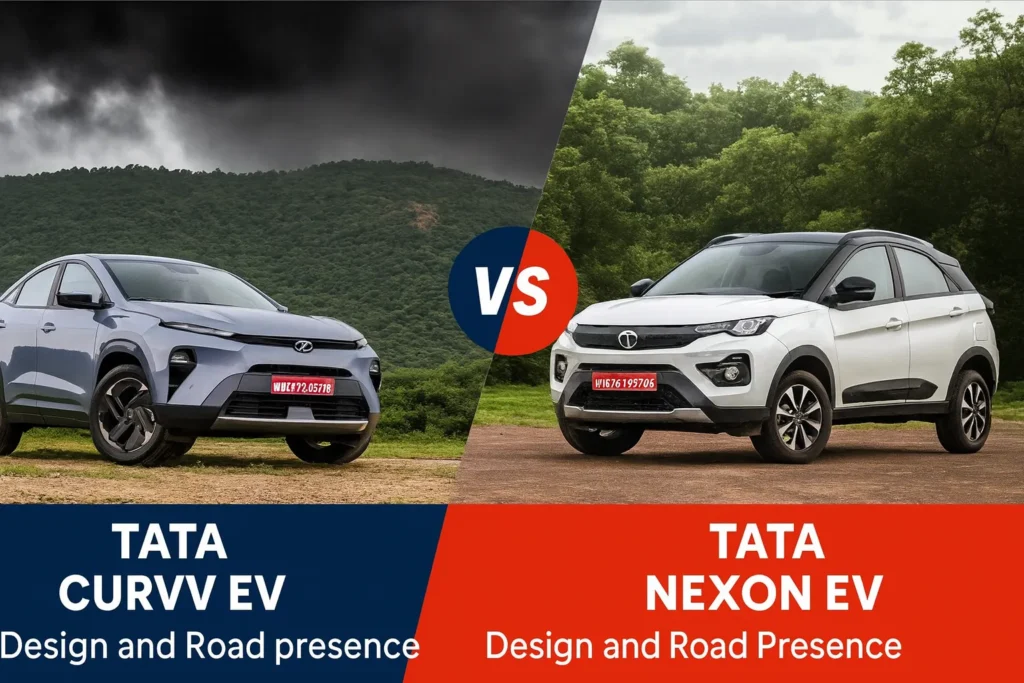
Design philosophy is where these two SUVs clearly diverge.
The Nexon EV carries over the familiar compact SUV silhouette with EV-specific highlights such as a closed grille, blue accents, and aerodynamic alloy wheels. Its design is practical and well-suited for city use, though it does not dramatically stand out on the road.
The Sierra EV adopts a more futuristic and bold design approach. Spy images and concept previews suggest a boxy SUV shape, larger glass areas, flush door handles, and a distinctive LED lighting signature. The Sierra EV is expected to have stronger road presence and a more premium visual appeal compared to the Nexon EV.
Dimensions and Space
Size plays a crucial role in buyer decisions.
The Tata Nexon EV measures just under 4 meters in length, making it easy to maneuver in city traffic and park in tight spaces. However, rear seat legroom and boot space, while adequate, are not class-leading.
The Tata Sierra EV is expected to be significantly larger, offering more cabin space, improved rear seat comfort, and a bigger boot. This makes it more suitable for long journeys and families needing extra room.
Battery, Range, and Performance
Battery technology remains a key comparison point.
The Tata Nexon EV currently offers two battery options, with the larger pack providing a claimed range of up to 465–489 km (MIDC). In real-world driving conditions, users typically report a usable range of around 300 km, depending on driving style and conditions.
The Tata Sierra EV is expected to offer a claimed range of around 400 km or more. While official battery specifications are yet to be announced, it is likely to use Tata’s newer EV architecture, potentially offering improved efficiency and thermal management.
In terms of performance, the Nexon EV is tuned for smooth and predictable driving, making it ideal for daily commuting. The Sierra EV is expected to offer stronger acceleration and a more refined driving experience, though Tata has not released performance figures yet.
Charging Capabilities
Charging infrastructure compatibility is another important factor.
The Nexon EV supports fast charging, allowing the battery to charge from 10% to 80% in around 40–60 minutes using a DC fast charger. Home AC charging typically takes several hours.
The Sierra EV is expected to support similar or improved fast-charging capabilities, possibly with higher charging speeds. Tata may also introduce upgraded charging tech to align with future EV standards.
Interior and Technology
Interior features are where the Sierra EV is expected to clearly pull ahead.
The Nexon EV already offers a modern cabin with a large touchscreen infotainment system, digital driver display, wireless smartphone connectivity, and connected car features. However, its interior design prioritizes function over luxury.
The Sierra EV is expected to feature a more premium cabin with larger digital displays, advanced infotainment, improved materials, panoramic sunroof, and possibly a multi-screen layout. Tata has hinted that the Sierra EV will focus heavily on comfort, technology, and a more upscale user experience.
Safety Features
Safety is a strong point for Tata vehicles in general.
The Tata Nexon EV comes equipped with multiple airbags, ABS, electronic stability control, and has performed well in crash safety tests. Its safety credentials have contributed to its popularity among families.
The Tata Sierra EV is expected to build on this foundation with additional safety features, potentially including advanced driver assistance systems (ADAS), though official confirmation is awaited.
Running Costs and Ownership Experience
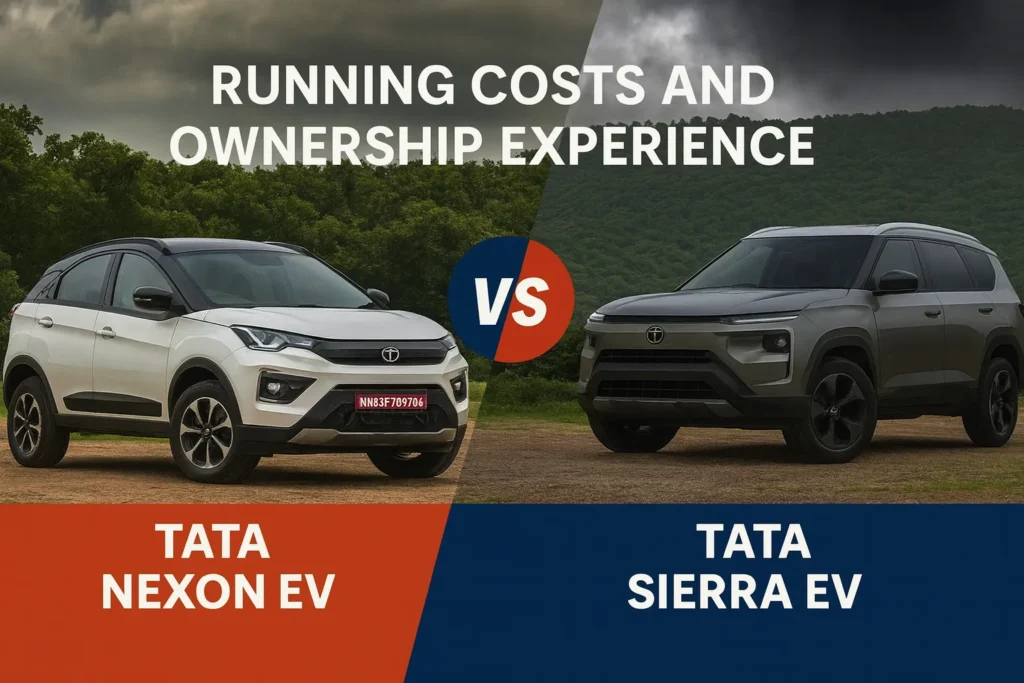
Electric vehicles are generally cheaper to run compared to petrol or diesel cars.
The Nexon EV’s running cost is estimated at under ₹1 per kilometer, making it one of the most economical vehicles in its segment. Maintenance costs are also relatively low due to fewer moving parts.
The Sierra EV, while likely to have slightly higher running and service costs due to its size and premium positioning, should still remain significantly cheaper to operate than a comparable ICE SUV.
Target Buyers
The Tata Nexon EV is best suited for:
- First-time EV buyers
- City commuters
- Budget-conscious families
- Buyers looking for proven EV reliability
The Tata Sierra EV is likely to appeal to:
- Buyers upgrading from compact SUVs
- Families needing more space
- EV buyers seeking premium features
- Customers attracted to bold design and new technology
Launch Timeline
The Tata Nexon EV is already available nationwide with multiple variants and regular updates.
The Tata Sierra EV is expected to launch within the next couple of years. While production-ready versions have been teased, Tata has not confirmed an exact launch date.
Conclusion
The Tata Nexon EV and Tata Sierra EV are not direct rivals but represent two different stages of Tata’s electric vehicle strategy. The Nexon EV focuses on affordability, practicality, and mass adoption, while the Sierra EV aims to elevate Tata’s EV portfolio with a more premium, spacious, and feature-rich offering.
For buyers seeking a reliable and cost-effective electric SUV today, the Nexon EV remains a strong choice. Those willing to wait for a more advanced and premium electric SUV may find the Sierra EV worth considering once it launches.
As Tata Motors continues expanding its EV lineup, the coexistence of the Nexon EV and Sierra EV highlights how the brand plans to cater to a wide range of electric mobility needs in India.